Showing posts with label business. Show all posts

12.08.2007

Take my return, please

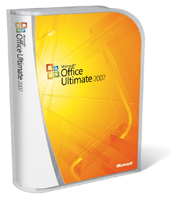
Through a series of fortunate events, my little brother recently managed to win himself a copy of Microsoft Office Ultimate during a Halo 3 tournament on campus.

For those of you who don't know Noah, my 20-year-old brother is a bona fide scary-smart genius. He's also a typical sophomore in college, strapped for cash and struggling to stay on top of his workload. He does not want or need Microsoft Office Ultimate. Like, at all.

But he enters this video game competition. The whole thing is designed around raffle tickets. The incentive to stay in the game longer is not one top prize, but simply more chances to win the raffle. Noah drops out in the first round, but he decides to hang around on the off chance that he might still win.

When his ticket number is called, the college crowd actually laughs at him. They all seem to think that Office is a sad, sad second place prize (first place was an Xbox). They yell things like "You can download it for free!" One kid approaches him a few minutes later, saying "You know, I could actually use that - I'll give you 20 bucks for it?" Noah hesitates, then takes the kid's number just in case.

When he gets back to his dorm room, my brother looks up the product, just in case. OH MY GOD. MS Office Ultimate ("Ultimate" being the key word) is a high-end bundle of productivity software valued at over $700! Cha-ching! Who's laughing now?

And so, his journey to cash in begins.

First, he brings the bright yellow box to Best Buy. But he's turned away. Their policy: "Sorry, we can't take returns without a receipt if they are over $100."

Then, he goes to Circuit City. Again, a no-go. Their policy: "Actually, we do carry that product but after scanning this particular one, we're showing that it wasn't bought at a Circuit City."

Next, he tries CompUSA. His third rejection. Their terms: "We flat-out don't take returns without a receipt."

Finally, he heads to Office Depot. Here's how the conversation goes.

Noah: I want to return this. Will you take it back?
Office Depot Guy: Sorry, we actually just sent back our entire shipment of MS Office, because the new ones are coming out.
Noah: Oh.
ODG: But wait just a minute, let me see that box - this IS the new version! Okay, here is your store credit for $727.

SEVEN HUNDRED BUCKS TO OFFICE DEPOT. That is what he has won. That is actually pretty awesome, if you like office products. (Or know someone who does - Noah ended up trading it for cash with a small-business-owning family friend!)

Of course, what his dorky older sister finds most interesting about this story is the varying return policies of these four stores. To rewind for a sec, a return policy exists to a) please unhappy customers and b) thwart criminals who steal, then return. And it has to be a balance between the two. So let's review.

Best Buy: Must have receipt if over $100. This sounds like a businessperson's decision. "Well, let's look at the numbers here. It seems that 20% of the items stolen account for 80% of the loss, so let's draw the line somewhere that sounds reasonable to a shopper...okay, $100." Basically, if people want to steal cheap things from Best Buy, and return them with no receipt, Best Buy is willing to let that go. Because they don't want to piss off Joe Honest whose universal remote is broken and his wife threw out the receipt. They are okay paying thieves for their own smaller-ticket items, as long as they're not also paying them for plasma TVs.

Still, I think Best Buy's policy is a bit confusing. I'm sure they get lots of customers scratching their heads: "How does the item being $100 relate to my ability to return it?" And technical close-calls: "It was $100 when I bought it, but now it's on sale for $79.99?" It sounds like a good compromise, but it's probably more annoying for shoppers, while still being somewhat amenable to thieves. Grade: B+.

Circuit City: Product must have been bought at their store. This seems reasonable for consumers, and the store is smart to scan the item. However, what if the product was stolen at their store? Would the scanner tell them that? (That would be really cool - front line employees could be nabbing unsuspecting criminals!) If it doesn't tell you whether the item was bought or stolen, though, this policy has little merit in stopping crime. It does, however, make good sense for honest customers, especially honest customers who live in the digital age. Grade: A if the scanner knows, A- if it doesn't.

CompUSA: No returns without a receipt. This is the most old-school, black and white, 'it is or it isn't' kind of policy. It reminds me of a simpler time, before everything we touched had electronic copies. CompUSA must be a tricky place for thieves to make headway. It's probably also a place where lots of honest customers get pissed. Grade: C.

Office Depot: We just want your product. I think this must have been a fluke. Stores typically don't take back extra items because it adds to their inventory. Inventories are planned so that the store sells everything it has. If you start accepting every Joe Schmo's unwanted products, you suddenly have an imbalance. Maybe this employee thought to himself, "That Office Ultimate is gonna be the hit of the season - it can't hurt to have an extra one on our shelves!" But this is pretty shortsighted, and I'm doubting it's company policy. My brother was a customer, bordering on dishonest, and he walked away with a giant store credit. No price minimum, no package scan, and no receipt. I have to imagine this place is somewhat easy to scam. Grade: D.

Ultimately, stores don't want you to return things. They want to take your money and give you stuff. However, as our society becomes more and more full of choice, we as consumers become increasingly indecisive. Return policies are our safety net, and stores actually use them as a selling point. "We're low-commitment," the policies tell people. "You don't have to be sure with us." They make it easy for shoppers to buy on impulse, and to buy more than they really need. "We can always return it," we say to ourselves.

Here's what I'd like stores to do. I can guarantee you they'll never do it, because it runs counter to human nature, but here it is anyway. If you want to return something, we will give you half of what that item cost. You want to return a $60 dress? Here's $30. What, you decided you don't like it anymore? Oooh, sorry. Shoulda tried it on first.

I know, I know, this would force people to actually make real decisions in the store. It would also cause them to truly consider the price of something, in relation to its worth. Which is something we all seem to have forgotten.

Stores will never do this because of all the excuses - something broke, didn't fit, the giftee hated it, dog ate the receipt, and on and on. They know humans aren't perfect, and that we need this Plan B. But I still think some responsibility should fall on our shoulders. If stores would give shoppers fewer choices and less return-policy flexibility, I actually think we'd become smarter, better shoppers. Plus, thieves would have to find something else to do.

4.21.2007

Public or private?

Last night, I found someone else's shopping list.

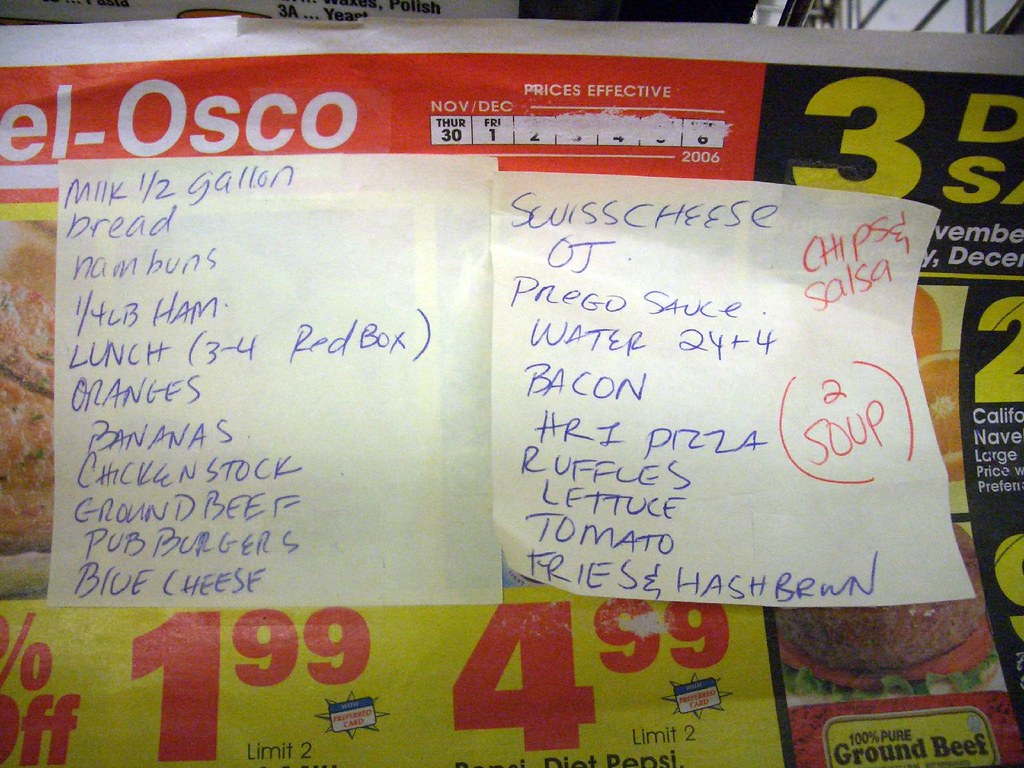
I was making my way through the produce section when I looked in my cart, and there it was. Stuck to the in-store circular on two Post-It notes.

And you know what? It stopped me in my tracks. Maybe I'm just nosy, but I felt compelled to stand there, read it, and imagine an entire life story about the person who wrote it.

Now I suppose the list wasn't all that unique. Milk, OJ, bread, cheese. Bor-ing. But I couldn't help digging deeper. What tidbits could I glean about the author of this list? Who was this woman?

And I was sure it was a woman. Most shoppers are women, the handwriting was feminine, and the way it was stuck to the coupon pages – oh yes. This was a money-saving mom with a family at home. I know that part because she was buying "Lunch," which consisted of "3-4 Red Box." That sounded like juiceboxes to me. Though why only 3-4? There are five schooldays in a week. Maybe her kids buy lunch on Fridays?

Or maybe she wasn't a mom. Maybe she was getting frozen insta-lunches and they come in a red box. Because I noted that while lunch and dinner were present, breakfast was conspicuously absent. Does she skip breakfast? Maybe she's a busy career woman. A Starbucks drive-thru kind of gal. Maybe she wrote the list, and her assistant is doing the shopping!

Though she was definitely planning an event. Maybe a barbecue. That would explain the burgers, buns, lettuce and tomato. And two items were added in red, chips and salsa and two soups. She must have noted those down at the last minute. Does she keep a red pen in her car? Is she a schoolteacher? Why was she having a barbecue when it's 40 degrees outside anyway? What will she cook with the chicken stock? WHAT'S INSIDE THE RED BOX?

All this went through my head in a matter of seconds. It was surprisingly intimate. I felt a little guilty, like I had violated this person’s privacy. Like I'd peered in her closet or dug through her fridge.

But it was also intriguing. Knowing the personal details of someone else's life is strangely fascinating. And a shopping list contains lots of these little clues. Because what we buy is a direct reflection of who we are. Are we brand-conscious? Price-conscious? Health-conscious? Impulsive? Consistent? Lactose-intolerant? I could speculate for hours about this woman's job, family, appearance, cooking abilities, social life, budget and values.

But here's the question of the hour. Do you think she would mind?

---

Privacy is simultaneously becoming more and less important these days. Because as a society, our trust in each other is getting paradoxically larger and smaller.

On the one hand, some types of information are becoming more public. Our likes and dislikes, our jobs and hobbies, even our love lives and biggest secrets are being put on display. We all want to know more about each other; there's something in human nature that compels us to seek this out. And our desire is being met with increasingly “real” versions of real life - from the Jennicam to Justin Kan's life on camera. There’s a popular Flickr group called What's In Your Bag, where people spill, sort and photograph the items in their purses. You might be asking yourself, who cares what's in my bag? But trust me. People do.
On the other hand, some types of information are becoming more private. Our social security numbers, sure. But also our email addresses, our receipts and our mail. Privacy is now a big deal on a national scale. Fears about identity theft and government security and "the dangers of the internet" run rampant, especially with older generations. We all have 37 different passwords. The shredder market is booming.


Now the store is a great arena to watch this all play out. The information at stake is simply, "what we buy." Should what we buy be public or private?

Well, the items in our cart are on full display. We don't own them, and everyone can see them. They are public. Yet when we get to the checkout, we don't like other people staring at them. They are put in bags. Now they are private. But once we unpack, some of us write the items up on our shopping blogs. And others leave lists in their carts. So in one sense, maybe we don't mind our purchases being public.


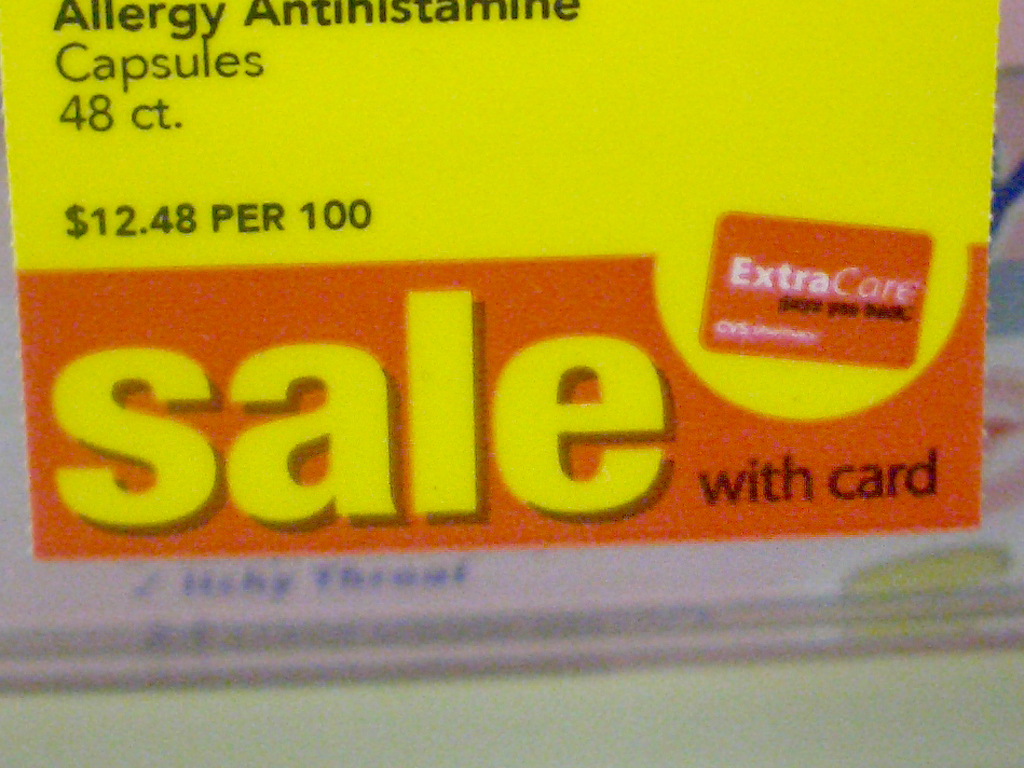
But if the main trend is transparency, its countertrend is an increased concern for privacy. Because here's what many people don't know. Stores collect personal data on what we buy. If you've ever shopped with a loyalty card, like the Tesco Clubcard or the CVS Extra Care card, you have shared your purchase information with the store. The same personal tidbits that I saw on the list, but with greater accuracy, scale and detail. (They know, for instance, what's in the red box). Stores record our purchase behavior, and pass it onto companies like dunnhumby, who use it to conduct "relevance marketing." In other words, our unknowing card swipes are helping them make all sorts of decisions about products, prices and in-store advertising. They can slice and dice their customer base to their pie chart's delight. It's powerful data.

But is this an invasion of privacy? Some people say it is. These folks opt not to use loyalty cards, and their purchases remain anonymous. But guess what - they lose out on the savings that cardholders enjoy. And I don't think that's fair.

So just like the choice at the end, "Paper or plastic," I believe we should be given a choice up front: "Public or private?" And stores should work to give both kinds of shoppers an experience that meets their needs.

Shoppers who "go public" can elect to share what they buy with, well, everyone. Their shopping lists are on full display, broadcast throughout the store with their personal profiles. They sign up for free samples of products they enjoy, see where they rank in shopping contests, create universal wish lists, and see what they've bought in the past. They give feedback on products, get recruited for market research, and discuss favorites with fellow customers. They essentially live lives of shopping transparency. These are all natural desires, and the stores should help fulfill them. But the one thing "public" shoppers shouldn't get is a price break.

Likewise, shoppers who "go private" can elect not to share what they buy with, well, anyone. They push around carts with opaque covers, so that nobody can see their items. Their receipts are blank except for the price. They are happy to get what they need, while remaining respectfully anonymous. And they aren't docked financially for feeling this way.

Because while I don't think that money is the best way to incentivize people to share, it's the tactic du jour for getting shoppers to give their demographic information up front, and their purchase information over time. Rather, shoppers who want to go public should be given channels to share, and shoppers who want to stay private should be equally accommodated. The store would save money on all those coupons, too.

As the privacy wars are waged on nearly every front, and a new generation grows up with high expectations for transparency, the question of To Share or Not To Share may well perplex leaders in every industry. I wonder what retail will do. Because right now, we are seeing Privacy 1.0. A couple pennies saved by a bunch of naive consumers. Rather, I envision a space where we choose all sorts of privacy preferences, and customize our sharing options in every store.
---

So, do you think the anonymous shopper would have minded that I was poring over her list? She left it in a public place, after all, and I suppose my snooping was harmless enough. Would she care if I posted it on my blog? What if I started sending her coupons for chicken stock? Would she mind if I lumped her into a "shopper demographic" and made money off my knowledge of her choices?

This is where it gets tricky. It's a soft line between what's okay to share and what's not. But it's a hard line between using someone's info for entertainment, and using that info for profit. So my guess is, no, she wouldn't have minded that. But she might mind this. I'm sorry, anonymous shopper. Your story just had to be told. Maybe next time, you won't leave your list in the cart.

2.21.2007

Stand by your fish

One recent evening, I happened to wander into a Petco. It was very different than the pet stores of my childhood. Instead of wide-eyed children gazing at puppies and bunnies, I saw two things. Supplies and fish. Apparently, Petco has scaled back.
Or maybe it's always been this way. I can't imagine that a national chain like Petco wouldn't be able to logistically handle dogs and cats, but perhaps those are better left to independent breeders and animal shelters. Or maybe puppies are just low-margin merchandise. (Sorta breaks your heart to think of it that way, huh?)

But you know, the longer a puppy "sits on the shelf," so to speak, the more expensive he becomes to maintain. Employees have to feed him, walk him and love him, and even at minimum wage, all that loving can get expensive.

But a fish has got to have better shelf life. And I'd imagine the markups are decent. So perhaps supplies and fish were more of a business decision than anything else. After all, Petco is a business too. Even though it's peddling love and appealing to shoppers' emotions, it's still a large corporation with shareholders (or recently, private investors) to please.

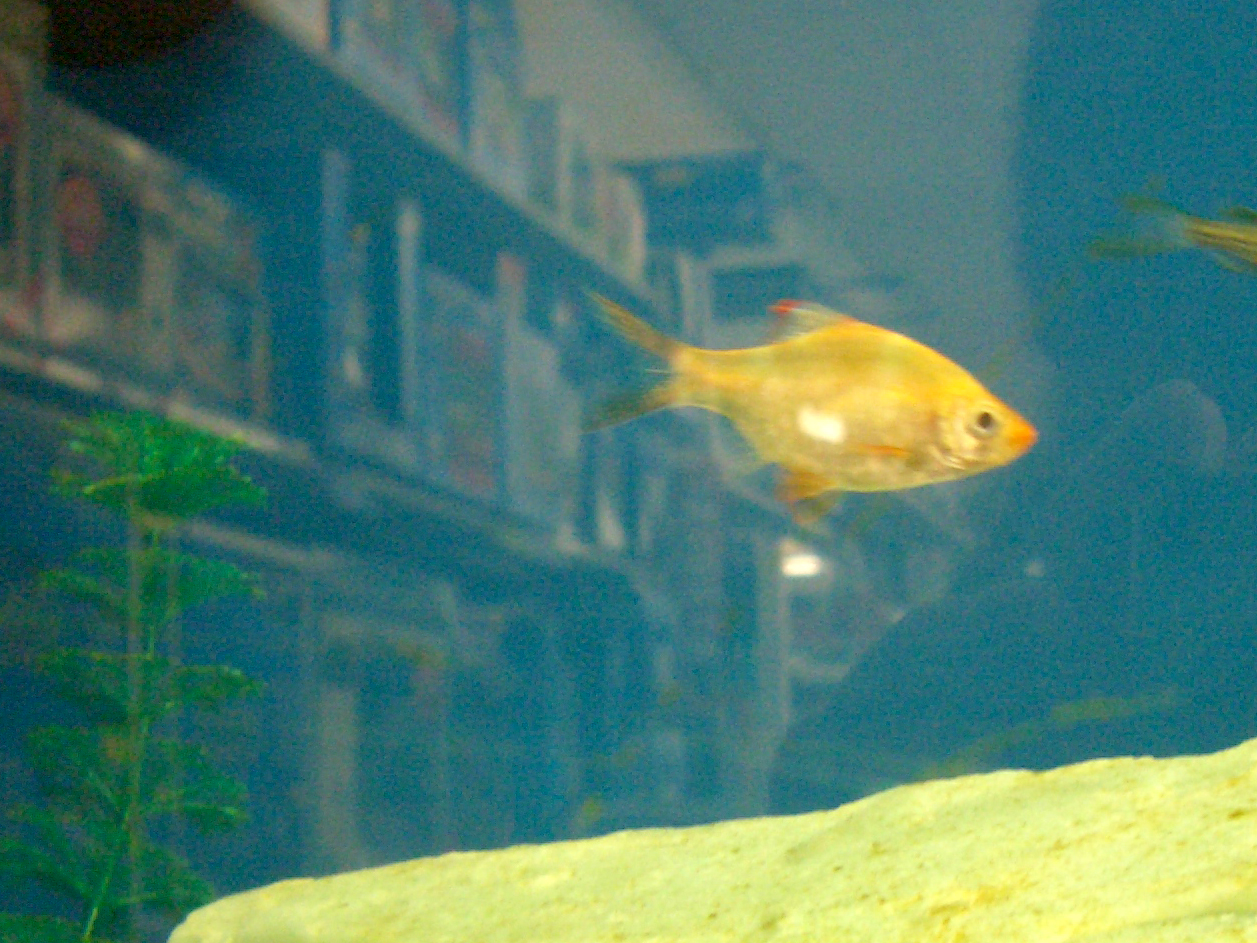
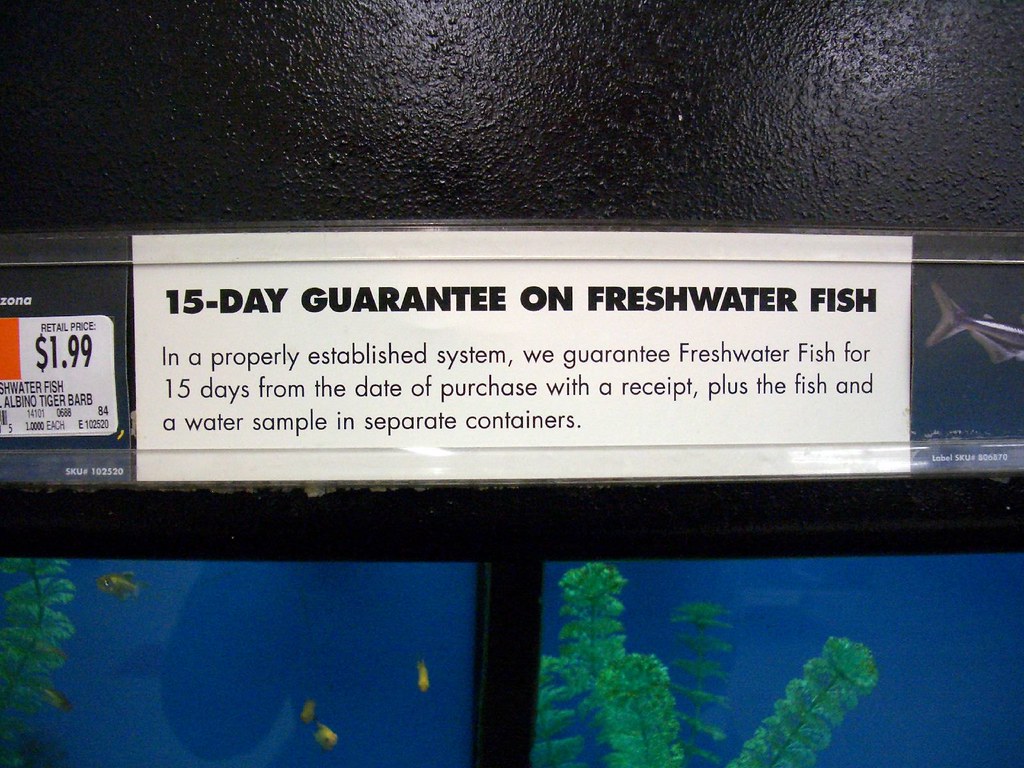
Anyway, I am not in the market for a pet of any species, but I had some time to kill. So I decided to browse the fish aisle. There I was, gazing into tanks and making pucker faces, when I noticed a small sign.


"15-DAY GUARANTEE ON FRESHWATER FISH. In a properly established system, we guarantee Freshwater Fish for 15 days from the date of purchase with a receipt, plus the fish and a water sample in separate containers."

This was unlike any return policy I have ever seen. I'm going to take it one phrase at a time.

First, Petco is saying their fish will live for 15 days. I don't know if you've ever had a pet goldfish, but in my experience, lifespan varies widely. We'd come home with four new fish in a bag. One would be dead that night, two more would go in a month, and the last one would live for five years. So how they heck are they providing this sort of guarantee? Do they inject their fish with 15-day miracle vitamins? I was skeptical.

But then, they specify a "properly established system." Upon inquiry, it turns out that a proper system takes all sorts of factors into account, such as water temperature, filters and lighting. The Petco employee had a whole bunch of take-home literature on how to properly establish your system. It was actually quite useful, and I'd imagine that if I were buying my first fish, I would read up. So maybe this guarantee has an educational benefit. But I still wasn't totally convinced. Would anyone else make the effort to learn?

Finally, you not only have to bring a receipt, you have to bring the fish. THE FISH. They are not kidding around! Apparently dead fish transportation receptacles have recently included Tupperware containers and pillboxes. Oh, and a water sample. You have to save some of your dead fish's water for inspection. Doesn't this seem like a lot of work for one lousy free fish?

Apparently, it's not. People are indeed taking advantage of this fish guarantee. And I actually think it's quite clever. Petco knows that fish are notoriously short-lived, and I have to imagine it was getting multiple complaints a day, from angry shoppers, about dying goldfish. So the folks at corporate must have realized that the best way to take control of the situation was to give some responsibility back to their customers. Petco can't be liable for every dead-pet heartbreak in town, but it can carve out an area where its responsibility ends, and the customer's begins.

So they wrote this return policy in no uncertain terms. I imagine it's quite effective.

First, there's the education opportunity. The "properly established system" part means that if you didn't read our guidelines, it's your own fault. Imagine what takes place when a customer brings back Fishy. The employee gives him a little fish physical - takes his temperature, looks at his color and size. Then she tests the water's chlorine levels and looks for foreign particles. If something is up, the employee can diagnose it, teach the person what went wrong, and instruct them on what to do differently next time. It's like saying "We told you so" in the nicest of ways. Plus, education is rewarded; if you did everything we told you, then it wasn't your fault and you will get a new fish.

Second, there's the emotional response. I'm sure this is disproportionate for fish. I mean, if your toaster breaks, that is irritating. But when your child's new friend kicks the bucket, that is a sad day. A very sad day. That child is in the darkest hour of his little life. So just when Dad is most pissed, and Joey is most distraught, in swoops Petco to save the day. Joey learns a valuable lesson in the transience of life and death, and Dad learns to read the fine print. I'd imagine this return policy wins major points with parents.

And third, there is the business impact. Which is basically, zero. How much do you think a fish costs Petco? Ten cents? Small investment for what must be big rewards. They'd probably have to give away a free fish, every 15 days for a year before they lost money. And I'm sure someone did the math. Maybe they found that 10% of their stock typically die in less than 15 days, while the other 90% live longer. Ten percent of inventory is pretty manageable. Many retailers make similar estimates regarding their own "shrinkage." I'm sure the fish warranty makes only the tiniest of dents in the bottom line.

Education allows for loyal, informed customers. Replacement allows for happy children. And education + loyalty - small cost = big value. Good job, guys.

PS: I thought perhaps Petco's policy might give it a leg up on PetSmart, its arch nemesis. A quick call told me that PetSmart only offers a 14-day fish guarantee. Ha, ha. How's that for a competitive advantage?

1.08.2007

Come for the deals, stay for the treasure

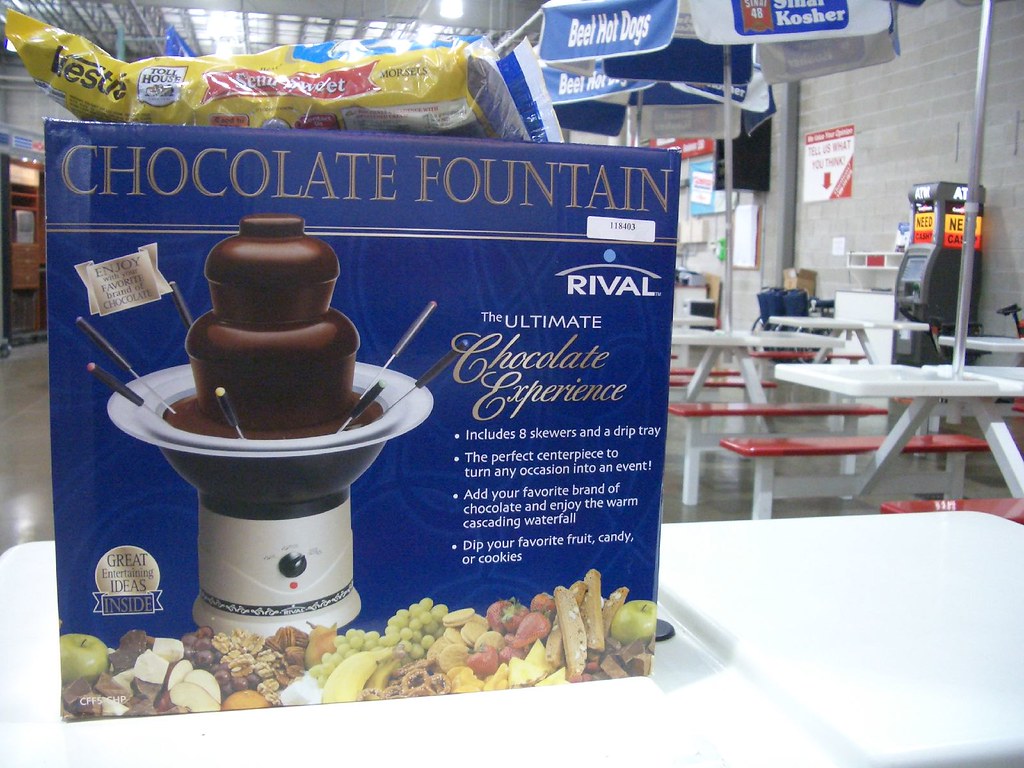
Last week I went to Costco, to buy a chocolate fountain. Possibly the most obscure, hilarious item I've ever purchased. It's for an upcoming party, and once I decided to get one, I absolutely had to find one. There was no turning back.

There are no local chocolate fountain stores, per se, and rental can run you $300, so when I realized I might find it at Costco, my heart leapt at the possibility. Sure enough, the Costco website showed two or three different ones, ranging from $40 to $200. Amazing, I thought, and only at Costco.

---

One year ago, I wrote about Costco in an admittedly whiny way. I said that the store's giant products require giant houses, and that therefore, Costco is not for me. I still find most of the industrial-size items impractical, but nonetheless, I'll confess that trips to Costco have crept into my life with greater and greater frequency.

However, over the year of my membership, the motivation has changed. I used to crave Costco's low prices per unit - its great deals on commodities. But when that didn't pan out logistically, I started to discover the other side of the clever retailer. Now, I shop at Costco for big-ticket, hard-to-find and extremely special things. Why? Because I've been trained to seek them out.


The treasure hunt mentality is one of Costco's founding principles. Diamonds and iPods and plasma TVs are right in there with the ketchup and soap. My favorite-ever Costco purchase was a giant trampoline my family bought when I was 16. More recently, it's been king crab legs, an all-in-one printer and, of course, the chocolate fountain.

What exactly is Costco doing to earn my treasure-hunting dollars? For starters, while a Wal*Mart Supercenter might carry 100,000 items, each Costco only has about 4,000. Yet every one of those items is carefully considered. There aren't 60 kinds of toothpaste; there are two, and both are great. But the great products rotate in and out all the time. Surprises are everywhere. Samples encourage trial. The lenient return policy lessens the risk. Prices drop one day; deals disappear the next. It's a roller coaster of thrills and letdowns.

In 1983, when Costco first appeared on the scene, these seemingly inconsistent practices were certainly not the norm. I have to imagine consumers were initially confused. But over time, Costco has trained its shoppers. Trained them so well that they literally behave differently inside its warehouses than in any other store. Sane, rational people turn into pirates.

Never has this been more evident than in my chocolate fountain shopping trip. When I called the store to check availability, they said it was $37.99, and that they had "about 16 left." I immediately understood that once those 16 were gone, they weren't coming back. I planned to visit the very next day.

Then, when I marched down the appliances aisle and arrived at my coveted fountain, surprise! It was only $19.99! Half price on an already-great deal! I felt like I was beating the system in a big way. Take that, $300 fondue rentals! I grabbed one, found two 5-pound bags of chocolate, and made my way to the front.

But the best part was the checkout. As the cashier was ringing me up, she says, "This is twenty bucks? Are there any more left? Because this would be great for my daughter's wedding." I laughed and told her there were. Then the guy in line behind me starts asking questions. "How much was that? Twenty dollars? What kind of chocolate goes in it? And twenty dollars? Hold on, ma'am, I'm just gonna run back." She goes, "Hey, can you get one for me too?"

---

Costco shoppers - and employees - are behaving exactly as Costco wants them to. Over many shopping trips and many years, they have learned to expect the unexpected. To recognize a great deal when they see one. To look at what other people have in their carts. To buy things they don't need, simply because they are scarce. To shop the whole store, because a great find could be just around the corner. To visit often, because you never know what you're missing. And to buy it now, because it might not be here tomorrow.

Costco's unique blend of merchandise speaks to both our practical and impractical sides. But the practicality of the bulk of the store affords a little madness. I can imagine typical in-store conversations: "But honey, we saved 100 bucks on tires. We can afford this deep fryer!" "Sweetheart, we saved 60 cents a pound on steaks. Can we please get this memory foam mattress?" Or me: "This item is too cheap, obscure and amazing not to buy!"

Costco, you won me back. I came for the deals, but I stayed for the treasure.

11.19.2006

Everything is relative

At the beginning of the summer, I needed a dress. Badly. I was heading to three weddings with three completely disparate groups of friends - high school, college and grad school - and so with near-zero attendee overlap, I could easily wear the same dress to all three. The need was clear for something new and fabulous. So back in May, my friend Hillary and I set out to find the perfect summer wedding dress.

It didn't take long. We wandered into Language, a posh and eclectic Wicker Park boutique, and there it was. Green, silk, simple and gorgeous. It was $350.

For me, this is a lot of money, even for formalwear. But after serious flattery by the saleswoman ("That dress has never looked so good on anyone!"), serious convincing by Hillary ("I won't let you leave here without it!") and serious rationalizing by me ("If I wear it to three weddings, that's only like $115 a wedding!") I decided to get it.

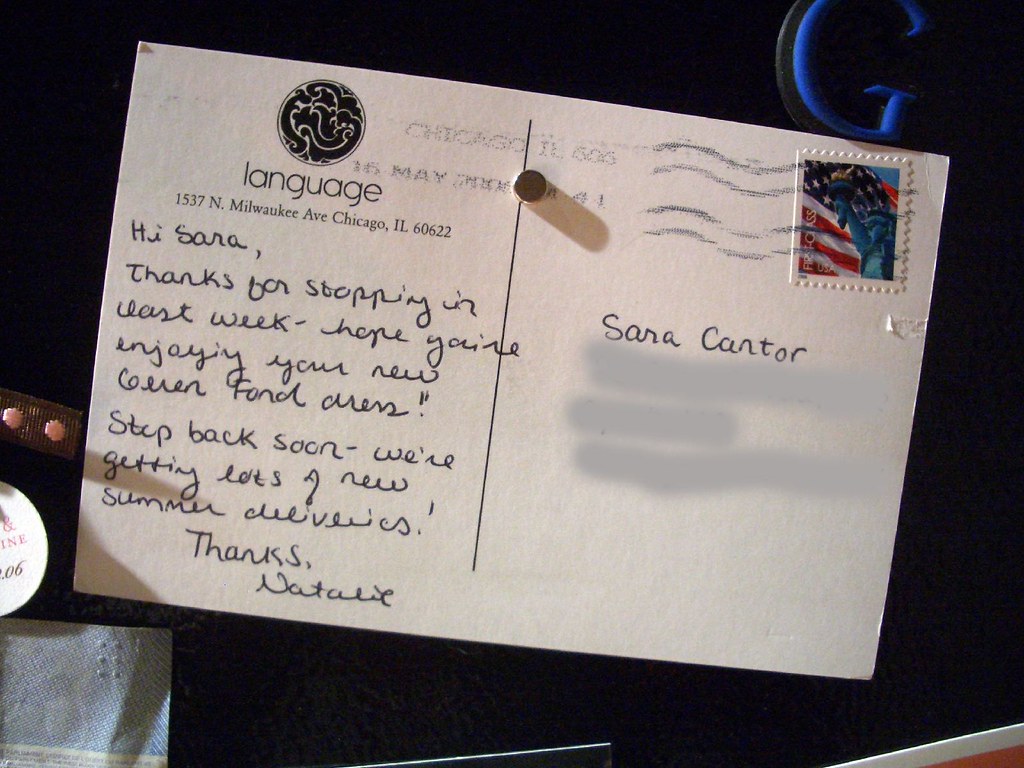
I was still mourning over my bank statement a few days later, when I got a handwritten postcard from Language. Well, technically it was from Natalie.


"Hi Sara, Thanks for stopping in last week - hope you're enjoying your new Geren Ford dress! Stop back soon - we're getting lots of new summer deliveries! Thanks, Natalie."

While some people feel funny about receiving a personalized note like this, I thought it was fine. That dress was my biggest purchase of the year, and I was pleased to know that it was significant for the store too. I felt like an upper-class citizen, like Natalie and I were on a first-name basis. Like I come into Language once a week and drop $350.

But that's the thing. I don't, and I won't. This was a one-time deal, and if Natalie thinks that by sending me a 39-cent postcard I will become a regular patron of her establishment, she is barking up the wrong tree. I mean, the card is nice. It says my name and what I bought. It brings a smile to my face. But that is all. I almost felt bad, like some kind of poser. I wanted to write her back: "Sorry, Natalie, for making you think I'm someone I'm not. I really rarely buy such pricey clothing. You should send postcards to some of my building neighbors, who actually own their apartments."

Plus, quite frankly, the postcard gave no real incentive for me to return. You will be getting lots of new deliveries? Um, yeah, so will every other store in town. How is that motivating for me? I suppose if I were a fashion-crazed trixie I might rush back, but I'm not. So months go by.

---

Six months, in fact. And then I get a card in the mail. Huh. It's from Language. Now what?

This one is way more interesting. Still handwritten, and still from Natalie. Still addressed personally to me. But listen to this:


"We haven't seen you in a while! Please accept this $25 gift card on us - it's good on any purchase thru 12/31/06. Hope to see you soon!"

Whoa. Hold the phone. Stop the presses. What's this? Free money? A tangible gift card? An invitation to spend 25 big ones, just like that? And a call to urgency, giving me less than two months or this note will self-destruct?

This hard-sell tactic was completely different from the first one, and I'm slightly embarrased to say that it worked all too well. I felt compelled by a force, a force greater than myself, to leave my house, walk down the street, enter Language and buy something. This force was strong and unrelenting. This force, I have realized, is called Absolute Dollars.

Because it's not like they sent me a coupon. I have never been much of a coupon clipper, and I think it's because "20% off" has never really felt that substantial. Saving 20% is annoying if I spend a little, annoying if I spend a lot. If I buy Entenmann's crumb cake for $3.99, I'm saving like 80 cents. Eh. Not worth the trouble. And if I buy a lawn mower for $399, I'm saving 80 bucks, but hey, wait a minute, I had to spend $320 just to get the big savings. I've always felt like the currency of "percent off" was misleading and annoying. I realize that the more I spend, the more I save. But the keywords that turn me off here are "spend" and "more." So me and coupons have never really jived.

But this. This was no "percent off." This was absolute dollars. Regardless of how much I spent, I could subtract 25 from my total. I realize that Natalie didn't mail me a 20 and a 5, but it sorta felt that way. How could I let that solid, unconditional quarter-of-a-hundred-dollars go to waste?

Then, I further speculated, what if I bought something for $30? Then it would be like I had a coupon for 83% off! Whoa! And $25 is so much more than the usual coupons I receive, which are measured in cents, not dollars. The card was strange and exciting, and it was burning a hole in my pocket.

---

So here's what happened. I went in yesterday, tried on some pants, and found a pair I loved. They were $175. I proudly handed over my gift card, which brought my total with tax to $160.

Did you get that? I spent a hundred and sixty dollars on pants! Did I need those pants? Eh! Sure, I will love them and wear them, but that's not the point. The store lured me in with free money. But that free money turned out to be less than 15% of the total.

The cold, harsh lesson: everything is relative. Comparatively speaking, Language sending me $25 is like Target sending me $2. In absolute terms, and in the comfort of my own home, it seems like a lot. But in relative terms, and inside the four walls of a very upscale store, it is not a lot. Not a lot at all.

Language cleverly used "dollars" instead of "percent off" to reframe my savings. If the note had said "Please accept this gift card for 15% off your purchase," I would have thought more realistically about the prices of the store. I would have said "Well, great. That's like 15% of a $600 sweater." I would have done the math, and the math would not have been pretty.

But 25 absolute dollars helps you forget about the math. It's promotional genius. It takes a borderline shopper and reins her back in. Like a fish on a hook.

Language, you got me this time. And though I feel slightly duped, I hope your gift card scheme works. You've changed the language of savings (no pun intended) and as a high-end store, it can only work to your advantage.

When I was paying for the pants, I could tell I was one of the first to act on this deal, because the girl at the register had never received a gift card before. I doubt I'll be the last.

9.22.2006

Size inflation


The following dramatization is based on real events.

Woman enters store. Woman spots shirt. Woman checks sizes. Woman identifies shirt of her size. Woman takes shirt to dressing room. Woman finds shirt to be too large. Woman feels elated, then confused.

---

This scenario could happen to you. Perhaps it already has. This series of events is something that goes on periodically in the world of clothing retail, and it's a bit of a mixed blessing. It's called size inflation.

That's right, folks. You thought you were an 8? Guess again! Now you're a 6! Always been a medium? Now you're a small! Hooray, you say as you leave the dressing room to find the item in your new and improved size.

Now I won't name names, but I have experienced size inflation recently at a number of popular retailers. And I'll admit, when I bought my first skirt in a 6, I experienced tiny, temporary glee. Maybe I had lost weight? Or the yoga was paying off? And even though I hadn't changed a bit, and rationally I knew that, some deeply-buried emotional corner of my brain felt good. I would even venture to say that it influenced my purchase decision. "I like this skirt because it's a 6," a tiny voice said. So I can only imagine why stores shift their sizes. They are in hot pursuit of the magic moment when women realize, "Good god, I'm a smaller size!" That's right ladies, you too are a smaller size.

Except, of course, you're not. Your body is the same today as it was yesterday. Perhaps you've been a happy size 10 for years. You are accustomed to your size 10, and it makes shopping easier. So now, when you find that in some stores you are a 10, while in others you're an 8 and in still others a 6, well that's just confusing. With each new store, you have to bring at least two or three sizes into the dressing room. Your old standard is no longer standard.

So why would retailers put us through this trouble? Well, size inflation in clothing coincides neatly with size inflation at food establishments. It's right alongside the Super Size menus, the Big Gulps, the entrees at Cheesecake Factory. As meal portions grow, everything else grows too.

And so, not wanting to be "the only store where I'm still a 10," each retailer periodically updates its sizing structure so that women feel better about buying there. They keep up with the Gaps, if you will. And it tends to work out quite nicely - the women who have grown keep the same size, while the women who have not, go down.

But this is crazy! While other companies adjust according to reality, such as Tupperware making larger lunch containers or airlines adding wider seats, clothing stores are simply shifting these arbitrary numbers called sizes! While it's clever from a psychological perspective, it's also denying reality. It's changing the macro so we don't feel the micro. It's keeping that woman from noticing her own changes.

---

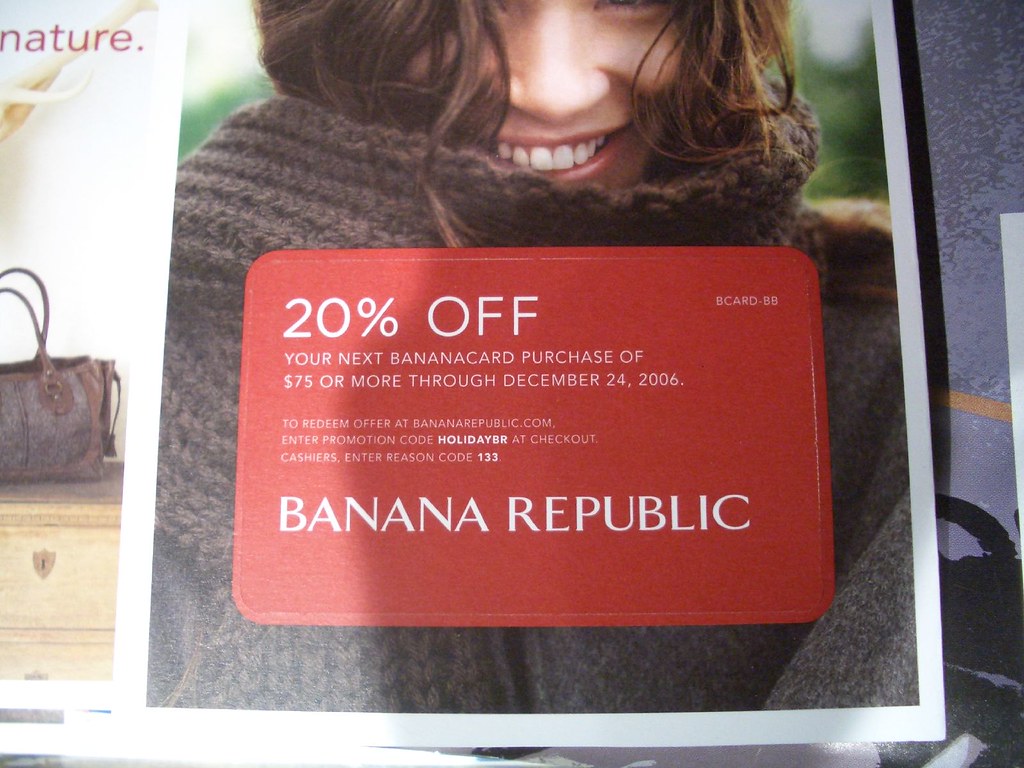
I recently purchased my first-ever extra small top from Banana Republic. I may be on the thin side, but still. There is no way I am an extra small in this world. I didn't feel any joy this time - just annoyance. After trying both a medium and a small, I felt strange when I finally took the extra small and it fit. "If I am an extra small," I thought, "what size does Jessica wear?" (My little sister is far more narrow than me). And who is wearing the mediums that I used to buy? The whole experience was slightly disconcerting.

Depending on which way you look at it, they've made the clothes bigger, or the sizes smaller. It's like currency inflation, and I get it. You follow the trends, and you make adjustments. But I wish there was another way. Because this practice affects women in a fundamental manner. You are messing with our perceptions of ourselves, and prolonging our inevitable facing of facts. It feels artificial because it is artificial.

I think retailers should get together and slow the size inflation cycle. Just add numbers on at the top. Integrate more of the plus sizes into the main lines. It would be a pretty inclusive strategy, and as long as everybody was in agreement, nobody would get hurt. Maybe this is unrealistic, but it's not impossible. Surely retailers would prefer not to go through costly resizings every few years!

People make a big deal over the fact that Marilyn Monroe wore a size 12. Oh, how our standards for beauty have changed, we say. But was she told that her dress was a 4, to make her feel better? I doubt it. There's a reason some members of the industry call this practice "vanity sizing" - we are more vain than ever, and more ready to equate thinness with beauty. Size inflation is just one part of this unhealthy cycle. I'd love to see it end.

8.31.2006

The drowning dog


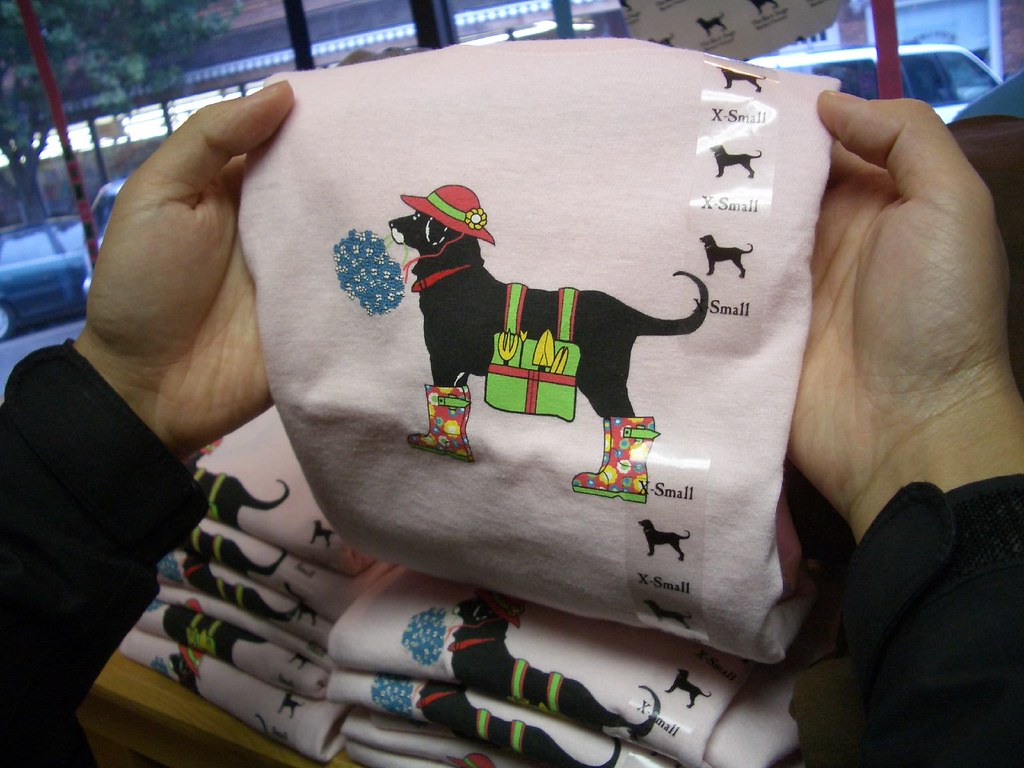
There is a small restaurant in Martha's Vineyard called The Black Dog. It's a quaint, rustic establishment that serves upscale seafood dishes. The Black Dog is a restaurant, and it is a good one. The story could end right here.

But it doesn't, because in terms of merchandise proliferation, this tiny eatery rivals the freaking Hard Rock Cafe.

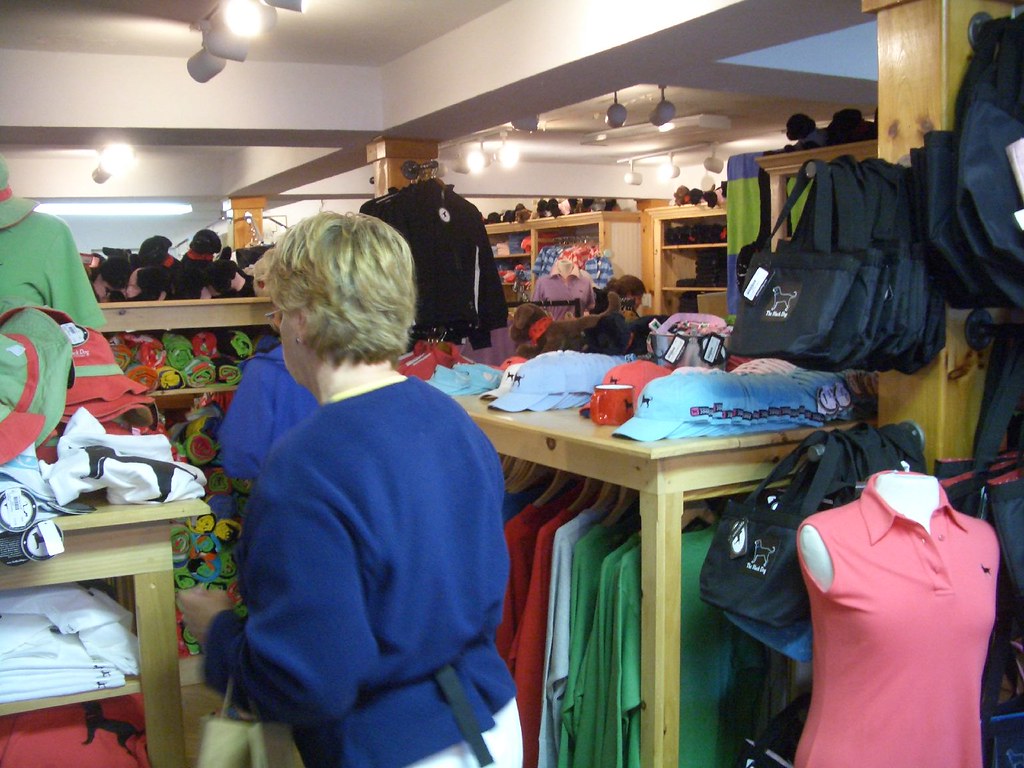
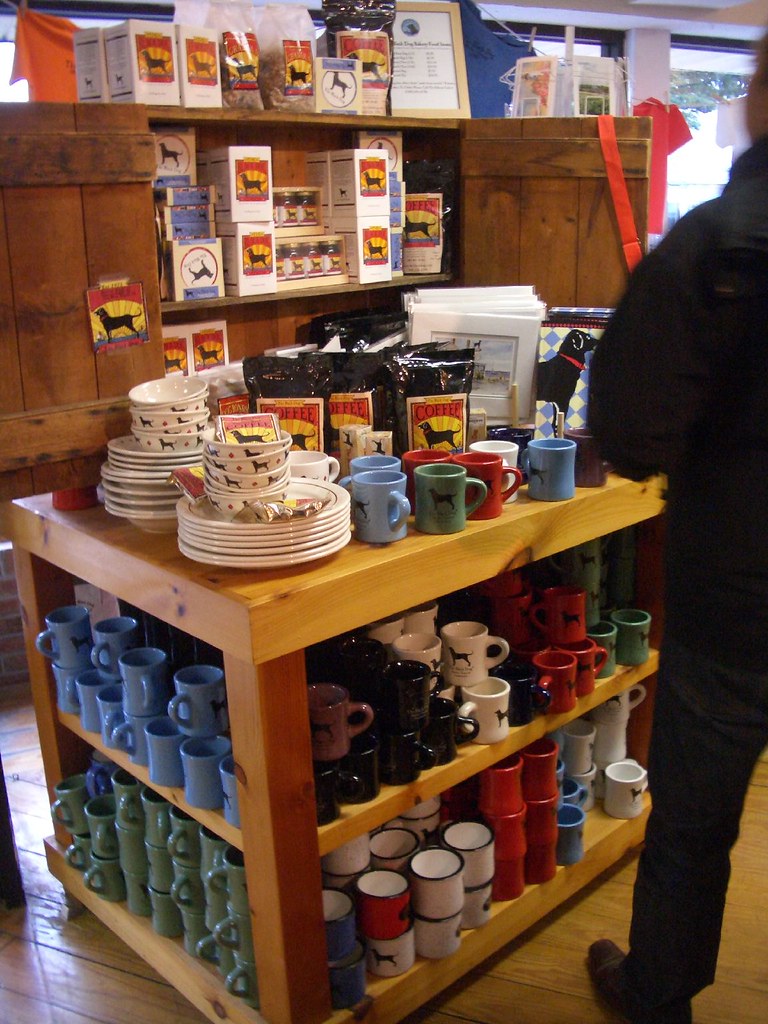
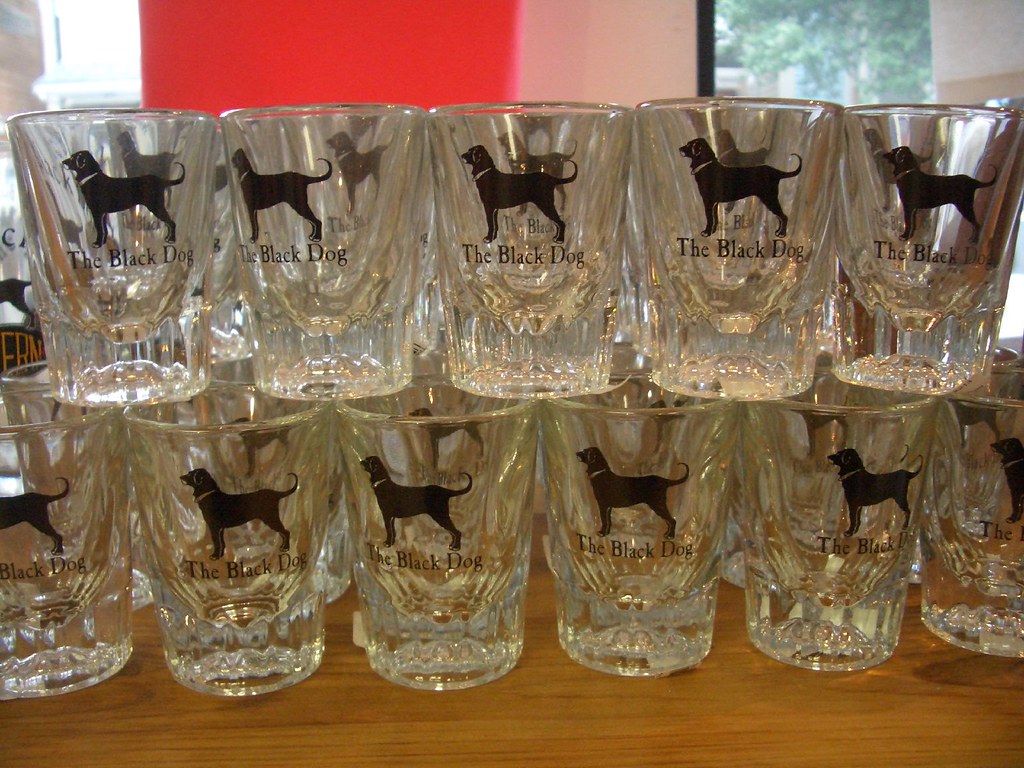
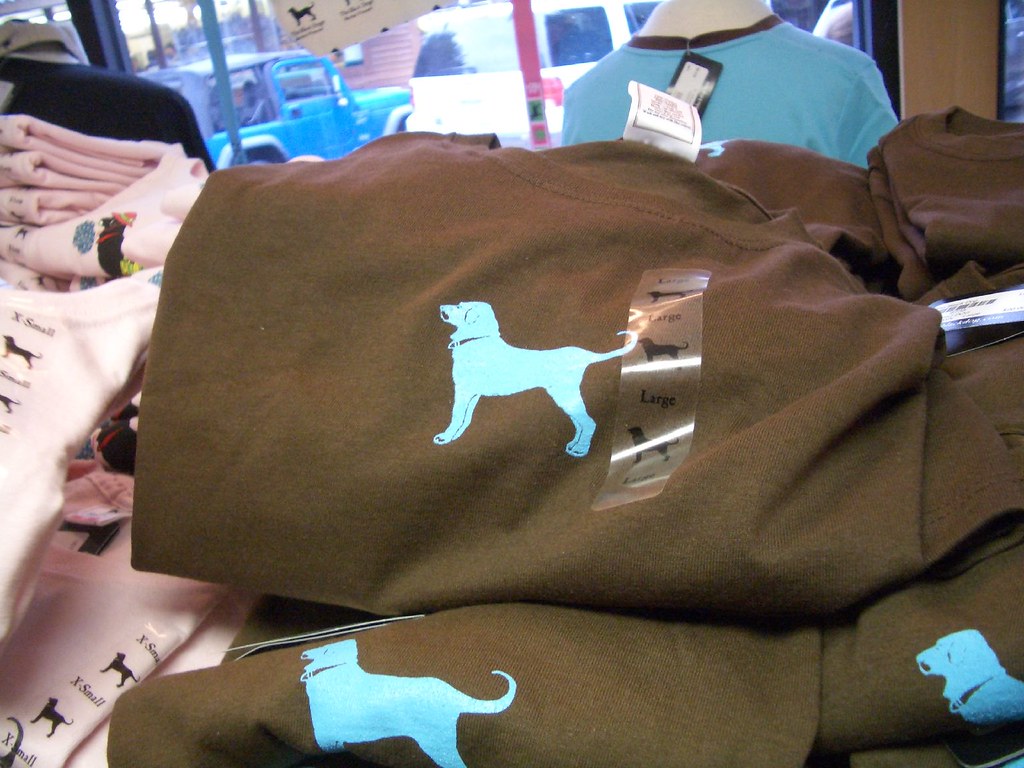
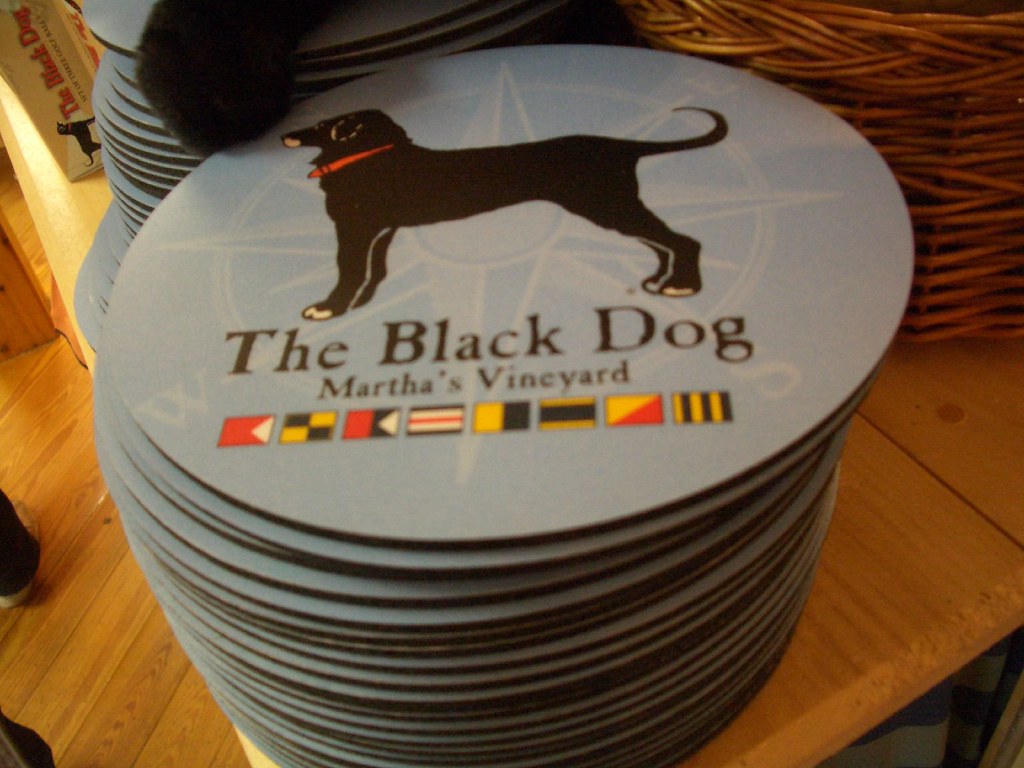
I spent a few days on the island and boy, I just could not miss The Black Dog. It. Was. Everywhere. Shopping bags from The Black Dog. Hats and t-shirts and sweatshirts and bandanas and tote bags from The Black Dog. Kids carrying stuffed animals of The Black Dog. The Black Dog Bakery. The Black Dog General Store. The Black Dog Kids Store. And venture inside one of these stores? Black Dog shot glasses, coffee mugs, cozies and baseball caps and bathing suits and beach towels and people, this has passed the point of no return. (I felt like David Cross on his American flag rant. Eat the Black Dog. Eat it.)

The Black Dog owns a font. It owns a logo. It owns a certain breed of canine. It owns half the real estate on Martha's Vineyard! It basically owns the island, and for most intents and purposes, this is a good thing. For the owners, it's good business. For the tourists, it narrows down their dinner options and souvenir choices. And for the locals, well, there seems to be a constant, unconditional outpouring of love and dollars for anything with The Black Dog on it. People love that crazy dog.

But my question is, why? I spent four days, had about four thousand Black Dog brand impressions, and still don't know what the fuss is about. In fact, I feel absolutely no connection with that silly mutt. Maybe it's because the wait at the restaurant was 40 minutes long and they didn't take reservations, which left me disenchanted. Maybe it's because we ate at the Black Dog Bakery instead, which was overhyped and a bit disappointing. Maybe it's because I saw no real black dog running around, and that was what I was hoping for. Maybe the legacy was just lost on me.

Now I have to assume that the locals know the legend. They've heard the story of the old sea captain, his loyal black dog and his tall ship, and how he provided food to hungry sailors long before there were any year-round restaurants on the island. For more Black Dog lore, its website is chock full of stories. But the stories don't get communicated anywhere in the physical world, and I think that leads to a big disconnect. People are buying products, but they don't know why.

There's an important ratio at stake here: I'll call it the ratio of core offering to fluff. In some places, the core offering is primary, such as an authentic meal at a simple diner. The food is good; end of story. In some places the two are balanced, such as Joe's Crab Shack, which offers a quirky atmosphere, affordable seafood and snarky t-shirts at the front. Part core, part fluff. And then there is The Black Dog, where the fluff is just disproportionately huge. There is one Black Dog Tavern, and there are 12 General Stores.

Now god bless the folks who run The Black Dog, for they must be overjoyed at this level of growth. Their brand is synonymous with Martha's Vineyard - you almost can't board the exit ferry without showing your shopping bag. Furthermore, all brands start somewhere, and the Black Dog's humble beginnings are grounded in a very real, very beautiful core offering.

And I know that it would be hard to replicate The Black Dog's core offering (its restaurant) every half a mile. Nobody but Starbucks can pull that off. Plus, why would they? The restaurant's lure is partially its exclusivity, its scarcity. To add franchises would water it down. I also know that the company is simply responding to demand - hey, when tourists are clamoring to buy your coffee mugs, why not make shot glasses? And so on.

But I think at some point, you have to practice restraint, because the brand just gets diluted. When does that happen? Well, this brand is most certainly diluted when the dog is no longer black. Or when it's wearing random costumes. Or when your line extensions become totally unrelated (I'll buy a beach tote, but not a mousepad!) It's diluted when nobody can get a seat at your tables, so they simply substitute the experience for a store-bought replica. When people buy your stuff but have no idea what it means. When they only buy it because everyone else already has.

Black Dog, I applaud you for your recent expansion. I just hope you can find a way to stay focused on your core offering. You should tell your story, whether by retail design, a museum-like exhibit, books or cultural events or even another restaurant. I want to love you, just like everyone else does. You just have to give me a reason.

8.17.2006

The curious shoplifter


Last week, I witnessed something dramatic.

I was standing in the auto care aisle at Wal*Mart when a teenage boy entered the aisle. He looked about 14, with a very long shirt and baggy shorts. He started fiddling with the merchandise, which seemed odd to me because he couldn't possibly be old enough to drive a car.

Suddenly, a man came up to him. The man was tall, with a shirt and tie and a big official Wal*Mart badge. He was holding a torn-open, empty package of something - I couldn't tell what, but it looked like maybe razors or video games. "Do you know anything about this?" he barked. The boy shook his head no. "So if the police searched your pockets on the way out, they wouldn't find anything?" Again, the boy shook his head. The man stared at him for another few seconds. "All right then." And he left.

I stood staring at the kid, having abandoned all manner of social inhibition. He continued to look at the stuff on the shelves, but his hands hovered nervously around his pockets. Then he glanced at me and we locked eyes. He looked scared.

Finally, the kid left the aisle and he was gone. The man came back a minute later, searching all around between the shelves and under the products, presumably trying to find the item which he assumed the kid had unloaded. After all, the auto care aisle is relatively secluded and if I were trying to hide inside Wal*Mart, it's exactly where I would go.

---

Retail theft is a big, big problem in the US. Professional thieves wear trench coats with inside pockets, so that they can reach their arms into the shelves and sweep out all the product at once. And they go for items that fit their target criteria: small and valuable. High-theft items include traditionally valuable items like razor blades and DVDs, as well as more recently valuable items like cough medicine and baby formula, the ingredients of which are used to make drugs.

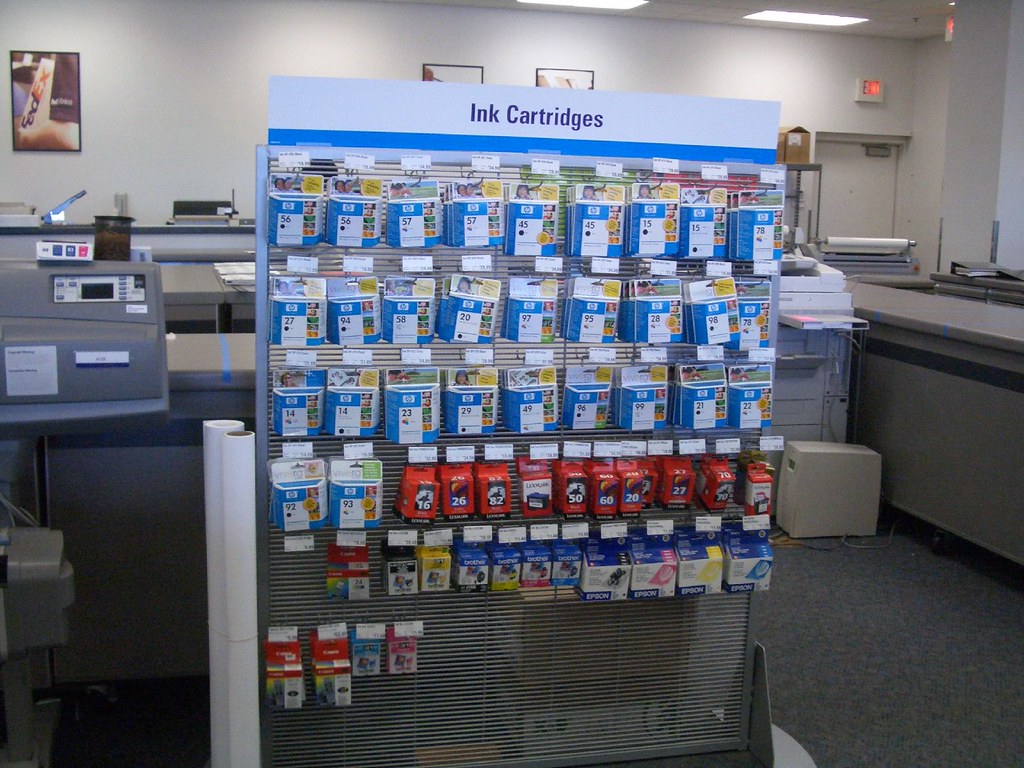
This problem is formally called shrinkage, and many attempts have been made to solve it. You can watch your store - Wal*Mart installs security cameras every few feet, disguised in eerie little domes and suspended from the ceiling. You can secure your product - Walgreens has locked up razor blades for years, and Best Buy ties down cellphones with massive security cables. You can move your product's location - FedEx Kinko's now puts printer cartridges behind the counter. You can install shelf-level security - this solution has clear shelf guards, and if the shopper holds the guard open too long it sounds an alarm!

The problem with all these tactics is that while they deter thieves, they also deter honest shoppers. I hate finding an employee to unlock the case, so sometimes I just skip it. So while theft goes down, sales go down too. But the even crazier thing is that these solutions still provide retailers with a return on investment. Shrinkage causes so much loss that it is literally cheaper for them to make shopping hard for honest people, than it is to make it easy for thieves.

But folks, this is a losing battle. The smarter the stores get, the smarter the thieves get. It seems we are caught in a downward spiral, where the ultimate loss is to the shopping experience. And like any systemic problem, I don't think it can be solved by putting a bandaid on the end state. You have to start farther up the chain.

Maybe it involves communicating trust in your shoppers. Maybe it means treating your employees with respect - after all, half of the loss is from employee theft. Maybe it means going even farther back, to the root causes of the need, and getting involved in the community.

Instead of scaring that kid, which will only make him tougher next time, maybe the Wal*Mart man could have taken his information, called his parents, and invited him to a class on how to be smart with money. Maybe he could have recruited him into an internship program or a Wal*Mart volunteering squad. Maybe he could have sat him down and interviewed him about his reasons for shoplifting. Maybe he could have taken him in the back and showed him the security guard station. Maybe he could have invited him and his family over for dinner. I know these ideas sound crazy, but they aren't much crazier than yelling at every suspicious-looking teenager.

I don't presume to know the answer to this one. It's something that a lot of smart people have spent a lot of time trying to solve. What I do know is that there are some dishonest people out there, but far more honest ones. And if the shopping experience becomes so bad that the honest ones feel their business isn't welcomed, they will take their business elsewhere.

8.12.2006

Billions of pennies


A wise man once told me that retail is billions of pennies. He was my boss's boss, and it was my first day on the job. Needless to say, I was confused. I pictured giant warehouses of pennies, stores overflowing with pennies, people pushing shopping carts through oceans of pennies. What the hell was this guy talking about?

Well, I think I get it now. Retail, at least the mass market kind, is about low margins and high scale. Let me explain.

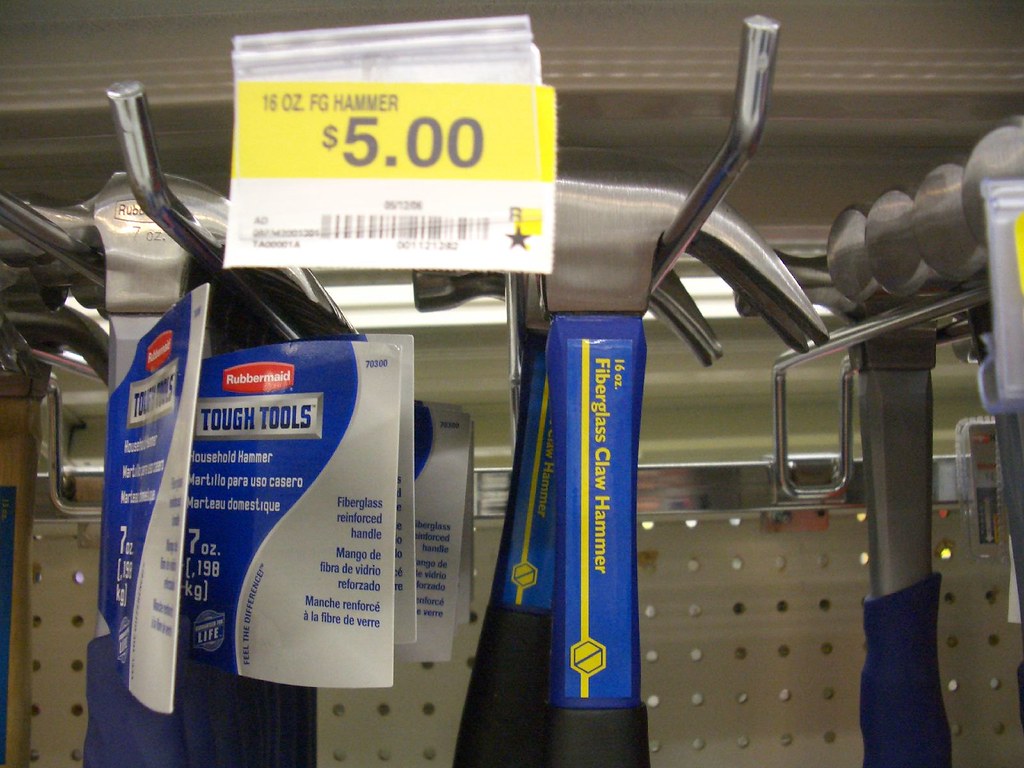
Let's say Wal*Mart sells a hammer for $5.00. Millions of people walk past it, all over the country and all over the world. Of those millions who walk past the hammer, only thousands see it. Of those thousands who see it, only one thousand decide to buy it.

But those thousand people are hardly insignificant. If a thousand people buy a $5.00 hammer, that's a sizable chunk of change. However, let's say Wal*Mart paid the hammer maker $4.78 apiece. So they only make 12 cents on each hammer sold. Hence, they need to sell a lot.

Now let's say Wal*Mart notices that the hammer is selling well, so they raise the price to $5.05. Five more pennies. Not a big difference to a shopper, but that's 17 cents of margin instead of 12. An extra $500 for the store, just like that.

This type of scale is what allows stores to stay in business with twelve-cent margins. If you picture your shopping cart from the store's perspective, they are getting 50 cents on your soap, 13 cents on your apples, 24 cents on your deodorant, and so on. If 600 people buy that deodorant, the pennies add up.

And what we don't think about is that stores are measuring our every move. If you are in CVS and you see a slick new display, some part of your brain says "Ooh, this Dove body lotion looks great!" and you buy one. Did your single purchase make a difference to CVS? Hardly. But you are just one of many. That display caused 20 extra people to buy Dove body lotion in that store. It caused 2,000 extra people to buy Dove body lotion in all stores. CVS made a bunch of pennies off that one.

Our actions at retail are measured with a giant lens. Each time we add one more item to our cart, the store doesn't earn that much - maybe a few cents, maybe a dollar. But with massive scale, our collective actions add up. It's kinda like voting.

I only recently realized the true meaning of the comment, after spending a significant amount of time inside Wal*Mart. They've tinkered with every last price tag, so that instead of a whole shelf of product being $1.99, some items are $1.77 while others are $2.24. Because they are so large, every last cent makes a difference.

Retail is big business, that's for sure. But it isn't always about millions of dollars. Sometimes, it's about billions of pennies.

7.07.2006

The long tail of retail


I visited this magazine shop the other day called the Chicago-Main Newsstand. It looked like a newsstand. But it was not. It was a newsstand on steroids.

My boyfriend was planning a trip to the Big Apple, and he wanted a copy of Time Out New York. I was like, "Why would they sell a local magazine, which tells you about events happening in THAT city, in THIS city?" He was like, "Just you wait - they'll have it."

We step inside, and a tidal wave of magazines seems to be crashing down all around us. So. Many. Magazines. So many categories and subcategories. I counted 29 titles in the Aviation section alone. They had a pets section which, beyond just your standard cat, dog and bird publications, had one for people who raise alpacas! There were two copies of this magazine, leading me to believe there are at least two individuals in the greater Chicagoland area who have an interest in these llama-like mammals!

This store had the wide selection, the obscurity, the long tail, if you will. Stores with this type of niche product can usually survive because they have high margins - think super-posh maternity clothing boutiques like Belly Dance or super-quirky rare and beautiful toy stores like Rotofugi.

But on the other hand, magazines aren't high-margin. What do they cost, three bucks? The shop's proprietor can't be marking them up that much. How in the world is this guy still in business?

Well, if you don't have margins, you have to have sales. But selling lots and lots of cheap things is not a guarantor of success. You could never have a niche store like this survive if it were selling other cheap items, like gum or pens. How long would a pen store be in business? Well, how often do you buy pens?

Then it hit me. Magazines are of a time-based nature. New ones come out on a regular basis. For this guy to own real estate in Evanston, and to ever turn a profit, he must have customers who are using his store like a subscription. Coming in every day, week, month or quarter.

And still, I thought, this is the type of business that the internet will render obsolete. You can surely get all of these titles from magazines.com. But then I realized an even greater element of magazine shopping: it's all about browsing. You stand in there and scan. You pick up. You glance through. You read. People were standing around in this store, and by standing around I mean STANDING AROUND. They looked like they lived there! It's fun to go to a place like this, because no matter your interest, you will find an abundance of cool stuff to check out. And you can definitely get lost in there for hours if you want to.

Good luck, Chicago-Main Newsstand. Your business model is based on the nature of your product, and I'm glad to see you're holding out where others have failed.

Oh by the way - they had Time Out New York. And Time Out London.

7.01.2006

The science of price


My colleague recently shared with me a slightly disturbing story. She was grocery shopping with her 15-year-old son. The boy took the cart up and down each aisle, and when the sign said "10 for $10," he automatically put ten of the item in the cart.

She finally noticed what he was doing. "Honey, you don't have to buy all ten." "Yes I do, Mom. It says ten for ten." "No you don't, you can buy as few as you want and still get the deal."

At the checkout, they confirmed that Mom was right. But is this always the case? A quick call to my local Jewel confirmed that indeed, a "ten for ten" can also be nine for nine or three for three. It just means the items are a dollar each.

My friend's son was confused. On the drive home, he asked his mom, "Why don't they just say 'A dollar each'?" She told him, "Because then you might only buy one or two. They want you to buy all ten." And then he said, "I see. So they are training us to buy more than we need."

Wise words, young shopper. I wonder how many people this fools. Did you know that "five for $8.00" means that the items are really just $1.60 each? Would you have bought all five? I always buy two orange juices when the deal is 2 for $5. I don't really need two cartons of OJ, but somehow the lure of a deal, a special promotion, is too good to pass up. I'm too impatient to do the math in my head, and sometimes I see a twofer and just assume it's cheaper. That can't be smart.

Pricing is a fascinating science. Why do you think everything is $19.99 instead of $20.00? Because $19 is still in the teens, it feels like a lot less than $20. Um, it's a penny less. But that "price point" theory prevails in almost every type of retailer there is.

What's most fascinating to me is how easily manipulated we are. How many times we are seduced by the "buy one, get the second one half off" deal. That second one is still costing you money! You are not literally saving any money - more is leaving your wallet! And rationally, you know this. But shopping is never fully rational, whether we admit it or not. In a desire to break the monotony of picking up milk and bread, we get excited by a deal. We feel we are "beating the system" when we discover ten for $10. We get emotional, and we grab ten items. Then we rationalize it later by masking our extra purchases with the word "savings."

And stores are definitely complicit in this process. By simply omitting information, such as "You do not have to buy ten of this item to receive the discount," they are tricking at least some people. They aren't conveying lies, and no one would win a court case against them, but they are only selling half the story.

You can't blame a store for trying to sell more product. It's their raison d'etre. But sometimes you have to keep that in mind when shopping. You may like the store, and want to support them, but buying more than you need usually means a waste of money, product, or both.

My colleague's son is still young - plenty of time to un-learn these strange habits that retailers have trained us all to have. But unless stores start owning up to their items' true prices, and practicing a little more honesty, he too will grow up having to watch out for ten for ten.

4.02.2006

Ten-stop shopping

How many stores do you really need to go to?

In days of yore, you'd go to the butcher, the tailor, the baker, the silversmith. A trip to the store meant a full day in town, stopping at each of the specialists for what he or she did best.

Then came the general store. Suddenly, all your dry goods in one place. Grains, eggs, candy and newspapers. People got the convenience thing pretty quickly. Maybe you still needed the butcher for that special cut of meat, and the tailor for your new pants, but the general store was a very early attempt at one-stop shopping.

Zoom ahead to 1962. Wal-Mart is founded in Rogers, Arkansas. Slowly one-stop shopping begins to take on a whole new meaning.

Today, in Wal-Mart, you can do your taxes. You can get a contact lens prescription. You can buy a couch, a cellphone, a lawnmower, a shotgun, a watermelon, an Xbox, a 7-night cruise to Bermuda. You can order a birth certificate. You can refill your Viagra prescription. People, the list goes on and on.

But you wanna know something? For all this convenience, Wal-Mart still sucks.

I won't go into the many reasons, but my thesis is this: if you are all things to all people, you are nothing to anyone. You have lost your meaning.

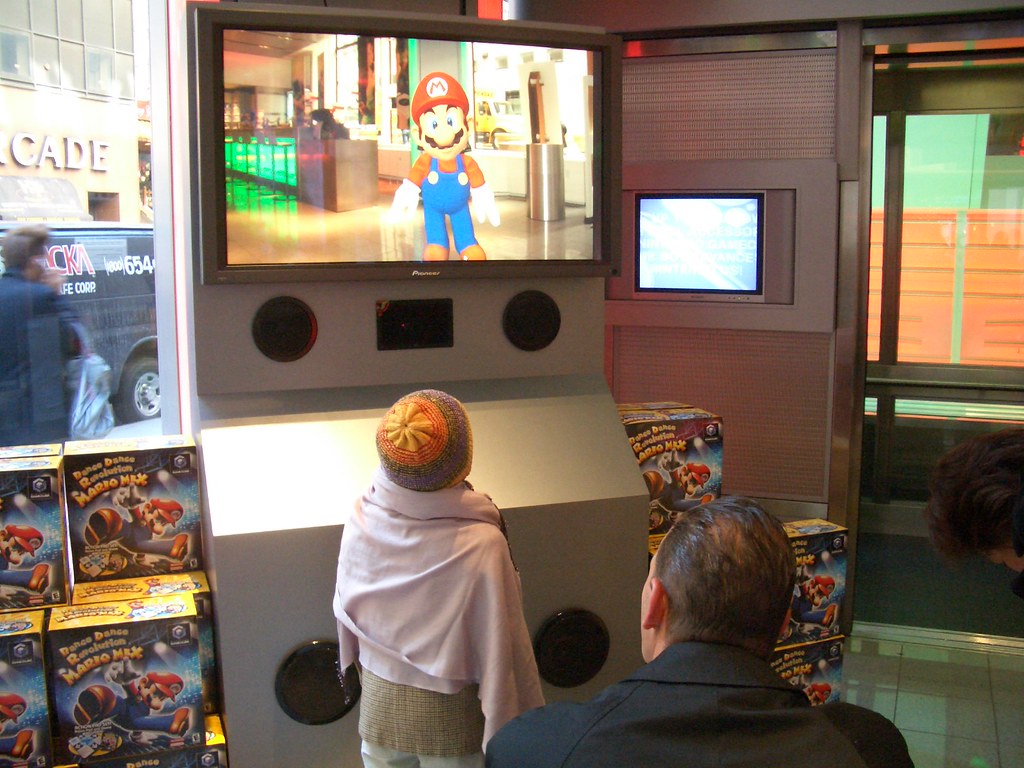
Let's go now to a different part of the world. New York City is ten-stop shopping...the exact opposite of a Wal-Mart. Each time I visit, I'm confronted with some new, nichier-than-niche shop, doing one thing and one thing only. There is the french fry store, the rice pudding shop, the milkshake company, the peanut butter sandwich restaurant. Every brand has its flagship store, from Adidas to Nintendo to Samsung.

Now I recognize that this model only works in places like Manhattan, where 26,000 people fill every square mile. You can stop in each individual store because they are all within your immediate neighborhood. These stores bring back some meaning to the task of shopping. You might have to walk three extra blocks to get a great grilled cheese sandwich. But it's better than the one inside Wal-Mart.

NYC is in direct conflict with the convenience trend sweeping the rest of the country. And sure, Americans are time-crunched. So one-stop shopping will always have its place. As long as Wal-Mart wins on price and convenience, the same 138 million Americans will walk through its doors every week.

But I want people to remember that the small businesses, the specialty stores, the long tail of retail, is where the meaning is. Wal-Mart is cheap and easy, but its environment defines generic, its employees the epitome of apathy. It's the little stores, that do one thing really well, where meaning is found.

3.07.2006

Our top five

I just learned an interesting tidbit from my day job as a Retail Planner. The top five items purchased in a grocery store are...drumroll...

Milk.

Eggs.

Bread.

Bananas.

Soda.

Interesting. I am super happy to see that milk, my all-time favorite beverage, is still topping the list. It gives me hope that Americans will hang onto their health. I'm likewise sad that soda, my all-time least favorite beverage, is number 5. It's beating out many tastier, more nutritious items. Do we really drink that much soda?

And sure, I understand eggs and bread. Eggs are like the backbone of America. We all grew up with eggs for breakfast. And bread - well, who can argue with bread. Even with the Atkins craze coming in and out of our consciousness, bread remains a mainstay of the all-American lunch.

But bananas - who knew? I guess they have some good things going for them - they're ready-to-eat, they tell you when they're ripe, they are quite filling, they come in pre-packaged bunches, you don't need to wash them, and if they get old, you can always make banana bread.

So this list is a little generic, but it represents the country as a whole. What I'd love to know is, what are the top 5 items that I buy in a grocery store? I'm sure Jewel knows this - they have my Preferred Card data stored away somewhere - so wouldn't it be more interesting if they could share it with me? I would be super curious to see how my buying patterns have changed in the 8 years that I've had the card. Did I used to buy more mac and cheese? I think I did. Have I gone through phases with orange juice? It seems like I was into it for a while, then it left my list, and now it's back. Have I gotten healthier? Less price-conscious? Better at finding good deals? What are some of the things I used to love, like cottage cheese, that I have simply forgotten about? I would love to be reminded of what I used to buy.

In this world of pervasive advertising and marketers desperate to generate word-of-mouth cred with "persons of influence," I think the most influential person to me would be, me! So sure, tell America what America is buying, and we will all go "Ohhh, interesting." But tell me what I am buying, and I will most likely buy it again.

1.24.2006

Costco is not for me

Last night I went to Costco. It was a wonderland.

It wasn’t the first time – I used to go with my mom when I was a kid. I liked it because there were always nice ladies with little samples of food, and giant shopping carts, and because it felt like a big playground full of hilariously humongous stuff. I especially loved the monster-size Hellmann’s mayonnaise and the double boxes of Cheerios.

And now, going back as a shopper, I am even more aware of Costco’s smart retail strategy. If you make it bigger, people will buy more.

So Costco negotiates special deals with all of its suppliers, in order to get “exclusive” products. Not new things, just bigger things. Like the 3-pack of Oil of Olay bath soap for $9. Normally one of those bottles would be $6, so it’s obviously a great deal. You just have to have the space in your bathroom.

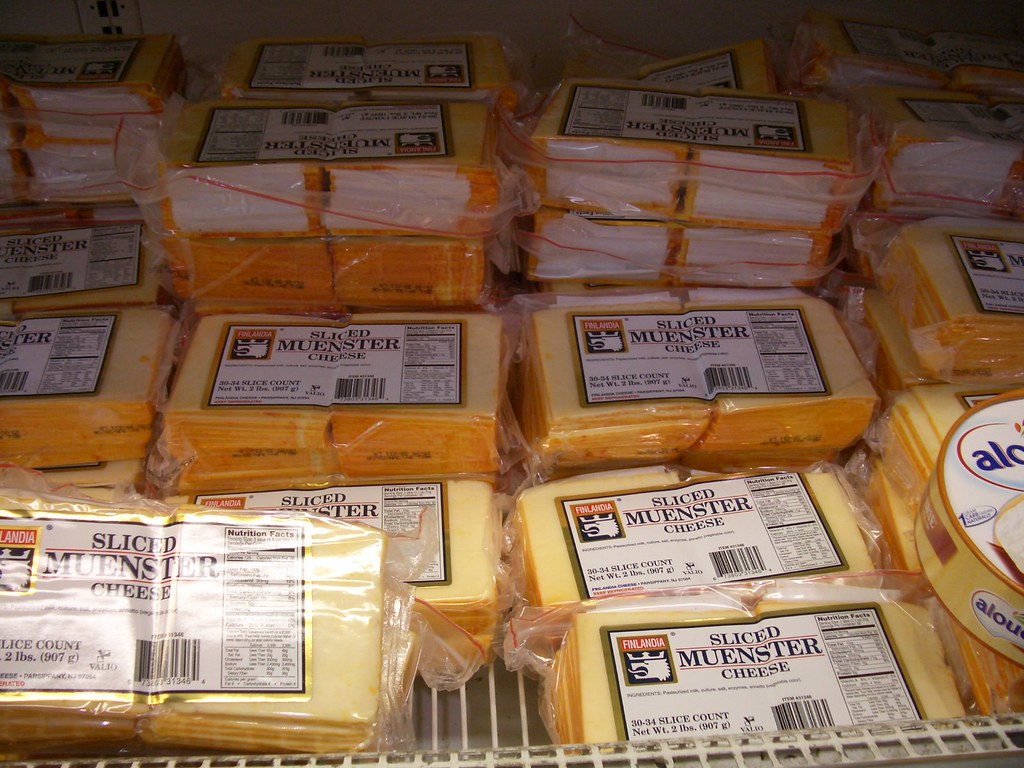
But therein lies the problem: you have to have the space in your bathroom. Or your kitchen. Or your garage. For a city-dwelling, apartment-residing Chicago yuppy like myself, Costco’s sizes are just too big. I can’t fit 40 jumbo rolls of toilet paper in my small cabinet in my single bathroom. I won’t eat 30 slices of muenster cheese before they go bad. I definitely won’t finish 36 chicken sausages - even if I freeze them, I'm only one person! I’ll get sick of them after eating four!

Which leads me to a sad yet inevitable conclusion: Costco is not for me. I don’t eat a lot, I don’t store a lot, I don’t consume a lot. I don’t need anything bigger than it already is. I am not a small business owner, nor am I a mother of four living in a McMansion in Schaumburg. Costco is just not for me.

But why can’t I be content with this conclusion? Because it’s not fair. I want to pay 30 cents an ounce for soap, not double that.

I would like Costco to set up a store-within-a-store. Similar to the sample section in grocery stores. Except instead of tiny containers of band-aids or bugspray, it’s just normal sizes. Just regular, average-sized bottles and boxes, but at Costco’s low low prices. They’ve got the negotiating power with their suppliers to make it happen.

However, here in America, I worry that this might serve a market of one: me.

Does anybody else wish they’d make things smaller? Might Costco be missing out on a huge revenue opportunity with the smaller-home, smaller-diet, smaller-consumption customer? (They could call it Costco City!)

Right now, I would be totally willing to pay the $45 a year to become a member of their store. But I won't, because right now, Costco is not for me.

1.06.2006

The impulse pineapple

So there’s this part of retail that everybody knows about, but nobody thinks about. It’s called the Impulse Section. Generally located right up front by the registers, you basically can’t avoid it. While waiting to pay, a thought mysteriously materializes out of nowhere – “I like gum. I will get some.” You hadn’t planned to buy gum, but there you are, fishing for the extra 89 cents. You crazy, impulsive risk-taker you.

Now, while most of us buy impulse items from time to time, most stores don’t really take advantage of the impulse department. There are a few commendable exceptions – once while standing in line at H&M, I watched two separate women in front of me each pick up, consider and then buy these cute, ruffly, $6 umbrellas. Now that’s smart impulse because an umbrella is an often-overlooked-yet-to-some-degree-life-saving accessory.

But usually impulse consists of candy, gum, magazines, soda, batteries and maybe a random weird thing like the Dueling Banjos Chipmunks (which I once bought, on impulse, at a Walgreens). The section is full of afterthoughts and accessories. It's stuff you don't need. It’s totally unplanned and often irrational.

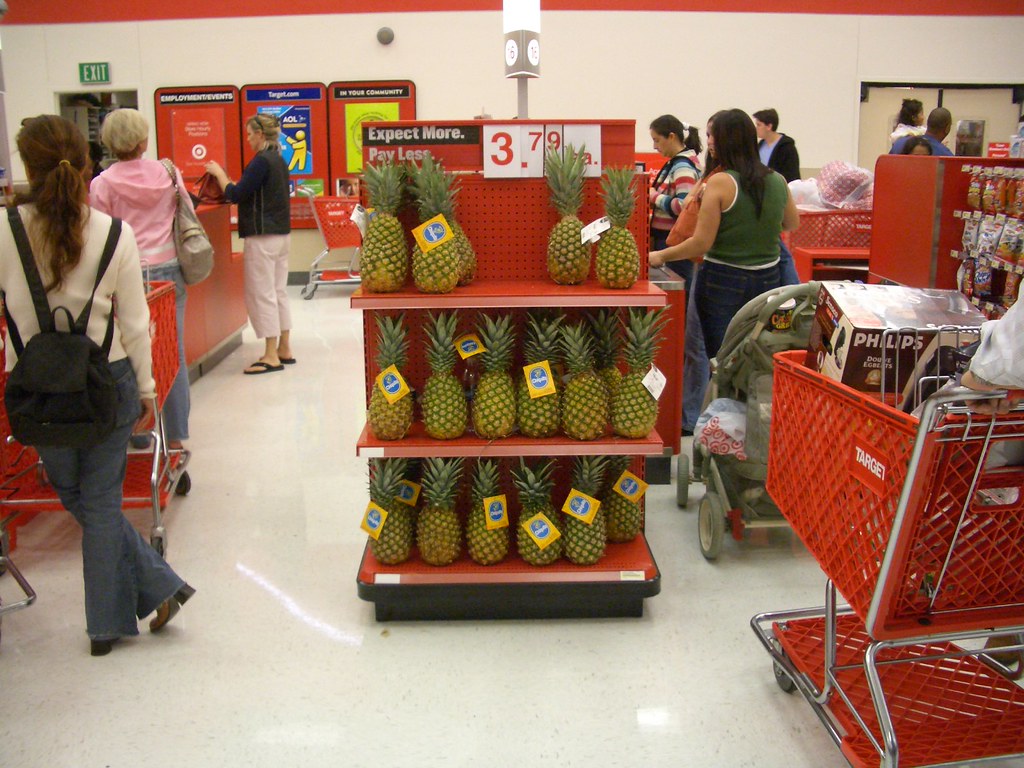
That is why, last week in Target, I was surprised and delighted to see a big rack of pineapples right up at the register.

Just imagine the shopper's thought process. “I like pineapples. Huh. I never thought of buying a pineapple before. But here they are, I can just pop one in my cart, and maybe put it in my kitchen. Make it into a fruit salad. Perhaps throw a tropical party."

The pineapple is such an unlikely candidate for impulse, and looks so out of place, it's hilarious. Unlike a Snickers bar, you can't open it right now and take a bite if you're hungry. Unlike gum, it's not convenient to just grab and pop in your purse. Unlike batteries, you don't need it for anything! It has neither the entertainment value of magazines, nor the thirst-quenching perceptions of soda! It's a pineapple!

But I think that Target is onto something - they usually are. Why keep impulse the way it's always been? Why do things like every other store, just because it's safe? I think safe is an endangered species, and I think Target does too.

So maybe Target had a surplus and needed to move some giant fruit, fast. Maybe Target knows that pineapple rarely makes the shopping list. Maybe Target realizes that its key shopper, the young mom, wants to feed her family healthy food and that a pineapple is a great way to remind her about fruit. Maybe Target saw that shoppers didn't like to carry a pineapple around the store in their baskets (they are kind of precarious). Maybe people are buying toilet paper at Target, but getting produce at the grocery store, and Target is trying to bolster its fresh food image.

There are a million possible reasons, but who knows. Maybe Target is just fun and quirky. I see some empty spaces at the top of that display - looks like someone's already made the impulsive pineapple decision today.

11.10.2005

Soap and karma

So there's this amazing soap store called Lush. They sell more than just soap - cosmetics and bath bubbles and massage bars are part of the lineup - but really, when you walk in, you're in a soap store. Except that it looks like a deli.

Everywhere you look, on wooden platforms of various heights, are giant hunks of soap. Huge blocks that look bright and tasty enough to eat. There are big chunks, small chunks, balls and bars and sticks of soap. There's even a giant Jello blob - made of soap. Your sheer instinct is to cut into a giant block, break off a big piece, and take a deep whiff of its fruity scent. Lush is so tactilely stimulating that it's overwhelming. In a good way.

I saw a product in Lush a year ago, at the store on Newbury Street in Boston. It was called something like "Milk soap." It smelled amazingly delicious. Unfortunately, I didn't buy it right then, but I figured I'd get it another time.

However, a year has gone by, and I've been to three Lush stores in three cities. None have carried my product. When I recently visited the Lush in Toronto, I asked about this specific product, and the woman filled me in on a very strange business practice that Lush employs.

She said, "We run on karma." Apparently, according to this source, Lush has a resident Karma Expert, who "gets a feel" for which products should stay in the stores, and which should go. And quite often, the products she pulls are the most popular ones. The woman further explained, "The company believes in a sort of Buddhism, which says we shouldn't get too attached to material possessions."

Okay, hold up. Sure, I agree that life's too short to get obsessed with your stuff. And sure, I buy the idea of karma, the version I know, which says that what goes around comes around. But you are a business! Since when does it make sense to systematically discontinue your best-selling items?

Now, I have heard of this phenomenon in other arenas. Zara does an amazing job of rotating product like, once a week, and that keeps customers coming back way more often than the industry average. Fine, I get it, it's the thrill of the fashion hunt.

But how often do you buy soap? Every two months? For a soap store to cherry-pick away its top items makes NO sense to me. People love those products! Is the goal for them to say "Oh hell, I didn't like that product anyway" and switch to a new one? Because while some people embrace that kind of change, I don't.

I want my milk soap.

I'm happy for Lush that it's doing so well, especially given its little comeback story on the website. But come on, guys. Your karma expert might be at peace with the world, but to me she's just spinning bad business.

9.06.2005

It's not really money

Chicago has a posh downtown mall called Water Tower Place, and on the ground floor is a cafeteria of sorts called Foodlife. It's a unique concept: instead of paying at the beginning, like most cafeterias, you get a plastic "Foodcard." As you order dishes at the various kiosks, each attendant swipes your card. Then, you eat. You don't even open your wallet until the end, when you tally up your total and pay.

This interaction is liberating because you don't have to think about money. You just hand the guy your card and voila - dinner. It's fun! I bet people love Foodlife because it's a stress-free place. Low commitment. But I think that the concept of a Foodcard - or any currency-free zone - could get a little risky.

I've been to the Taste of Chicago, and I've been to Dave & Buster's, and both do something similar. They make you pay up front in order to use their alternative currency.

At the Taste, you get tickets. You buy a bunch of them, but then it's so confusing to keep mentally converting tickets into dollars when each ticket is like $1.75 that you just say "Okay fine! I'll buy the lobster roll for 9 tickets!" And you end up spending waaaaay more than you would if you knew the lobster roll was actually $15.75. It's the same at D&B - if you want to play video games, you put money on a Power Card and never look back.

I think that the concept of a currency-free zone is a little scary because it takes advantage of people. They subconsciously think, "I am not spending any money right now, because I do not see any cash leaving my hands." Then they buy more. It's like any credit card or bank loan, but on a micro level. Very easy to abuse.

When places make spending money fun like this, people will spend more. And don't get me wrong - I think there's a huge opportunity here to make spending fun. Convert your dollars into stickers or punchcards or stamps or toys, and spend away! It's not money, it's just chips at a casino! It's not really dollars, just a fun plastic card!

But as consumers, we're going to have to control ourselves when using alternative currency. We can't let Foodlife lure us into getting dessert every time. Because even when it's all dressed up, it's still our hard-earned dough.

8.29.2005

The Crate & Barrel woman

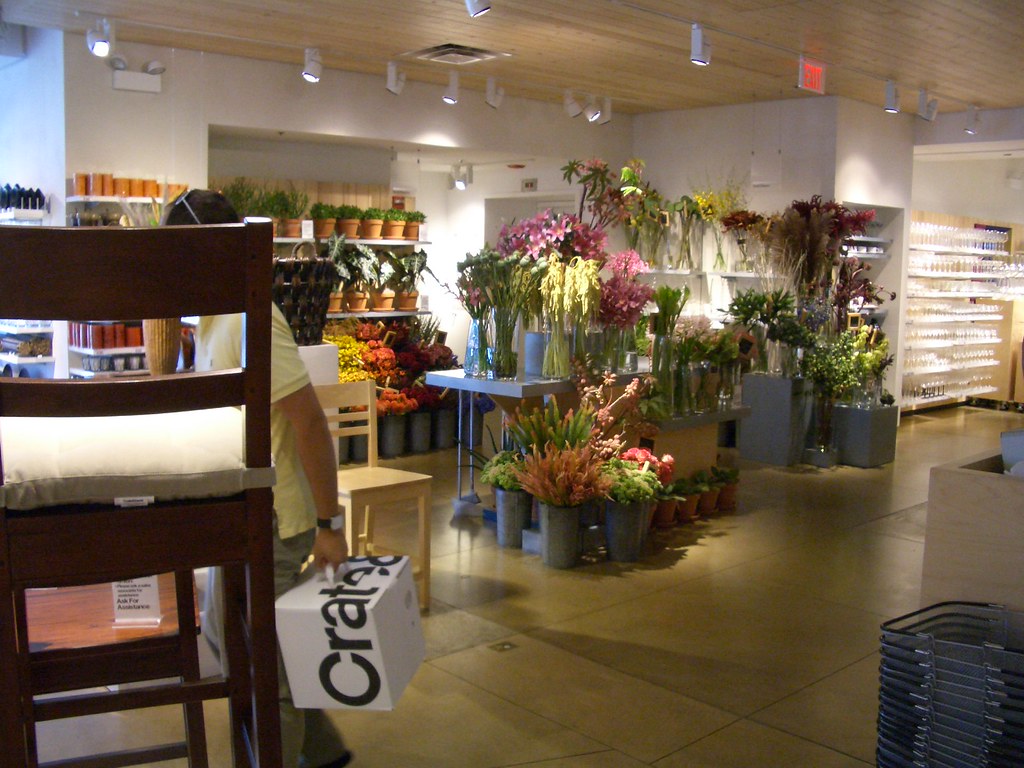
So I was in Crate & Barrel this weekend, and I noticed something new. They have a whole section of fresh flowers. Hang on, what? Daisies and roses? C&B sells non-perishable items like salad tongs and shag rugs! But if you think about it, the section actually makes a lot of sense.

Now a store like Crate & Barrel is pretty amazing at selling beautiful, mainstream, expensive home goods. But these kinds of items can sit on the shelf all season. To add a fresh section, where the products die in four days, must have meant a shift in the business model, not to mention the supply chain. So what's with the flowers?

I tried to imagine what flower bouquets have in common with the rest of the store. It's not immediately apparent, but there are a couple connections.

Number one, flowers and home goods are both occasion-based. You go to C&B when you're having a dinner party and you need a nice butter tray or soup ladle. What do you also need at a dinner party? That's right, you need flowers. Flowers for yourself, to freshen and brighten your home.

Number two, these offerings are both targeted squarely at a particular type of shopper: the upscale woman. Specifically, the upscale woman who buys herself flowers. Who buys herself flowers? A woman with confidence in herself, pride in her home, and money to spare.

Now, a fresh bouquet of flowers has historically been relegated to a) the husband on Valentine's Day, b) the college kid coming home for Christmas or c) the sympathetic family member sending condolences. All these occasions make flowers difficult - they are a last-minute excuse for a present, or they are hiding guilt, or they are trying to brighten a sad situation.

But in Crate & Barrel, the focus is on the shopper, this Crate & Barrel woman. Maybe she's having a dinner party. Or maybe she's having a quiet night at home. But either way, she is buying flowers for herself. She's empowered in the same way that women felt empowered to buy diamond right-hand rings a few years ago. She's giving herself a little personal indulgence.

I think that flowers in C&B makes perfect sense. They subtly complement the more permanent pieces in the store, they are consumed on similar occasions, and they are aimed at the exact same type of shopper. That elusive dinner-party-hosting self-loving indulgence-splurging happiness-purchasing Crate & Barrel woman.

6.28.2005

A symbiotic relationship

So there's this hip Thai restaurant in Lakeview called Pingpong. Tiny seating area, sterile white walls, one orange fish swimming in a bowl, superloud techno music, gorgeous Asian hostess that might be a man, you can't tell. It's usually booked, but sometimes you can sneak into a table in the outdoor seating area.

Pingpong, however, is BYOB. It gets mixed reactions. I think the concept is great for some people (I can bring whatever I want and it's gonna be cheaper), and not-so-great for others (do I have to go find a liquor store? I just want to order a nice bottle of wine).

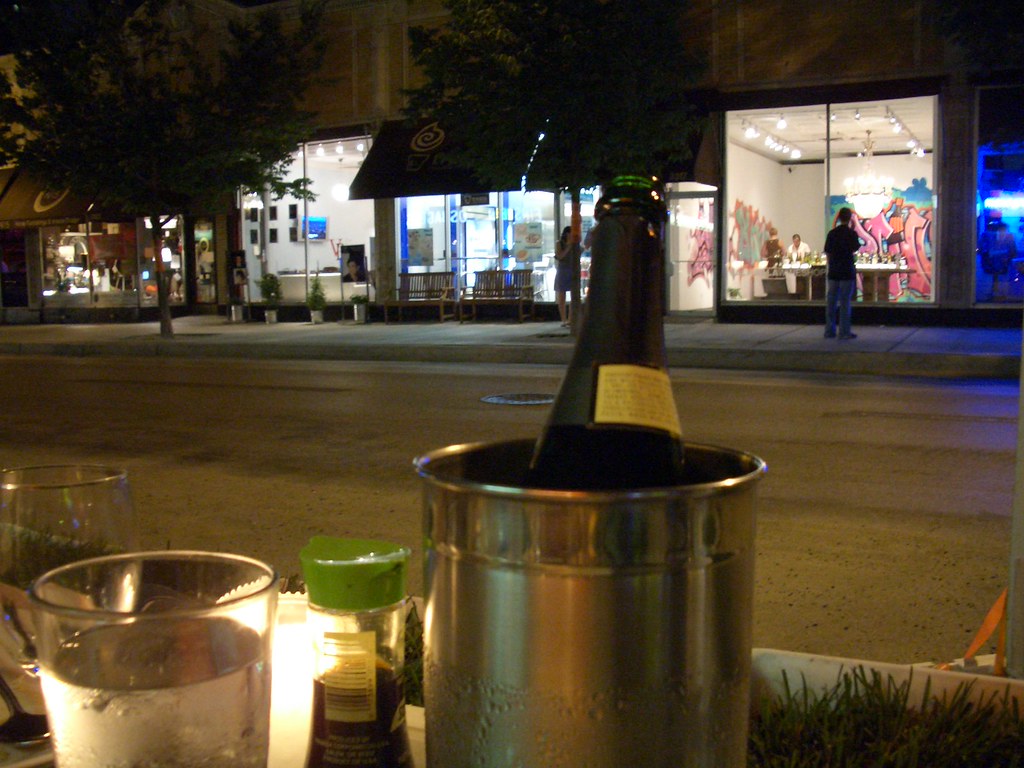
This is why Pingpong has such a genius setup. Right across the street is a wine store called Valhalla. Equally posh, equally funky, Valhalla has bright graffiti art on the walls, a hipster staff and a great range of wine at decent prices. It's smart because it meets the needs of both customers: the "I love BYOB" and the "I hate BYOB" types. Cheap, good selection and it couldn't be more convenient.

Here's the secret: the two places have the same owners. If you BYO Valhalla wine, Pingpong will waive the corkage fee. In fact, they quickly take your bottle, bring it back chilled and pour your first glass. It's great.

I don't know how the dual storefronts evolved - perhaps Pingpong couldn't get a liquor license, or the owners wanted to sell wine outside of a restaurant setting. But somehow, it remains a sweet little neighborhood secret that the two are linked, and the setup works. Pingpong benefits from Valhalla, and vice versa.

How can this symbiotic model be replicated? What kinds of stores would benefit from "adjacencies," or complementary stores right next door? I've heard of a few pairings - the video store/tanning salon, the movie theater/restaurant, the Starbucks within a Barnes & Noble. Where else could this go?

I could see the candy store next to the bank. Didn't they used to give kids lollipops at the bank so they'd be quiet? This would create a whole new level of happy kids. They'd turn into lifelong customers of that bank.

I could see the bike shop next to the car dealer. Bringing in your car for service again? Perhaps you should think about getting a bike instead. Or, does your bike need new brakes? Maybe you want something that can move you a little faster.

I could see Victoria's Secret opening up shop next to The Sharper Image. Or, substitute any store targeted at women, next to any store targeted at men. Dang those couples, they always shop together.

What other adjacencies make sense to you?

6.15.2005

Design within reach

So there's this store called Design Within Reach. The way I understand it, the goal of DWR is to bring design to the masses. To take well-designed furniture off its pedestal and make it more accessible to you and me.

This is a great philosophy. But where DWR goes wrong is that its products are far from "within reach." People call it "Design That's Totally Out Of My Reach." I can't afford a $1000 coffee table on wheels, can you? (Oh, and act now because that's the sale price).

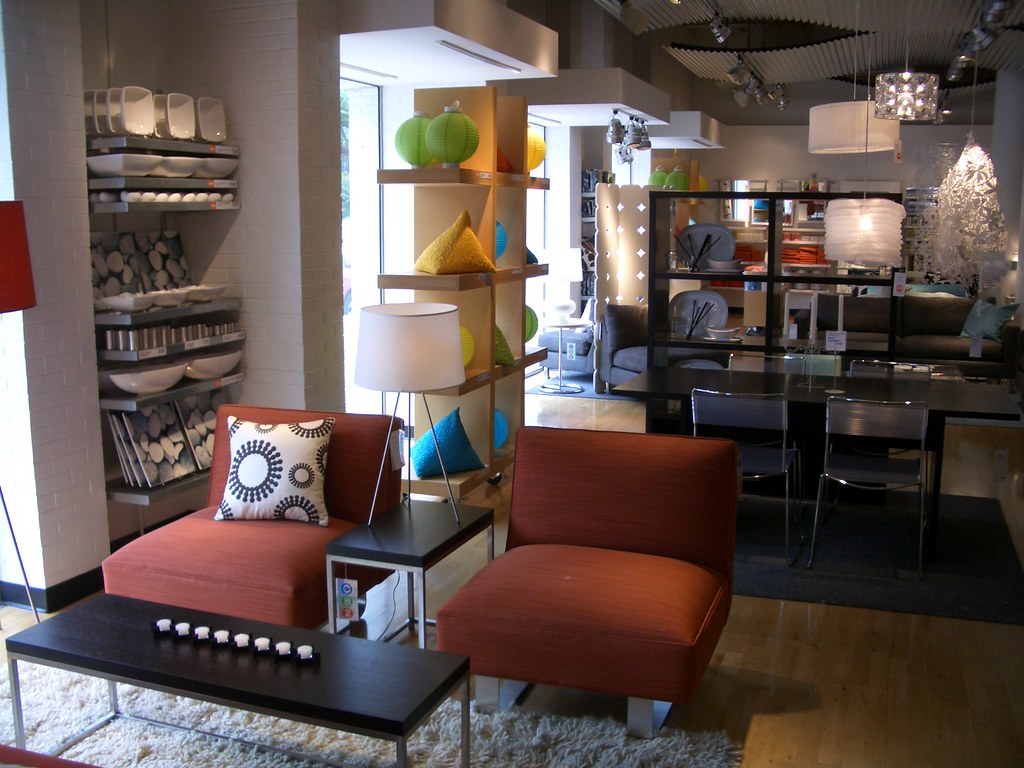
But I'd like to call attention to a design store that is actually within my reach. It's called CB2, and it's a part of Crate & Barrel. There are only two stores, and they are both in Chicago. They are fantastic.

CB2 does eight trillion things right, but what I feel they do best is truly embody "design within reach." Each item is displayed in a way that makes it seem unique (even though it's most likely a knockoff of something from DWR). Walking through the store is like moving through twelve different really cool people's living rooms. Each setup is a collection of products, some more expensive, like a big shag rug, and some really cheap, like tealights. CB2 makes you feel like a great interior designer, and that even if you just bought that orange watering can, you would be bringing home a piece of the hip store environment.

CB2 sells a $149 coffee table on wheels. It's remarkably similar to the one from DWR. Is $149 within your reach? It's certainly within mine.