Showing posts with label experience. Show all posts

4.11.2008

The devil you know

I recently became a responsible homeowner! The process was full of twists and turns, such as a 4-month delay in construction, but I am finally home. The place is great. Sorry for the lack of posts.

As part of my new status, I feel invested in not only my condo, but my neighborhood too. I have a sudden urge to support local businesses. Probably because if they win, I win. So I'm seeking out the local restaurants, drycleaners, nail salons, dive bars and flower shops.

But grocery shopping - well, that's different. I know my old Jewel so well I could fill my cart with my eyes closed. So I'll admit, I've been going back to the old store, in the old neighborhood. It's just a few minutes out of my way.

---

People don't like change. Especially when something is good. But even when things are just okay, we typically prefer the devil we know. We sacrifice convenience or comfort or even excitement, in order to avoid change. We do crazy things, like continuing to use our old hairstylist in our old hometown, ten years after we left for college! Because letting a new person cut your hair - well, that's a huge risk.

And resistance to change is virtually part of our DNA. The Massive Change exhibit talked about how ancient man was hardwired to fear change in nature, because it literally signaled near-certain death. So we're not just homebodies or stubborn. Change is hard for us humans.

---

So there's this grocery store just a few blocks from my new house. I'd seen billboards for the place as I drove, but never really given it serious consideration. The signs say things like "Welcome back to the days of good advice from your grocer." They show a balding man with an apron and a smile. The logo has a 1950's soda shop sensibility. Does it appeal to me? Meh. My first reaction was, "They probably carry a bunch of obscure products and no-name brands. I better stick with Jewel."

However, when a neighbor mentioned that the store was decent, I gave it a second thought. I mean, it's only a few blocks from my home - way closer than Jewel. And I certainly don't get advice from Jewel, old-fashioned or otherwise. Maybe this store did fit my values. It was at least worth a try.
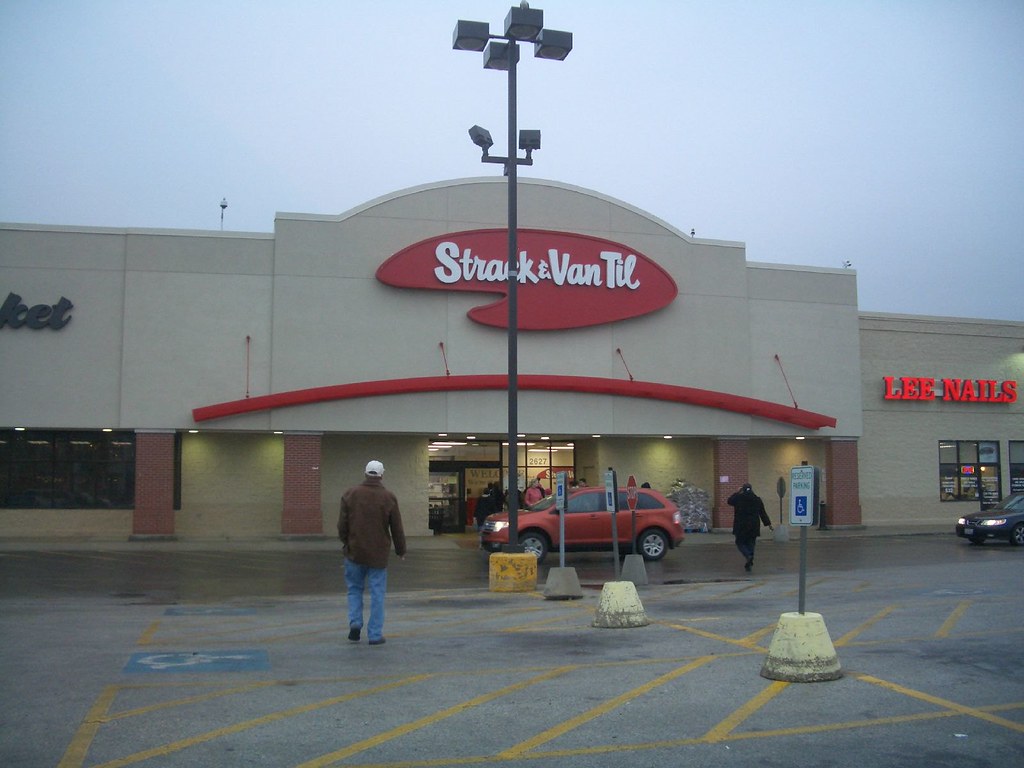

So I walk in, and the store is humongous. I'm talking Wal*Mart-sized aisles, and Costco-high ceilings. More warehouse than soda shop. This inspired a mixed reaction: Sweet, maybe their prices are low, followed by Ugh, I'll have to weed through zillions of products. My first thought was definitely not "local grocer." Where was the produce guy spritzing the tomatoes? Where was the pimply teenager sweeping the floor?

Besides comparing the store to its own branding, I also found myself comparing it to Jewel. But in this regard I was further disappointed. I spent a full hour wandering Strack & Van Til that first time, head up, taking in every sign. You might say I was mapping the store's layout to my mental blueprint of a grocery store. And when it didn't match up, I kept thinking, "This isn't where Jewel puts the cereal" and "This isn't how Jewel does its endcaps."

But it didn't seem fair to compare the store to competitors or branding. I was on a search for authenticity, after all, so I decided to run a little test.
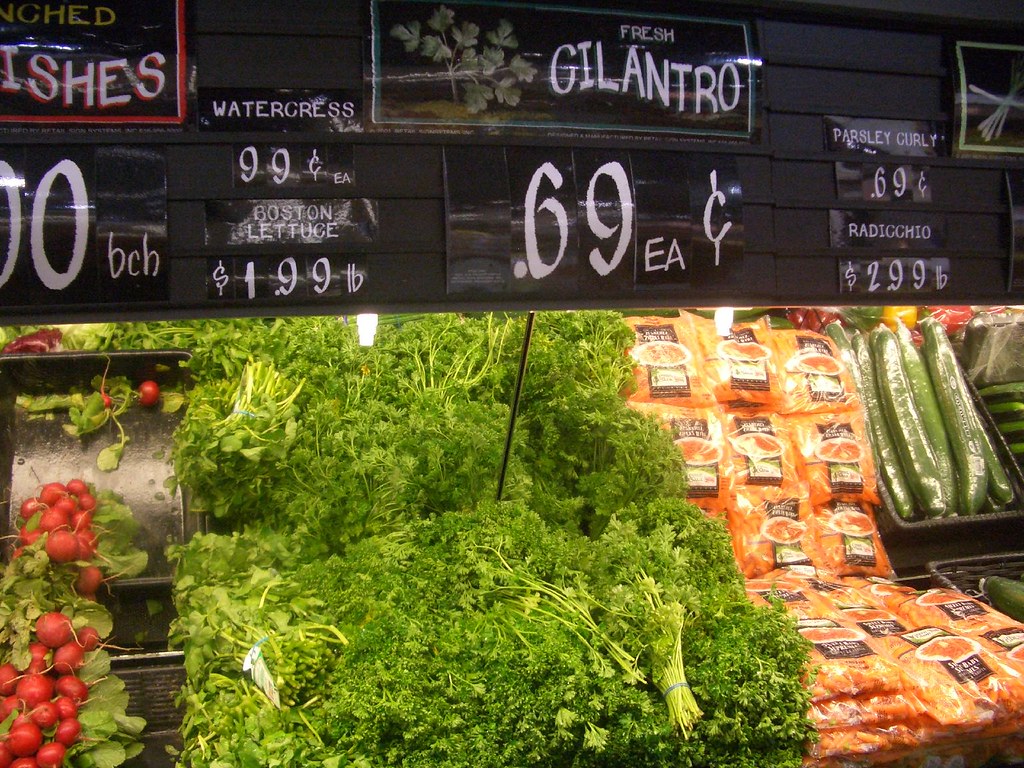

As I navigated the produce section, I came upon the fresh herbs. Now typically, I don't buy fresh herbs because of the waste. No recipe requires much more than a pinch of this or a sprig of that, and inevitably, a big clump of greens goes bad in my crisper. But as I eyed the cilantro, I had an idea. I would take only as much as I needed, and then see if the checkout person would charge me. Because a real "local grocer" would pass it by the register with a wink.

So I literally took two stems of cilantro, weighing basically nothing, and stuck them in a plastic bag. The price was 69 cents a bunch.

When I got to the checkout, the cashier said "Is this cilantro?" I smiled and said "Yeah, though I only needed a little bit, heh heh. Hope that's okay!" She said "Sure, it's fine," and rung it up at full price. 69 cents.

I left disappointed. Not only was this store WAY different than Jewel, it was SO not the "good old-fashioned advice" place I'd been picturing. Even though my expectations were probably unfair, they weren't met and I was let down. I resigned to never go again.

However...it was so close to home. A two-minute drive. And it's not like this place was worse than Jewel. Just...different. Is different necessarily bad?

The following week, I decided to give it one more try.

This time, I wasn't quite so freaked about finding my way around. I remembered where to find the cereal, and that lemonade was over by juice, around the corner from milk. I was able to shop my list more efficiently, and this allowed me way more freedom to explore new areas (an olive bar! a fancy cheese cooler!) I spent less time, but I think I bought more.
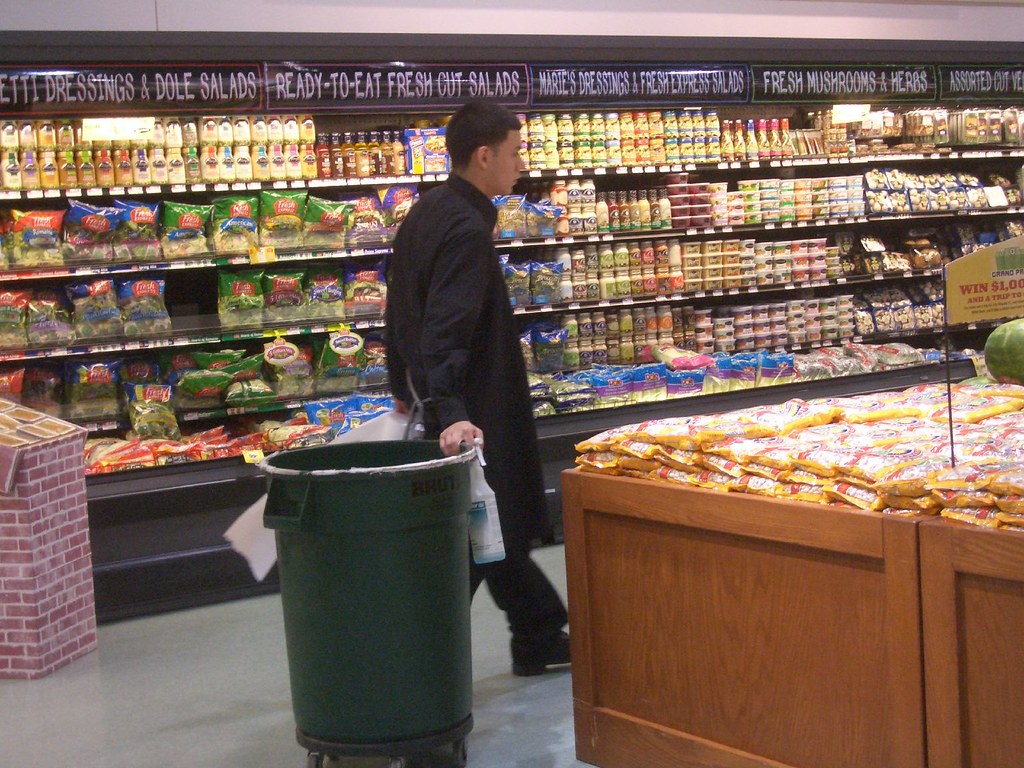

And you know what else, the staff seemed infinitely friendlier too. A stock boy helped me locate ricotta cheese, without seeming the least bit annoyed. When the bagger discovered that my glass milk bottle was leaky, she cheerily ran to get me another. And when I was just out the door, another staffer ran after me to hand me the cinnamon I'd left at the checkout! It seemed like this time, they were going above and beyond. Like a local grocer would.

But the best part was when I saw the grocer himself. I turned and there he was, the man from the sign! Walking into an office that said "Management." It felt like a flash of 1950's dream sequence. I liked that he wasn't just some random old dude - he was actually the real manager of this very store. And knowing that he advertises in my neighborhood (and is probably struggling to compete for customers on my very street) is enough to endear him to me. Maybe next time, he'll come out and give me some good advice.

---

The devil you know is still a devil. The devil you don't know could be worse, or it could be better. But the chance is probably 50/50, so isn't it worth a shot? I know that many retailers hesitate to make any major changes to their stores, because of the outcry that typically follows. Loyal shoppers of 40 years throw up their hands and go elsewhere. But I urge retailers and shoppers alike to reconsider. Be patient, and give it a second try.

Because when everything is new, it's totally overwhelming. The first time we shop for the same products in a new place, it's essentially a search for familiarity. It's like seeking out McDonald's in a foreign country.

But the next time we visit that country, we venture out. We turn down new streets and sample new tastes. Likewise, the second time we shop, the comfort level is way higher. We can find our repeat purchases more easily, so we have more mindspace to discover something new. I can't buy fancy olives until I've found the milk.

This world is full of disappointments, and it's easier to remember them than the pleasant surprises. However, if there's something you've been hanging on to, admittedly or not due to a distaste for change, I encourage you to sample the devil you don't know. It might not be such a devil after all.

10.28.2007

Where it counts

Folks, it's that time of year again. Welcome to Round Two of the Bathroom Blogfest. Bloggers around the world will be asking and answering questions about the importance of restrooms in the customer experience.

I, however, have a slightly different kind of question. It's a bit more...personal. This question was posed to me many years ago, when I was a teenage counselor at summer camp. It shocked me, and it may shock you too.

On the first night of camp, before the kids arrived, the counselors were playing getting-to-know-you games. One went like this: the camp director would call out a category with two options, and we'd self-organize into groups based on our choices. For instance, he'd say "Peanut butter: creamy or crunchy?" The creamy folks would run to one side of the room; the crunchy folks, the other. We'd all laugh and high-five over our shared preferences. The game went on for a while - "Airplane seat: window or aisle?" "Superpower: flight or invisibility?"

But then came a question that reverberated throughout the big rec hall. "Toilet paper: crumple or fold?"

Wait - people fold?

I had no idea anyone folded their toilet paper. What, like, in half? In thirds? In origami cranes? I was shocked and intrigued. But no time for questions - I ran to the crumple team, where everyone was hysterical. We crumplers were cracking up with lines like, "Hell yeah I crumple!" and "Who has time to fold?" Meanwhile, the folders were looking at us like we were heathens: "Those people scrunch up their toilet paper?" "Do they not care about anything?"

---

As you may know, I am forever preoccupied with an ongoing quest to better understand the details of people's everyday lives. Not only their shopping lists, but their secrets, their morning rituals, what they have in their bags, wallets and fridges. And today is no exception. Dear reader, please take my poll.


Thanks. I can't tell you how excited I am to see these results.

Now, when I heard this question for the first time, not only was I surprised to learn that people did things differently than me, I was amazed at how enthusiastic the two sides became. We immediately bonded within our groups. I think there was even some chanting, along the lines of "CRUM-PLE! CRUM-PLE!" Men and women, old and young, we all cared passionately about our TP.

And we still do. I would argue that toilet paper represents the make-or-break moment of the restroom experience. If it's great, everything else can be forgiven. And if it's bad, or (gasp) gone, well, all the scented soap in the world won't bring it back.

Because let's get specific for a moment here. There are a number of ways in which we physically interact with the bathroom around us. Our feet touch the floor. Our hands touch the doors, the flushers and the faucets. Sometimes our waists touch the counter. But our nether regions - invariably our most personal, private parts - touch one thing and one thing only. So what are we going to care most about?

Now I don't think any sane consumer would articulate this if asked, but I believe that every other element in a restroom only serves as a clue as to whether or not the toilet paper is good. When I'm waiting in line, I'm subconsciously evaluating all these elements, in an effort to guess at what the TP situation will be. If I step into a restroom and the floor is marble, I heave a secret sigh of relief. I know it'll be plush. And if I step into a restroom and there is garbage on the floor, fear strikes my heart. I check to make sure there is some in my stall before I even shut the door.

Now sometimes, the toilet paper is inconsistent with the rest of the experience. In this case, I typically weight TP higher when casting my overall vote. If the bathroom is nice but the toilet paper is thin and abrasive, it speaks volumes. I now know that this store/office/restaurant has tried to make surface improvements in order to wow people, but the fancy tissue box and designer art are only aesthetic. This place doesn't really care. And conversely, if the bathroom is nothing special but the toilet paper is soft and durable, with ribs or quilts or clouds, I feel that the place is reaching out to me. That they are saying, "We know where it counts."

Like any experience, we expect bathrooms to be consistent. And obviously, women and men would love it if they were all havens of comfort and relaxation. But in reality, they can't all be the Shangri-La of restrooms, and I understand that. My assertion is simply that if you were going to do one thing to improve your restroom - just ONE thing - that one thing should be to upgrade your toilet paper. People will appreciate this on a much deeper level than if you went for fancy faucets. It's, shall we say, closer to home.

Whether you crumple or fold, welcome to the Bathroom Blogfest!

For more Bathroom Blogfest all week long, please check out:

Adaptive Path
Blog Till You Drop
Checking Out and Checking In
Customer Experience Crossroads
Customers Are Always
Customers Rock!
Diva Marketing
The Engaging Brand
Experienceology
Fast Company Now
Flooring the Consumer
getFreshMinds
K+B DeltaVee
Library Bytes
Life and Its Little Pleasures
Practical Katie
Purple Wren
Qualitative Research
Results Revolution
Spirit Women
Transcultural
The Ultimate Corporate Entrepreneur

8.17.2007

Help us look good

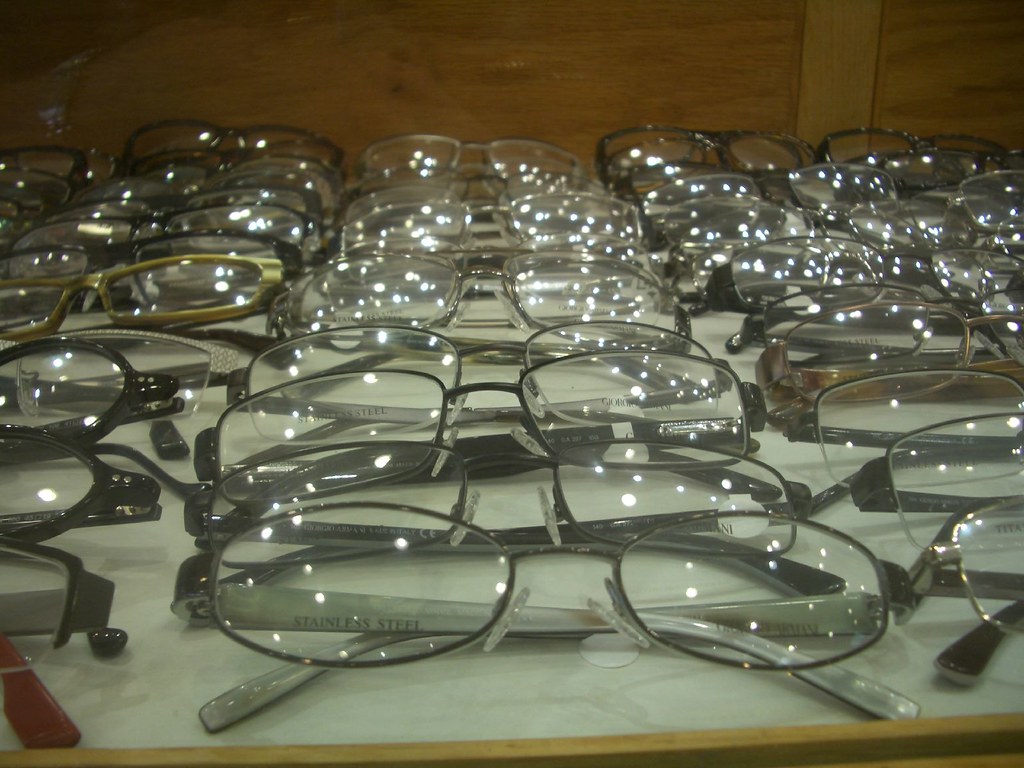
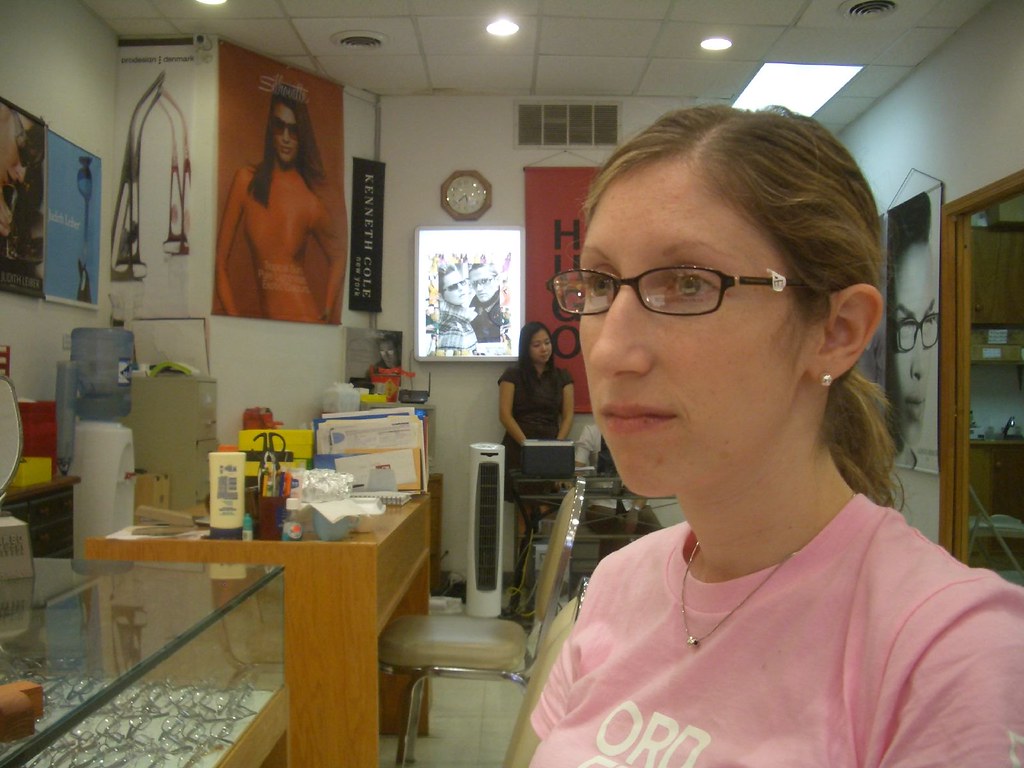
I recently bought new glasses. If you've ever gone through this process, you know that it can be agonizing.

First, you try on every single pair that remotely piques your interest. You hold onto the 'maybes' and try them again. Then you switch and check, switch and check, until you've narrowed it down to one pair. Even then, when you've chosen your candidate, you still have to scrutinize your face from every possible angle, look in every mirror in the store, and double-check against all the other pairs AGAIN in order to be absolutely sure you've found the best glasses for your face.

The process reminds me of the phenomenon that happens when you say a particular word too many times. Eventually, that word sounds funny. Any word can sound funny, if you say it enough times. (Try it!) Likewise, after checking my own face in the mirror six hundred times, it started to look funny. I began scrutinizing my features. God, my nose is long. God, my eyes are close together. Am I normal? Or am I funny-looking? Just like with the word, the familiar becomes strange.


So I finally found my pair, but I wasn't completely sold. They were the best pair in the store for me, but they didn't look Fabulous. They just looked Good. I realized this might be because I still thought my own face looked weird. So I tried something else.


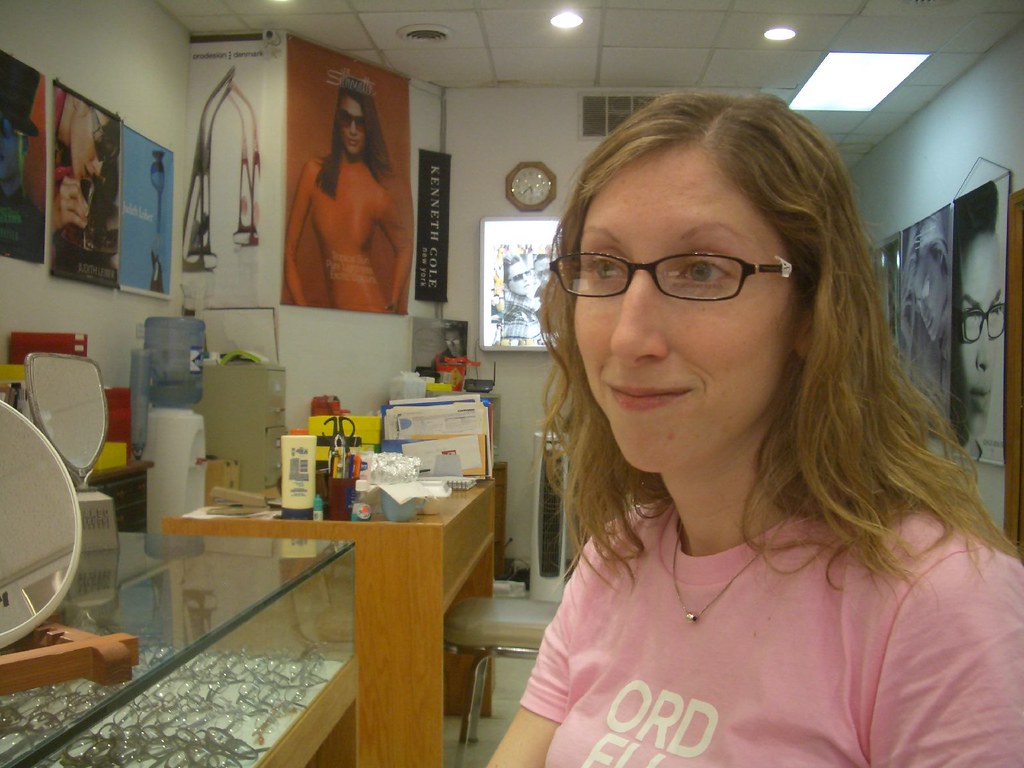
I took my hair out of its ponytail, rumpled it a bit, put on lip gloss, and smiled. This time, I thought the glasses looked great. My decision was made.

---

This leads me to a very basic insight: People buy things when they look good. But it's not just the new item that has to look good. It's everything. When I looked better overall, the glasses looked better too.

This insight can be quite useful for shoppers. If your goal is to buy a new pair of jeans, go shopping on a "thin day." If you feel good about your body, the jeans will practically buy themselves. If you want a new bathing suit, go shopping when you are tan. If you want new shoes, get a pedicure, and wear the clothes that you'll wear with the shoes. Et cetera.

Likewise, don't shop for clothing after a night of alcohol and fried food. Don't shop for makeup when your skin is terrible. Unless, of course, you don't actually want to buy anything.

This insight is also useful for retailers. If you want girls to buy your prom dresses, don't make them try them on in their white gym socks. Give them heels, for god's sake. They will look ten times better, and will be more likely to buy the dress. Who knows - they might even buy the shoes too.

So my appeal is this: Stores should find ways to make their shoppers look better. Easy touches like flattering lighting, color in the dressing rooms, and relevant accessories will help someone like the way they look.

Or better yet, why don't stores combine shopping with beauty? You enter the store, get a facial and your hair blow-dried, then look at outfits. Man. I would end up buying so much more this way. Because I get my hair done what, four times a year? But after walking out of the salon, I feel that I am at my absolute best. The top of my game, if you will. If I were to shop right then, who knows how much I would spend. I'd probably love everything I tried, because in the mirror was this fabulous me with perfect hair. The glasses would look better, the dress would look better, I bet even the purse or shoes (or lamp or car) would look better.
Now the downside, of course, is that this can become a distortion of reality. And that's where the line begins to blur. Stores that use "slimming mirrors" face ethical controversy. And there's always the risk that someone loves the dress, gets it home, and hates it. "This looked so much better in the store" is a complaint I've definitely heard. But on the other hand, let's face it - consumers today are still seeking a suspension of reality. Permission to forget who they really are, and become someone better.

Here's my stance. If the retailer helps you to simply perceive yourself as looking better, then that's pretty close to lying and I feel it's a disservice. But if the retailer helps you to actually look better, with substantive beauty services or advice, then I think that would be great. Oh, and profitable too.

---

I bought the glasses. They were perfect. And as I wore them each day, a funny thing happened. I would almost subconsciously recall the feeling I had about them in the store. It was a very private, personal feeling, something along the lines of "I look so smart and sophisticated." And you know, that feeling lives on, somewhere deep inside my brain. So even if the store had only made me look better during that brief "first impression," I've decided the first impression is critical. Not only for swaying me to buy the product, but for actually shaping my attitude towards the product during its lifetime of use.

So retailers, help us look good. We will like how we look inside your walls, buy more products, AND feel better about those products long after we've paid our credit card bills.

7.05.2007

How does my butt look?

This will be a shorter post, as I'm a busy girl with people to see and things to do.

---

Okay, we all know that's not true! Ha ha! Ha...But I am hereby starting a conscious effort to write some shorter posts, so that we don't go for weeks with none.

Today I'd like to talk about Target. Yes, they are the gold standard for mass retail; yes, they go where no discounter has gone before; and yes, they are captivating the crowds with their cheap chic offering and uncluttered merchandising and helpful in-store messaging and, you get the point. Target does a lot of things right.

But I want to mention one more thing that they have knocked out of the park. It's a design change that could have only come from the shopper's own voice. It's a very easy tactic that provides surprise and delight, improves the shopping experience and, I'm guessing, helps the bottom line at the end of the day.

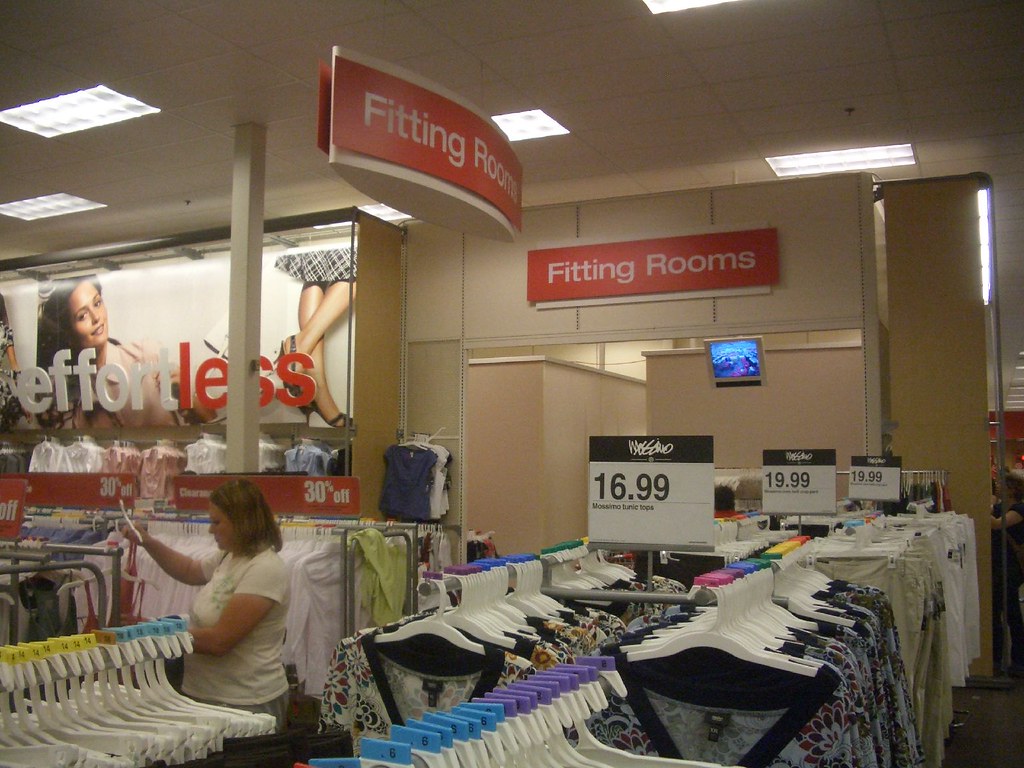
So, most clothing stores have dressing rooms. These stores give up valuable retail space because people want to try things on. But in my recent interviews with female shoppers, I'm starting to notice a pattern: women don't like dressing rooms. Either they are too busy to try it on now, or they feel uncomfortable in such a small, messy, poorly-lit, barely-private space. So they buy, they take home, they try on, and THEN they make their final purchase decision.

As you can imagine, stores hate this. Returns? Annoying! We could have been selling that shirt to someone else while it was sitting in your bedroom! Plus, why did we spend 300 square feet on dressing rooms if you're not going to use them?


Well, Target sells clothes. Target has dressing rooms. And Target wants its dressing rooms to get used. So I'm guessing it took a good hard look at the trying-it-on experience, and resolved to provide something that you couldn't get at home.

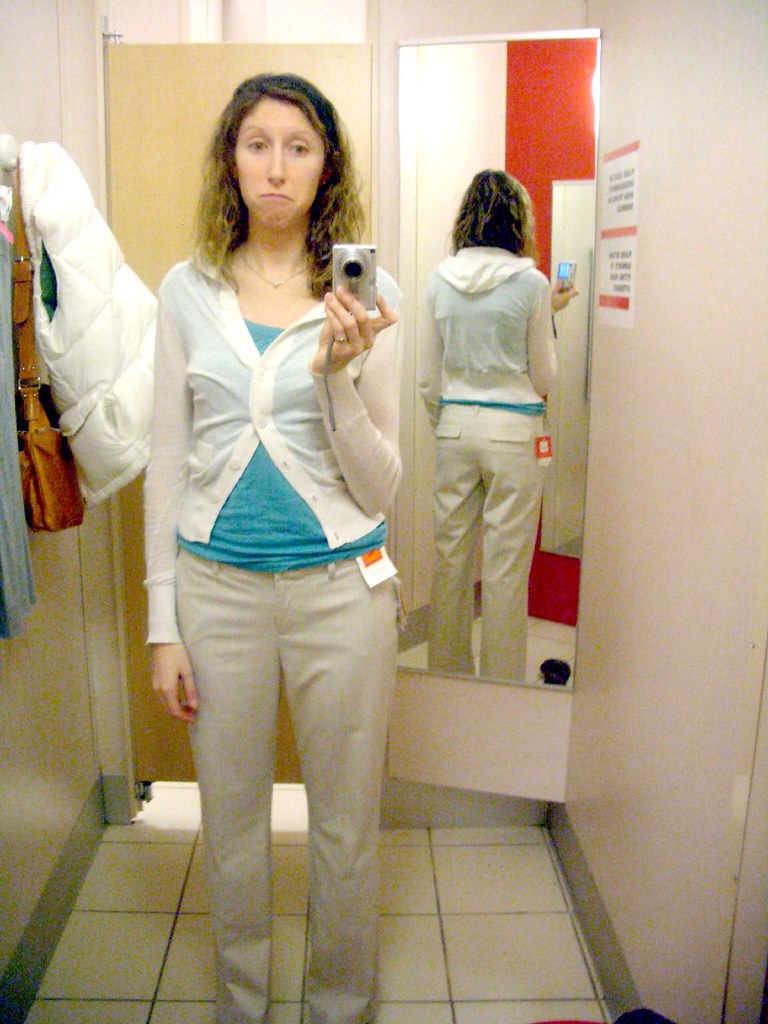
I don't know about you, but my home has it pretty good. A full-length mirror in my bedroom, a brightly-lit mirror in my bathroom, and my boyfriend to give me his honest opinion. But my home does not have one thing. Friends, my home lacks a butt mirror.

Target dressing rooms, on the other hand, have this mirror. It's surprisingly, refreshingly awesome. No more planting your hips squarely forward while you twist your neck around, catching a glimpse for three painful seconds. No more listening to a salesperson's pandering flattery. No more worrying about the question that has plagued women since the dawn of pants: How does my butt look in these?

I just bought pants at Target, and let me tell you, the butt mirror sealed the deal. It's at just the right angle to allow for a full viewing, like I was standing behind myself and checking myself out. And although I was undecided on the front of the pants, the back of the pants looked, in my opinion, well, okay. I thought it looked good.

Target, I'd rather try on clothes in your store than bring them home. Your dressing rooms are certainly no palace. But they have what no average residence contains. That infinitely wise, truth-bearing, all-knowing and all-illuminating butt mirror.

6.08.2007

Snickers or an iPod?

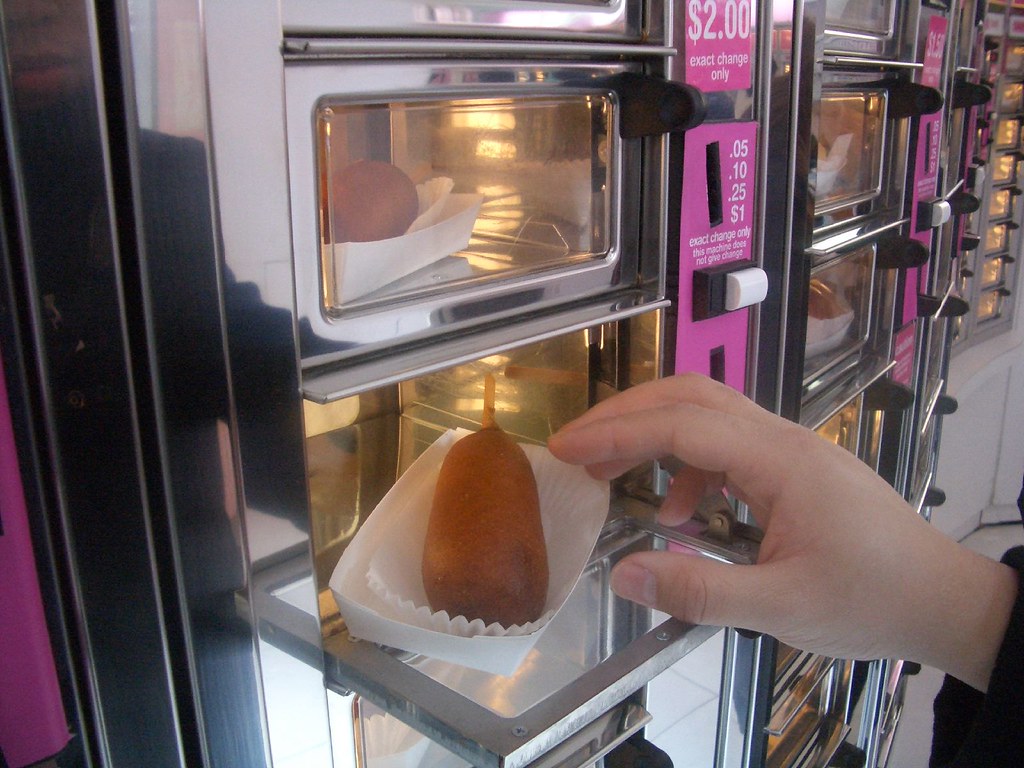
The last time I was in New York, my hip younger sister took me to a really cool vending machine.

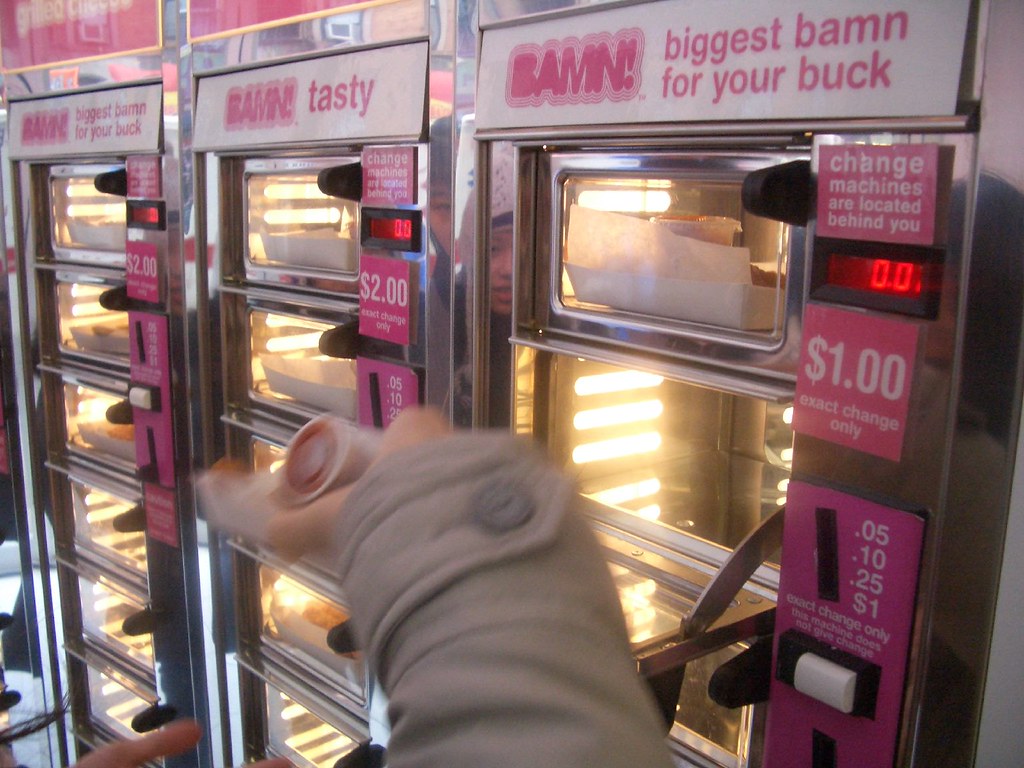
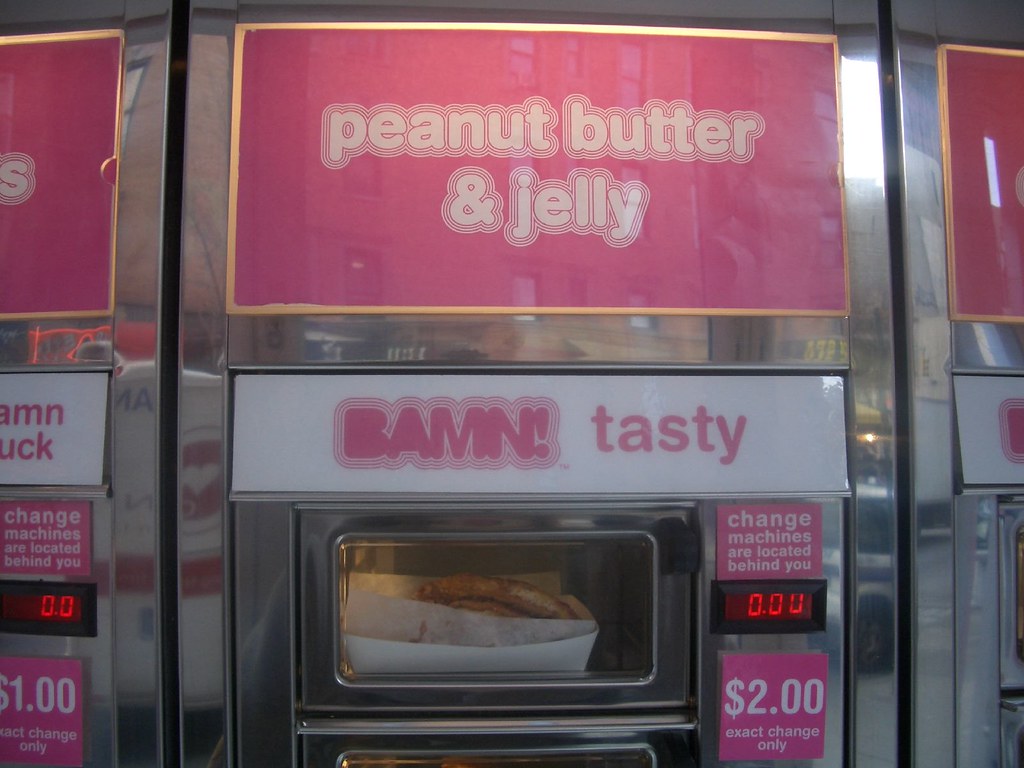
No, seriously. It's a humongous vending machine, with a whole storefront built around it, and a whole kitchen behind it. A bunch of people work at this vending machine, supplying it with fresh, hot snacks.

And I am not talking about chips and pretzels. I am talking grilled cheese, chicken wings, pizza and piping hot donuts.

The place is called Bamn. It's a recent version of a much older concept, called the Automat, which last dotted New York's late-night scene in the 1940s. Big banks of vending machines were serviced by cooks in the back, and the places had real crockery, metal utensils and seating for people seeking a fast, cheap bite.

Today, the atmosphere is different and so are the customers. Those crazy kids come in at all hours of the night, pop two bucks in the change machine, and grab their corn dogs and peanut butter sandwiches. Then they continue on their walks of shame. Bamn has no seating, no waiters and no time wasted. It's the epitome of modern, urban convenience.

Now granted, this place is a gimmick. It's not much different from any burger dive - same greasy food, same rock bottom prices. The only difference is the machines.

But for commodities like fast food, I would argue that the machines provide a refreshing twist on the original. Has a Burger King employee ever truly brightened your day? Chances are you leave most fast-food counters feeling bored at best, angry at worst. And burgers are a commodity. At this point, you can compete on taste or you can compete on price. Most compete on price.

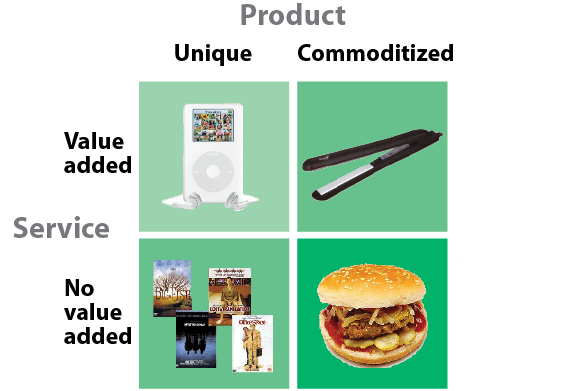
Now, let me be very clear. I think Bamn works for two reasons. The product is a commodity and the service is unnecessary. Vending machines deliver the product, effectively and efficiently, and no love is lost when no humans are present. But folks, vending machines are popping up in all kinds of crazy categories! And I think it's getting out of control.


Let's start with the bottom right. When the product is a commodity (low prices, little differentiation, readily available) and the service isn't adding any great value, then I say, vend away. Exhibit A: Bamn. Great job, guys. Way to catch a trend.

Next. Top right. Sometimes, the product is undifferentiated but the service can add great value. Example: hair care. You can blow dry your own hair with any generic dryer, but real women pay $20 and up to have someone do it for them. That service adds a mighty margin to an otherwise basic offering. So I don't think vending machines are necessarily going to boost this market, unless they can provide something that current services do not.

Enter Beautiful Vending. Its hair-straightener vending machines are popping up in women's restrooms all over the UK. One pound buys two minutes of time with a hot iron. This is smart because it creates a new usage occasion. Vending machines provide what beauticians cannot - ubiquity. Place one in every bar, and suddenly the entire hair care market expands.

Bottom left. Sometimes, the product is unique but the service is nonexistent. (Exhibit B: the chump at your local Blockbuster). The DVD market is crowded, and as Americans increasingly choose home over theater, lots of firms are dying to deliver movies to your set-top box or mailbox. Again, I think most shoppers' needs are being met, and the only way vending machines will grow the market is if they provide real improvement over existing models.

Enter companies like DVD Now. Its DVD vending machines are making waves at the grocery store, the drug store, and wherever shoppers make routine, weekly visits. One benefit rises to the top: the machines only carry new releases. No wasted space for box-office flops. So let's say you're not a huge movie person, and you don't subscribe to Netflix. Then you probably just want the hottest summer blockbuster. This machine helps "low-commitment shoppers" cut to the chase. It provides an easy solution for a new type of customer, thereby expanding the market for DVD rentals.

This brings me to the top left. Sometimes, though very rarely, the product is so unique that it creates and dominates a revolutionary new market. Sometimes, the product puts a company on the map and singlehandedly facilitates its turnaround. Sometimes the service surrounding the product is adding so much value, it can be described as the world's most amazing retail experience.

This is perhaps the only time where I would say that a vending machine is not going to help. In fact, it's going to hurt.


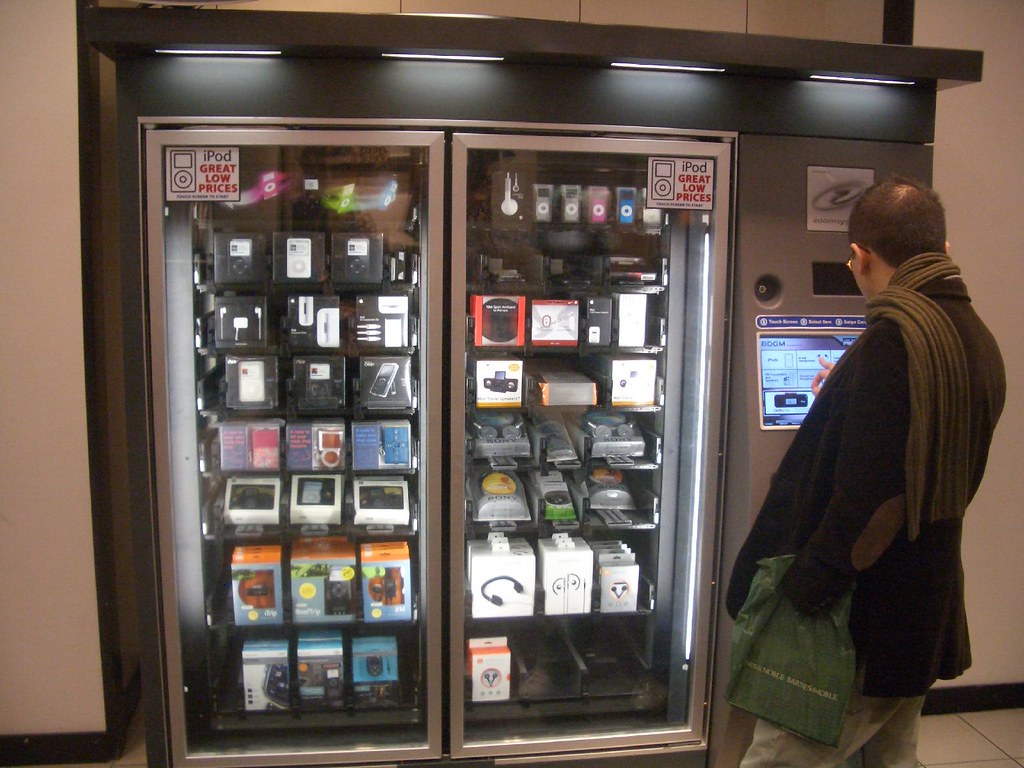
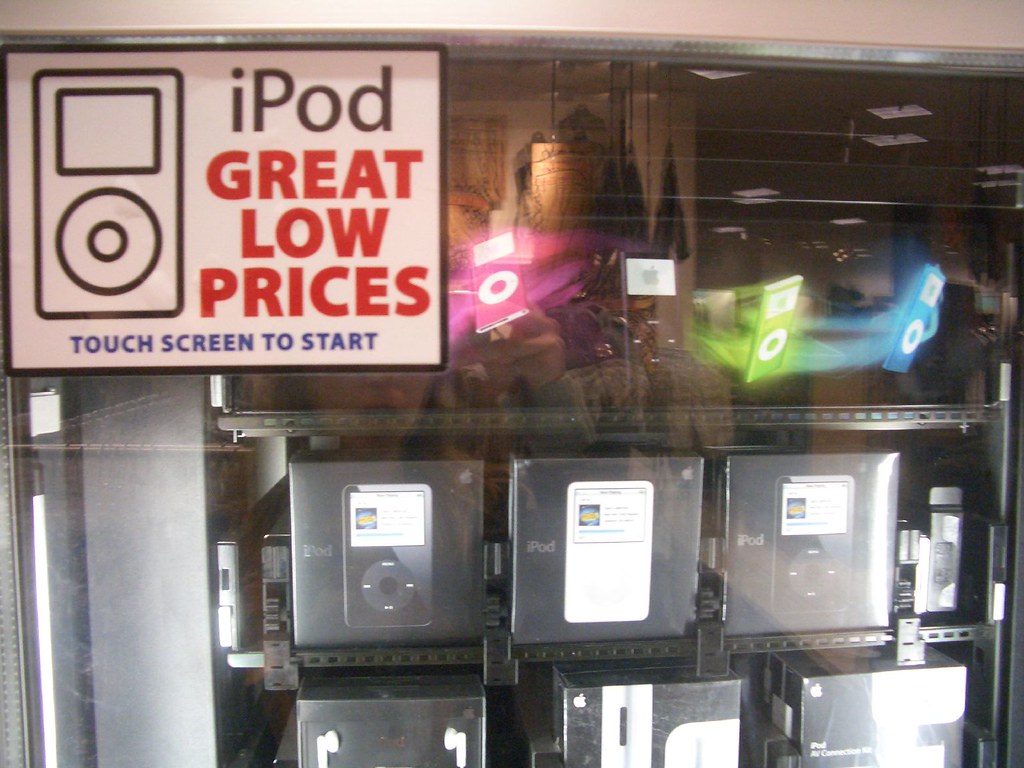
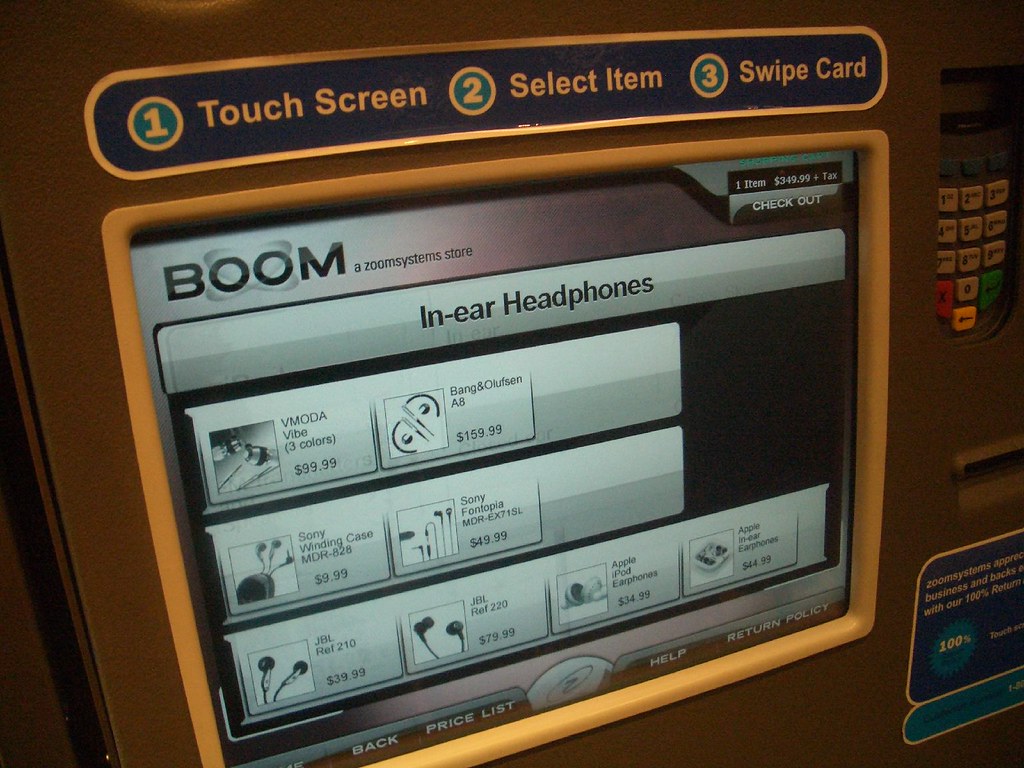
Ouch. Yes, those are real iPods. And real Bang & Olufsen, Sony and JBL accessories. They aren't cheap items. But their markdowns are being advertised loud and clear.


Great low prices? Is this a grocery store? Are we in Wal*Mart? Has anyone ever bought an iPod because it was cheap? Apple, talk to me. Are you trying to commoditize your product? Trying to undercut your outstanding service? Make it unnecessary for shoppers to visit the Apple Store? What can a vending machine possibly bring to your incredibly successful table?


Apparently it can bring a touchscreen interface. And that's about it. I don't see how this vending machine helps the iPod market. Its location doesn't expand product usage - this one was spotted in Macy's, where I can't imagine shoppers are in the mindset for electronics. It doesn't attract a new type of customer, unless you count the kind of customer who's hungry for a Snickers bar. (They're walking around Macy's, feeling hungry, they see a vending machine, and boom. They're looking at iPods. Unfortunately, now they are confused AND hungry).

No, this concept seems to only be providing more iPods in more places. And that is not such a good thing, because it will cause them to lose value. It's the law of supply and demand. Quite frankly, this vending machine has got to be the worst idea I've ever seen at retail. And folks, that's saying a lot.

---

You might be saying to yourself, "Everyone else is putting their products in vending machines, maybe I should too!" Well, I encourage you to consider within which quadrant your product currently lives. Is it already commoditized? Does it need a nudge in the other direction? What's your service experience like? Can a machine add value that a human cannot? Do vending machines make any sense at all?

For help answering these questions, I encourage you to refer to my handy vending machine planner's guide.


I hope that by now, this is self-explanatory.

11.28.2006

Show me the bank

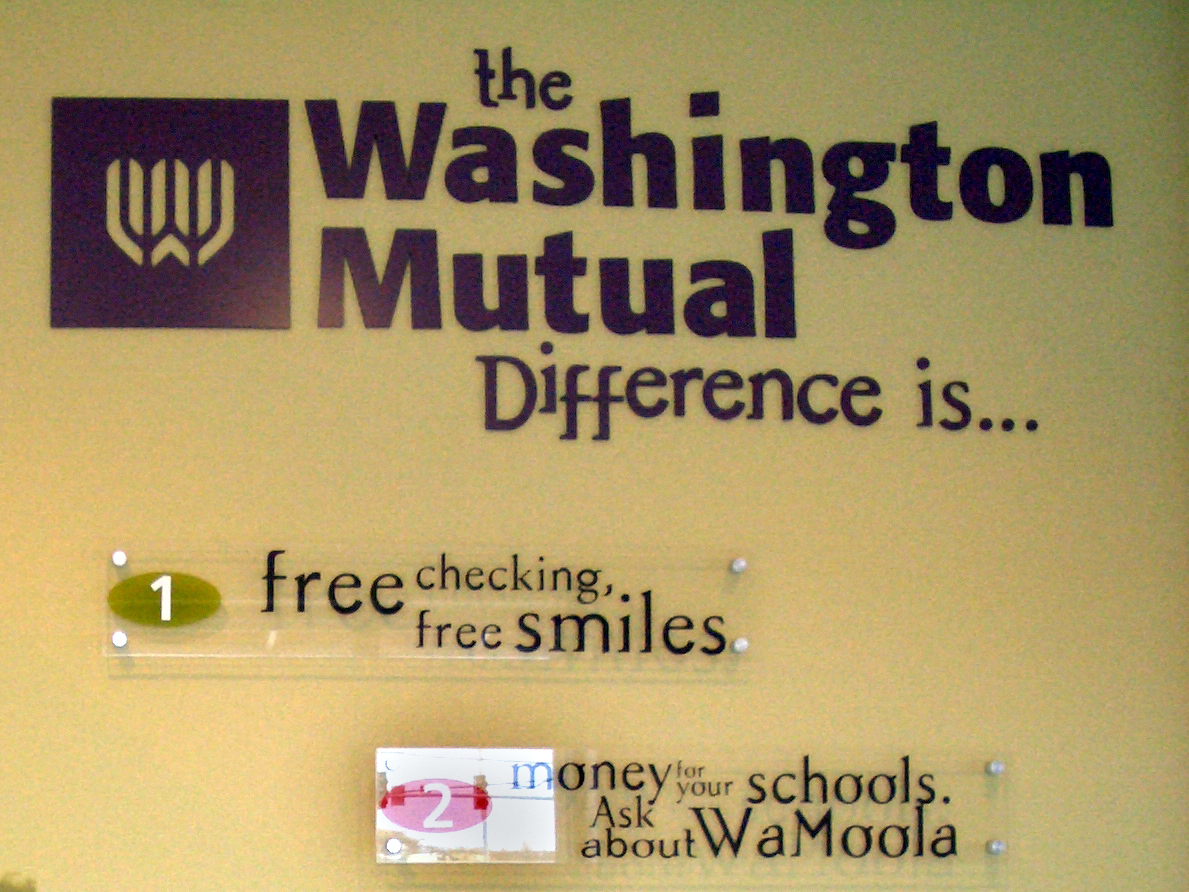
I recently took a major step toward responsible adulthood. I opened a small business checking account. The reason? My boyfriend and I officially registered our side business, Hubwear, and it was time to get serious. No more "we'll figure out the tax thing later" or "do we have to tell someone about this?" We have an Employer Identification Number, we put our legal notice in the paper, we even went to H&R Block. And now, with Washington Mutual at our side, we are the proud cosigners of a Free Business Checking account.

Hell yeah.

Now I had more than one reason for choosing WaMu. Of course, we reviewed comparable services from banks in the area. But most had fees somewhere in the fine print, and we are far too savvy to fall for that old gag. Washington Mutual not only had a fee-free option, it was near my office and seemed to be on the rise in Chicagoland. Finally, I'd heard about its "interesting branch designs" and, quite frankly, wanted a closer look.


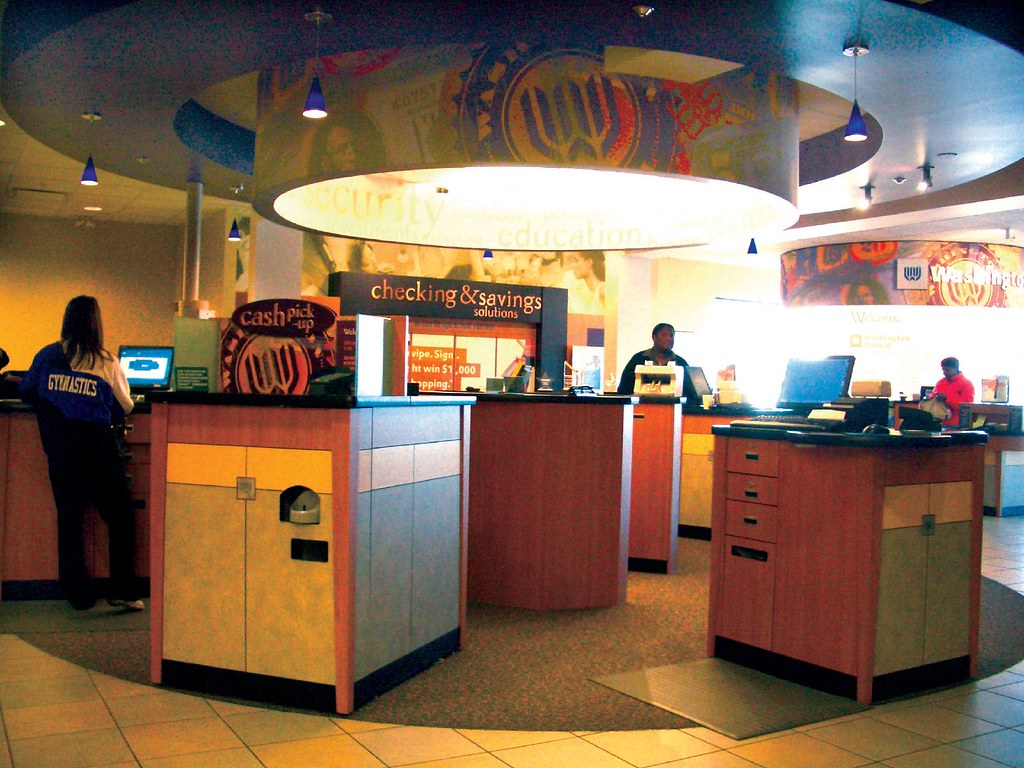
So I walked into my local branch, and immediately felt displaced. What was this, and where was the bank? I had arrived in a big, open room, where five or six standing-height kiosks were scattered around. There were round counters, round floor patterns and round ceiling fixtures, like everything was swirling around the eye of a hurricane. There were employees standing around the kiosks. There were customers standing around the employees. It looked like a wacky cyclone-themed bar at happy hour.

But it's not quite that crazy - just a little disorienting. You walk in and start scanning the room, when some employee in the back waves her arm and calls, "I can help you over here!" There's no clear path, so you weave through a bunch of kiosks to get to hers. This is fine, I suppose, but I found it strange to not immediately know what to do inside a bank.

This is because most banks have overly entrenched, formulaic protocols for how to act (calm), where to stand (in line), how to talk (quietly) and what to do (nothing. Just make your transaction and leave). Deviations from the protocol are rare. Retail banks reign supreme in the "Because That's How We've Always Done It" department, and surely, I have to presume, they've done it that way for a reason.

And to me, that reason is credibility. You need to trust the place that holds your money. So even though most banks are stodgy, formal and boring, I would rather a stodgy, formal bore hold my money than, well, anyone. Hence the tellers in conservative costume, the organized row of windows, the respectable wood and carpet, and the protocols. "If they have a strict process for making change for a dollar, surely they are strict with my savings."

But the process at Washington Mutual was unlike other banks - it was totally lacking in protocols. Simply put, a protocol is like an implicit agreement between store and customer. We'll do things a certain way, and in return, you'll do things a certain way. But when the store breaks from established protocols, I am left hanging. I have no metaphor, no clues for how to act. At best, I question myself. At worst, I question the store.

---

The lack of protocol was evident at several points in my visit. For example, I expect bankers to be pinnacles of professionalism. They sit properly on their side of the wall, and all I see is a business-suited torso. But as the khaki-clad employee chatted with me at her kiosk, she was visible from head to toe. I could see her comfortable sneakers and sense her casual body language. Should I be breezy with her? Should I make small talk? Wait a minute, was this woman a banker, a teller, or just a minimum-wage employee? Was she knowledgeable about personal finance? Did she even go to college?

I also expect banks to retain some element of secrecy. I want to know that everything is secure, password-protected and locked up tight. But when I sat with the teller at her workstation, her computer screen faced me. It was clearly placed in my line of vision to promote total transparency. But I actually wanted some opacity. Doesn't she keep security codes in there or something? Perhaps some top-secret banking software that I shouldn't see? I felt intrusive and awkward watching her type. (I also wanted some walls - if I could see my new account, couldn't the rest of the room?)

Furthermore, I expect banks to have a "back room," a storage chamber where they keep all the money. While I realize this notion may be outdated, and most money is now digital, I still expect a vault, safety deposit boxes, or at least a private space where rich old ladies can count their millions. But no. I looked all around the room, and there was no back area or special hallway. Upon inquiry, it turns out that money is actually stored inside each of the kiosks. Somehow, that doesn't seem like enough space. "Does this bank just not have that much money?" I thought to myself. That can't be a good customer perception.

The best example of a lack of protocol happened at the very end. I was back at an employee's kiosk, doing something boring like signing forms. Then I finished. Then I stood there, waiting. She was working on her computer. Finally she looked up and said, "Oh, you're done! You're all done. You can go." This moment was utterly bizarre. I was never given the signal that our time here was through. And I kid you not, I had two visits with two different employees, and this exact exchange happened both times.

---

Now just because WaMu defied my expectations, doesn't mean it's bad business. I'm a fan of shifting the paradigm, especially in antiquated industries, and if WaMu wants to be more like a retailer, and less like a bank, that's cool. The patented design, called Occasio, is supposed to create a comfortable, welcoming environment - a place "where [people] want to go, rather than have to go." Who can argue with that?

But I found the place to be so unlike a bank, that I began to question its credibility as a financial institution. And that is the line they most certainly do not want to cross.

I'd recommend adding back in some of the traditional banking cues. Just a few. Like building a tiny wall around employees, so to speak, so they are both important and confidential. Give their desks some privacy and their outfits some authority. Give them more prominent titles. Store the money in some perimeter fixture or machine. Give it a little more space. And finish the transaction with a gesture. Something that signifies the end and brings closure. Hand me a lollipop, for goodness sake!

I know WaMu is simply listening to its customers, staying in touch with the trends of accessibility and demystification. I just want them to remember that as long as they offer checking accounts, they are still a bank. I'm simply asking them to show me the bank.

11.02.2006

Theater in the bathroom

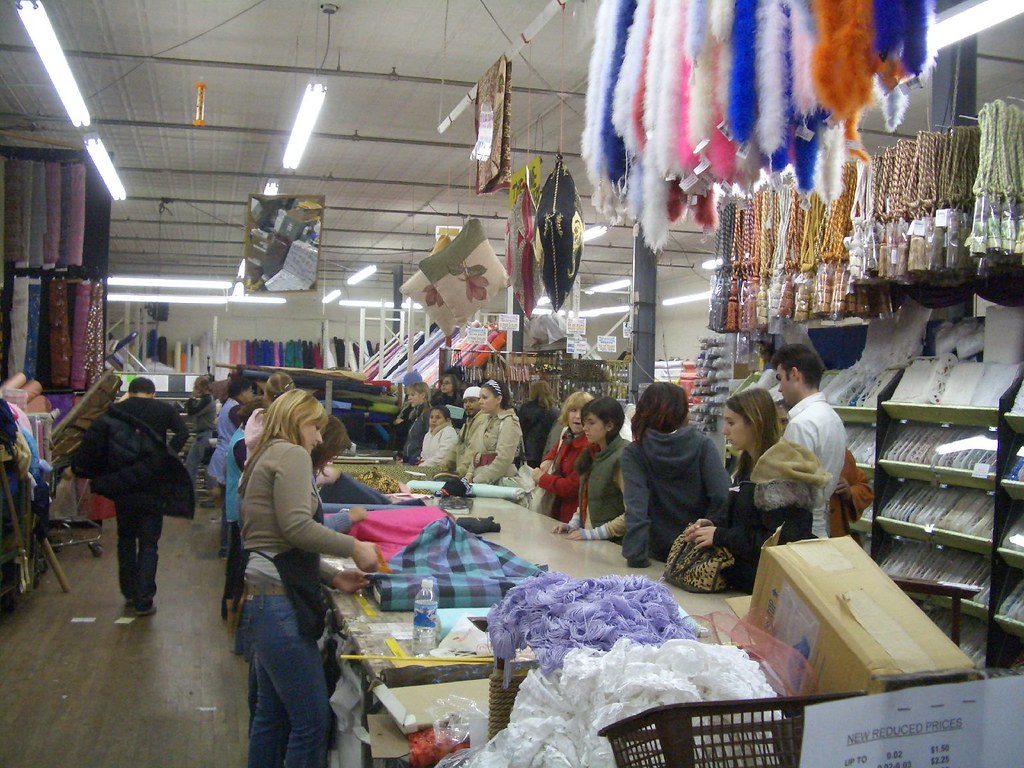
A few weeks ago, I visited an old, obscure fabric store. I'm talking really old, and really obscure. Textile Discount Outlet is an enormous warehouse building, hidden on a side street in Chicago's Pilsen neighborhood. With such a generic name, we couldn't even find it online. Calling 411 was useless. Until we stumbled upon it, the place seemed to simply not exist. That's probably because to pay it a visit, we had to essentially go back in time.

The store was amazing to behold. Fabric and fabric and fabric and zippers and fabric and buttons and fabric and lace and fabric and pillows and yarn and fabric. A four-story behemoth of crafting materials, project ideas, and dust.

And it sure was dusty. The age of the place seeped into every nook and cranny. You were torn between wanting to dive headfirst into bolts of cotton, and wanting to run home and take a shower. But it wasn't dirty, just weathered with age. I chose to dive headfirst.


Later, as I stood in line to have my fabric cut, I noticed the distinctly rhythmic pattern of the shoppers and employees. And it dawned on me - this place was probably once a factory, and in some ways, it still was. We were an assembly line of buyers and cutters and measurers, standing on both sides of our conveyor belt on the factory floor. It was organized chaos and it felt very, very industrial.

But alas, the daydream had to pause, because I had to use the bathroom. I got the key from the elderly cashier, and found my way through cavernous alleys of fabric to the women's restroom, which was hidden in a side hallway next to a utility closet. It was a cave inside a cave.

And stepping into that bathroom, my daydream came back in full effect. There was a tall set of rusty lockers taking up the full wall in front of me. My imagination could not be contained.

I pictured women, women from the postwar era, women from the city of Chicago. Women workers entering the building at the break of dawn, starting their morning shift at the factory. Walking into the bathroom and turning on the single dim light. Changing their shoes, tying their hair back, getting ready for the day. Talking about the boss, talking about the men, talking about their kids. Finishing up and putting their few personal items in the lockers.

I didn't dare open a locker, because I knew my vision would disappear. I couldn't bear to see a new Snickers bar or some Herbal Essences hairspray. Instead, I pictured hairnets and wooden combs, old nylons and faded lipsticks. I didn't want to enter the lockers because I preferred the ones in my imagination.

This, to me, was nothing short of theatrical. I may have an overactive imagination, but these lockers transported me back in time, to the lives and rhythms and rituals of the people who once used them. They didn't appear to be in use, but rather just relics of a former life.

While I highly doubt that Textile Discount Outlet had dramatic intentions, and has probably been meaning to toss those old lockers for years now, their effect was both simple and powerful. They gave me a sense of context.

And I wonder how that sense might be replicated. The restroom is a perfect space for a little immersion, a little storytelling. It's more private and reflective than the main event. It's a place worthy of consideration, as we all know from the recent Bathroom Blogfest, and I wonder how other places of business might use it to establish a connection with their guests.

Theaters are a great example. After seeing a movie, we all rush to the bathroom. Same for intermission at a play. Why not make these restrooms more reminiscent of the stars? Dressing-room lights around the mirrors, makeup chairs, powder puffs, maybe some wigs and costumes. Elements of glamour that remind us of the "backstage experience."

Or how about restaurants? At best, we are greeted by a luxe masterpiece of steel and marble. But how might we feel more connected to this particular place? Maybe we see photos of the restaurant when it first opened. Maybe recipes are painted on the walls. Maybe we meet the local produce suppliers. Or learn how the owners came up with the name. Or see the chefs' aprons.

Seeing an operation's underbelly, and learning what goes on "behind the scenes," is a great way to feel closer to a business. It's also a way to provide context, to tie your offering to the people behind it and the larger world around it. The dairy farmer to a grocery store, the garage tinkerer to an electronics store. And while few businesses would want their warehouses and employee breakrooms exposed to the world, transparency is becoming of greater and greater value to consumers. It can be a point of differentiation and a way to stimulate buzz. Plus, if you start with the bathroom, it's a low-investment way to do something memorable.

The lockers were the final piece of my daydream at Textile Discount Outlet. I felt that the place had firm roots planted in the city, and its format of honesty was enough to make me a returning customer. Because being genuine inspires trust, and you don't get much more genuine that.

10.29.2006

Shoppers must wash hands

Special notice #1: I am participating in an online event called the Bathroom Blogfest. A bunch of female bloggers are posting this week about ladies rooms.

Special notice #2: I am about to bare my innermost secrets, and I hope you won't think I'm a horribly gross person. Thank you.

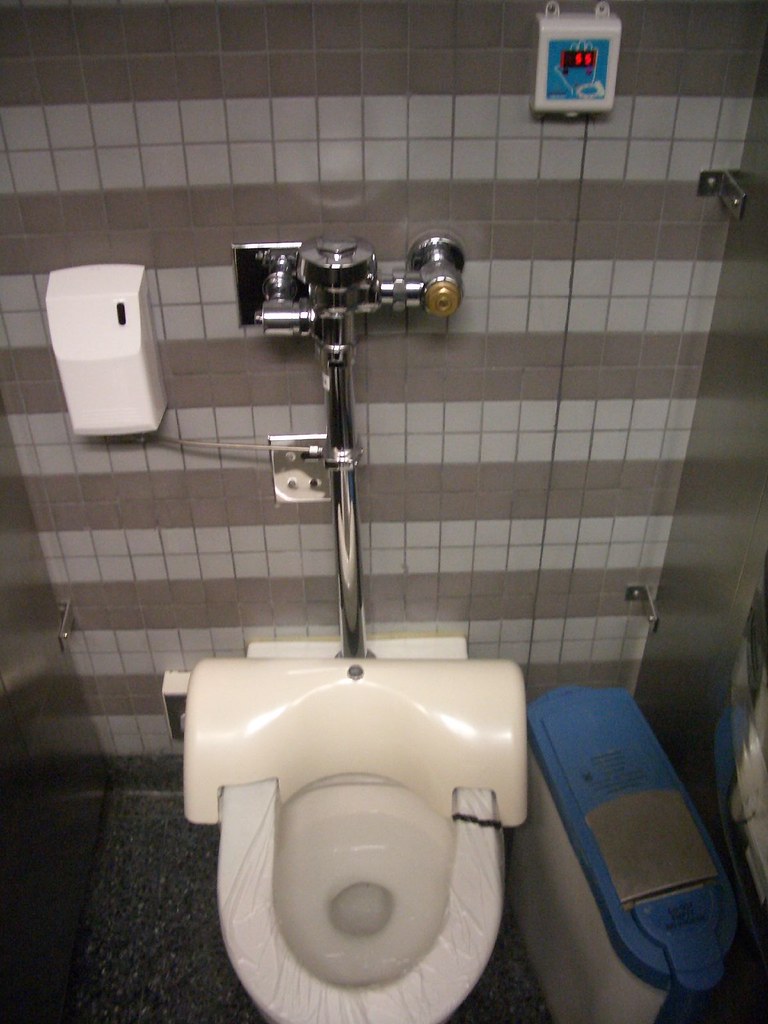
So I've been thinking about bathrooms for the past few weeks, and the trend that's shouting the loudest is cleanliness. We are obsessed with staying clean. This means toilets that flush automatically, plastic seat covers that whirr and rotate, sinks and soaps that sense your hands, paper towels that release with a wave, and fewer and fewer doors. Fewer doors? It's one less thing to touch.

We don't want to touch anything in the bathroom. We think every handle, button and lever is covered with an army of germs. And while Google produces a plethora of articles stating that my desk contains 400 times as many germs as a toilet seat, the notion persists that bathrooms are the dirtiest places on earth.


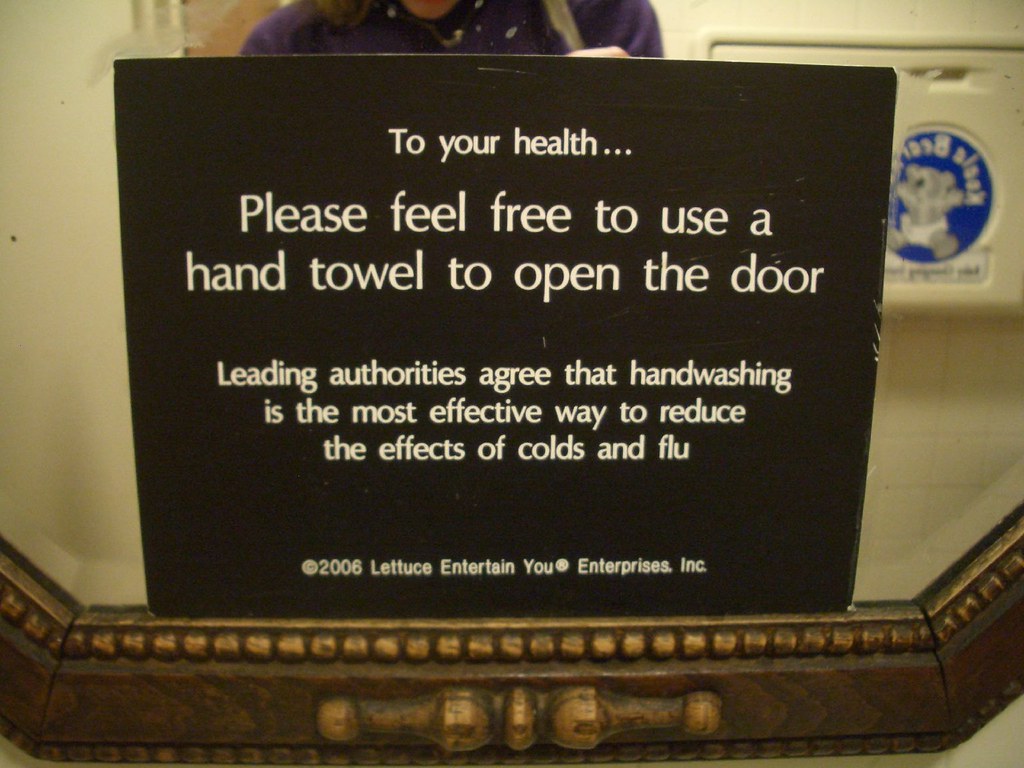
Bathrooms may be germy, but I still think our germophobia manifests itself in strange ways. This sign in RJ Grunts inspired two reactions, one right after another. "Hey, that's resourceful," followed by "Wait, what? Who has the time?" The logistics of actually grabbing a paper towel, using it to open the door, and then turning back to reach the garbage can are a little absurd to me.

Then again, that door probably has tons of germs. What if I got sick from touching it? What if the flu was going around and some lady had it and she touched the door and then I touched the door? I better use a paper towel. On second thought, I should wear gloves and a face mask. You know what, maybe I'll just stay home.

I think that when taken to its extreme, all this sanitary behavior can lead to isolation (not to mention stronger bacteria). People don't shake hands because they are nervous of passing on germs. Fine, why don't we all live in sterile sanctuaries, germ-free and human-interaction-free? We wouldn't have any social skills, but at least we'd have our health.

I think that for all the convenience these amenities bring, the main goal of bathroom sanitation is just to get people to wash their hands. If we would all just wash our hands, every day, every time, a lot of these fears would go away. Because, as my dad used to say, "I trust you. It's the other people that I don't trust." I might wash my hands, but if the woman before me did not, then by touching the doorknob I am erasing the effects of my own good habits. In other words, bathrooms need to do more than inspire me to wash my hands; they need to assure me that everyone else washed their hands too. It's kinda like driving - the system only works if everyone follows the rules.

So here's the embarassing part. I...don't always wash my hands. I mean, I do, the vast majority of the time. But not every single time. Once in a while, I'm in a rush. The hot-air dryer takes too long. The soap dries out my hands. There's no more paper towels. Plus, if nobody else is there, well, I feel like nobody will ever know. (Of course, writing this post kills that theory, but until now, I had that).

And I have reason to believe I'm not alone. Some friends have said that they usually wash hands in public places, but not always in their homes. I asked my boyfriend if guys always wash their hands, fully assuming that they do. He said, "Not always. But I thought girls always washed their hands!" Each thinking the other was the cleaner one, we had a good little embarassed laugh about it. But he echoed my sentiment - if somebody else is in the bathroom, it's a no-brainer.

So that's the key here - I would never, ever skip handwashing if somebody else was there. Because that social pressure is huge. If I just walk right out, what will they think of me? I know that if I saw them beeline from stall to exit, I would certainly judge them, however hypocritically.

This story details an observational survey where Harris Interactive researchers stood in bathrooms. They recorded that 90% of women and 75% of men washed their hands. But my problem with this study is fundamental: a person was standing in the bathroom, watching. If they had used discreet video cameras, I'm guessing the results would have been lower.

Now, I am by no means condoning wash-skipping behavior. I should wash my hands every single time; so should everyone. Handwashing is one of those universal tenets, like "Breakfast is the most important meal of the day." We know it's the right thing to do, and there's lots of persuasive statistics around it controlling the spread of disease. But obviously, this message either hasn't gotten out, or hasn't resonated with its target. So how do we design bathrooms that motivate people to wash their hands?


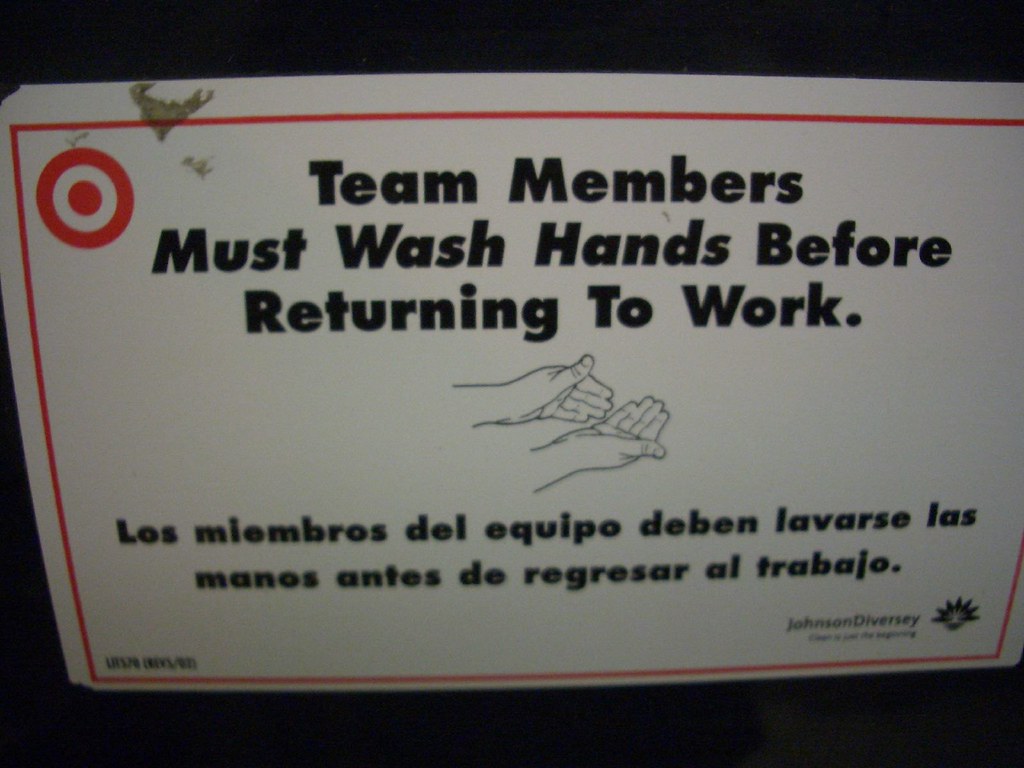
1. We can force it. Employees must wash hands, why not shoppers? We think it's part of the process, and we take it seriously here at Target/Starbucks/Disney World. You must wash hands in order to leave the bathroom. Perhaps you pay a dollar to enter, and after washing hands, that dollar is returned to you. Perhaps the door locks until your hands are clean. Of course these ideas are silly, but you get the point. A big red sign saying "SHOPPERS MUST WASH HANDS" would probably work just fine.

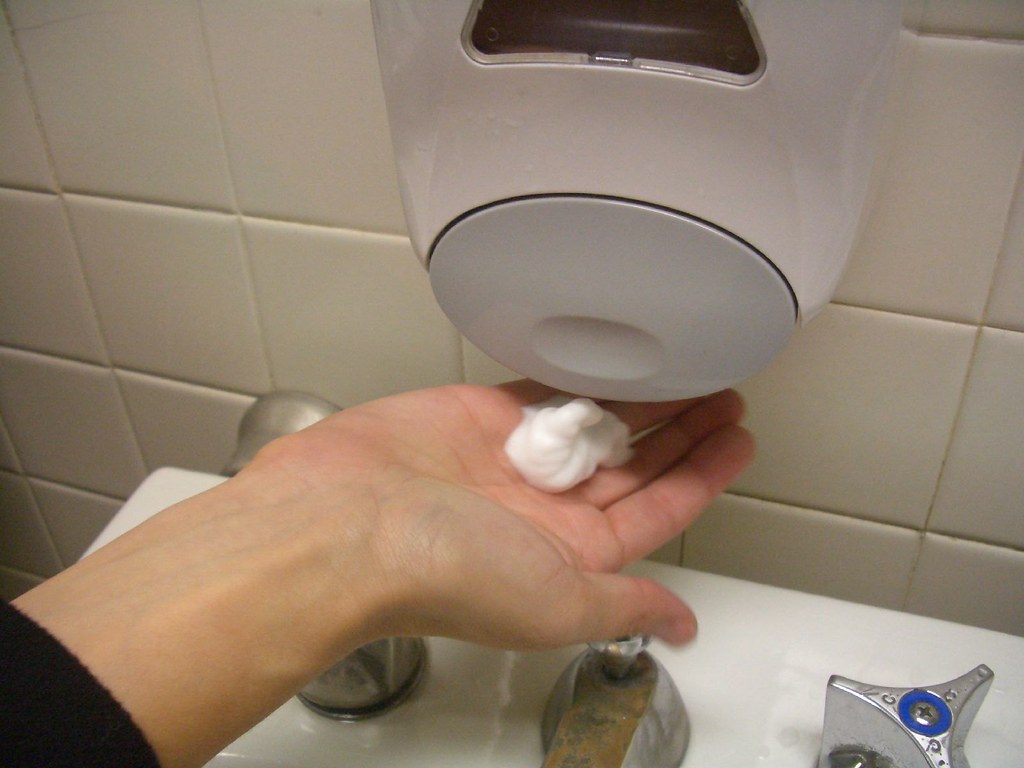
2. We can improve it. Here's some good-smelling lotion soap and soft paper towels. Here's a clean, dry counter to put your purse on. In fact, here's a special holder just for said purse, because we know how awkward it is to wash your hands while keeping it on your shoulder. Here's some flattering lighting and an inviting faucet handle. Here's some warm water followed by some cool water. Here's a big mitt that massages your hand as it washes it. Surely we can think of ways to make the process delightful and interesting. None are silver bullets, but they might begin to alleviate some of the barriers. For example, I find that washing my hands is more fun when they have that foamy soap. Negligible change in infrastructure; big difference in the experience.

3. We can socially influence it. This to me is the only surefire way to get average Joes and Josephinas to change their ways. It's also the toughest to imagine solutions for, but here goes. We can make people go to the bathroom in pairs. We can install windows in front of the sinks, so the people in the club/restaurant/office can see in. We can set up a "clean hand check" outside the door. We can make the sink area unisex. We can show photos of hip, beautiful people washing their hands. Or, we can hire Harris Interactive to stand in every restroom.

Social pressure can be used in all sorts of ways, in order to get people to do the right thing. It's pretty powerful. More than their own health (a sometimes distant, intangible thing), social rejection is immediate, and we all know how it feels. I think people would do a lot in order to avoid being judged, even by complete strangers. They might even wash their hands.

---

For more Bathroom Blogfest, see:

Church of the Customer
Customers Are Always
Customer Experience Crossroads
Experienceology
Fast Company Now
Flooring the Consumer
What I Do For a Living

PS: After writing this incredibly embarassing post, I can assure you that I will never skip handwashing again.

9.07.2006

Restaurant or store?


So there's this new prepared-foods place in Chicago called eatZi's. It's doing something very difficult, and doing it fairly well. It's bridging the gap between restaurants and stores.

Prepared foods are the kind that require little or no work on your part. You don't sit and eat them in a restaurant - you take them home. Oh, but you don't buy single ingredients either - you get them almost-ready-to-eat. Prepared foods often need a few steps, such as heating, mixing or spicing. They are for people who want to cook a little, but don't have time to cook a lot.

Prepared foods have been growing steadily in recent years, but if you look at this newish market, your options still come from mostly traditional players. Either it's primarily a restaurant - "We're Chili's and we also have curbside pickup" - or it's primarily a store - "We're Whole Foods and we also have a great couscous salad." But eatZi's is neither a restaurant, nor a store. It's really, actually, both.

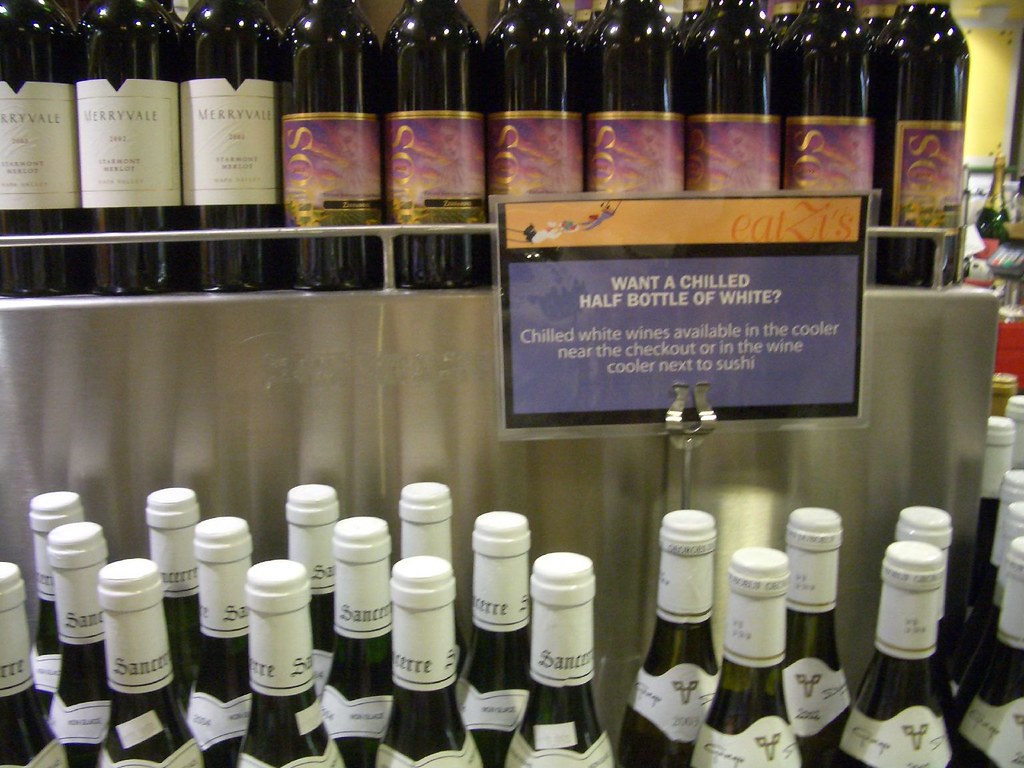
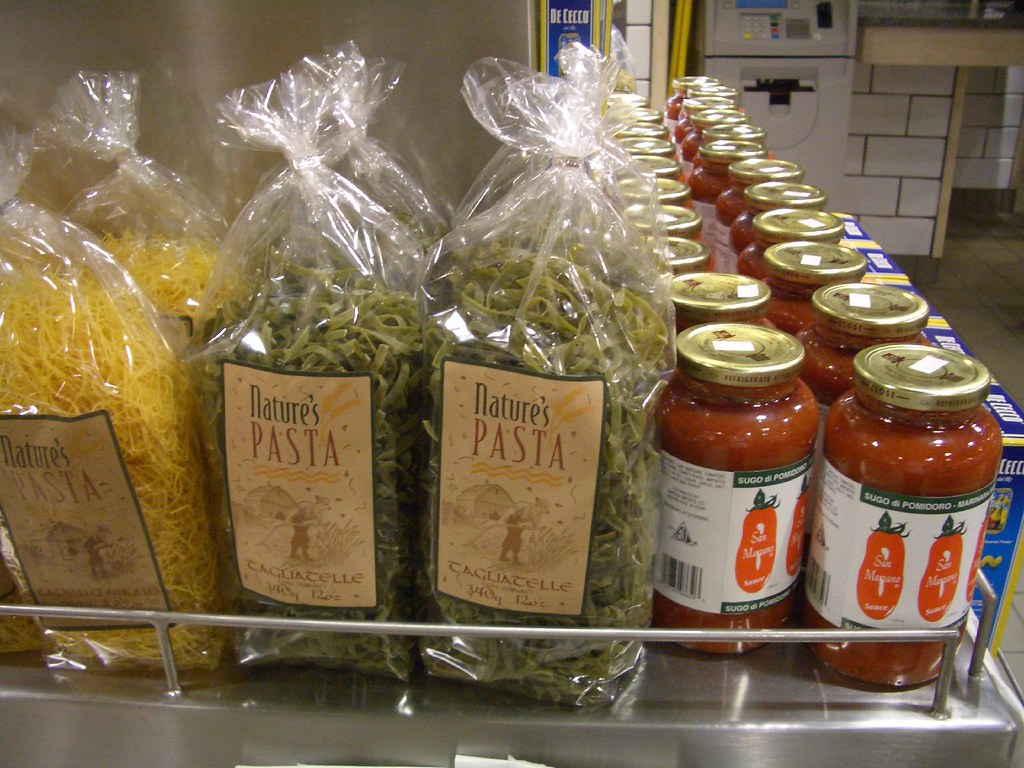
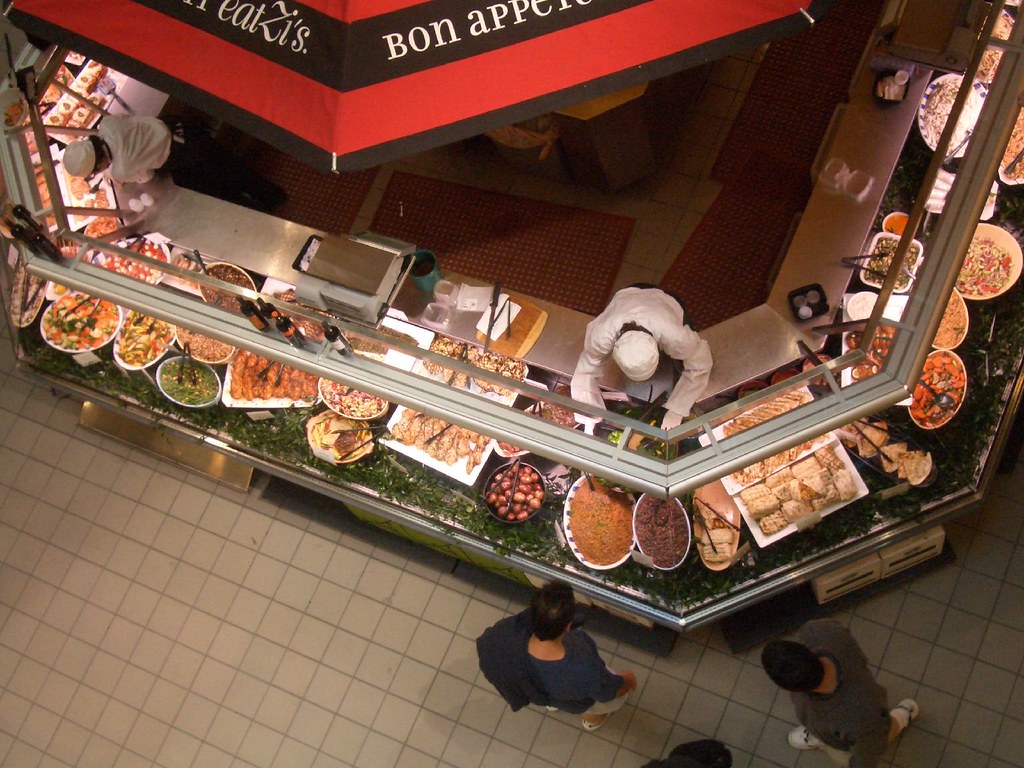
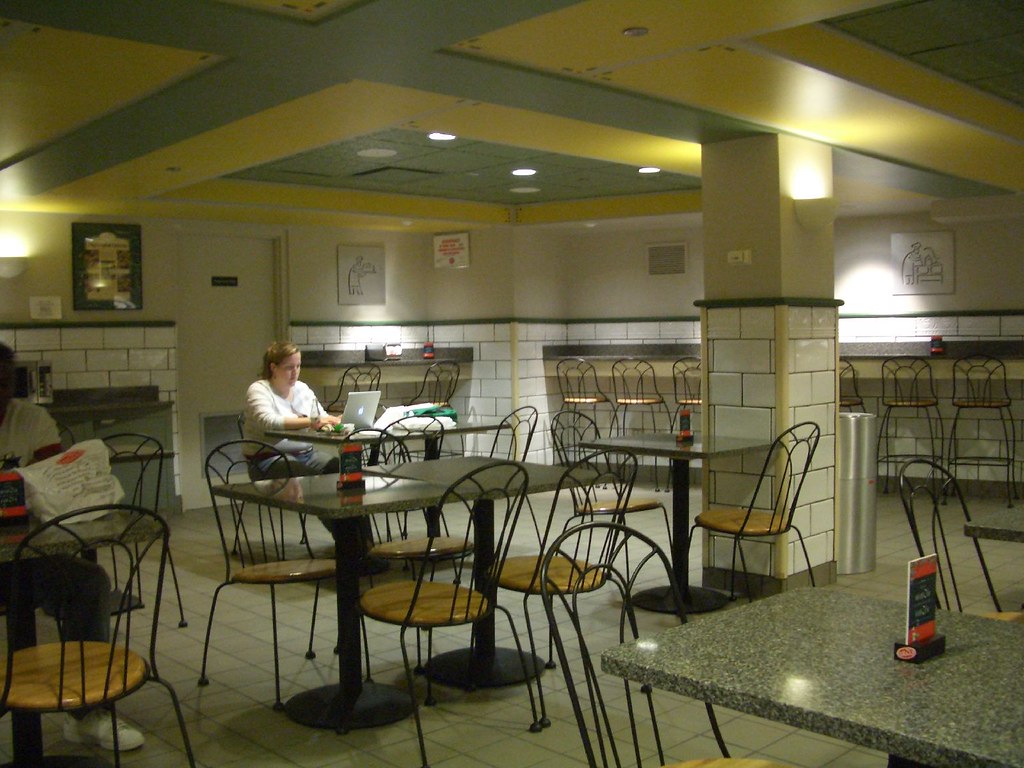
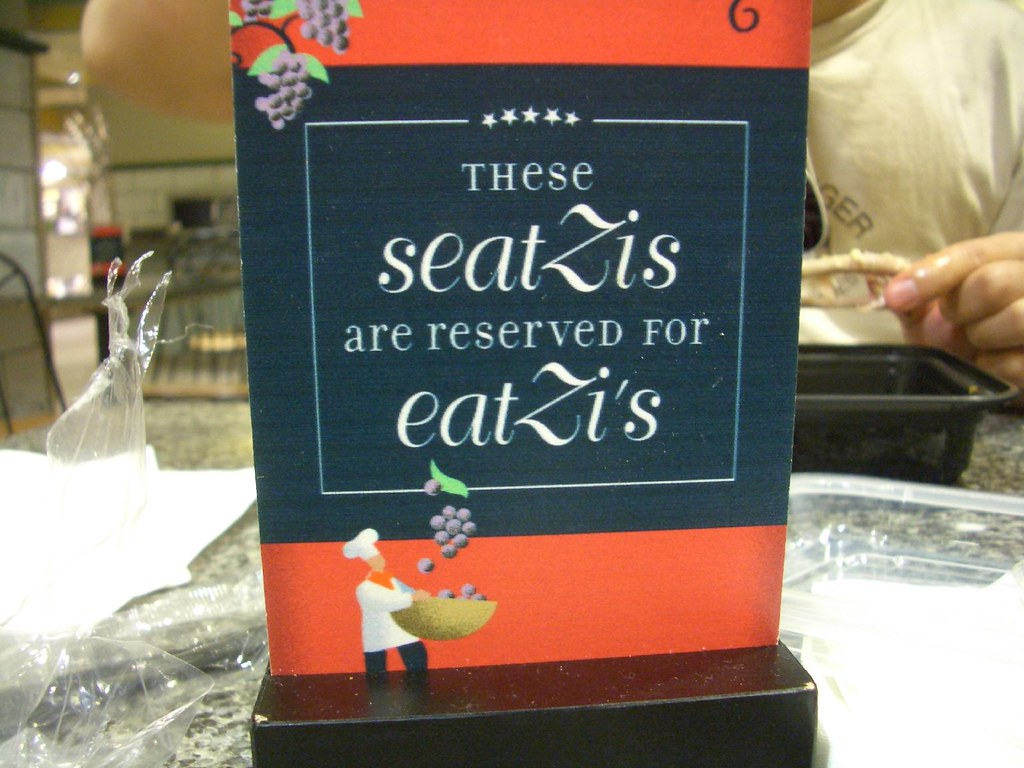
I walk in, and the cues are all across the board. The first thing I see is a big metal wine rack, an upscale version of your standard grocery shelf. One point, store. But then there is a sign encouraging the purchase of chilled half bottles, which I can open and drink right here and now. Huh. One point, restaurant. Then I see bags of dry pasta and jars of red sauce. Two points, store. Oh, but then there are chefs slicing meat and tossing salads! Two points, restaurant! Then I see a tasting station with a gorgeous basil cream spread and crackers - three points, store? But then there's this big seating area - three points, restaurant! Ahh! The lines were blurring as I struggled to put eatZi's into one of my mental buckets - the bucket for restaurants or the bucket for stores.

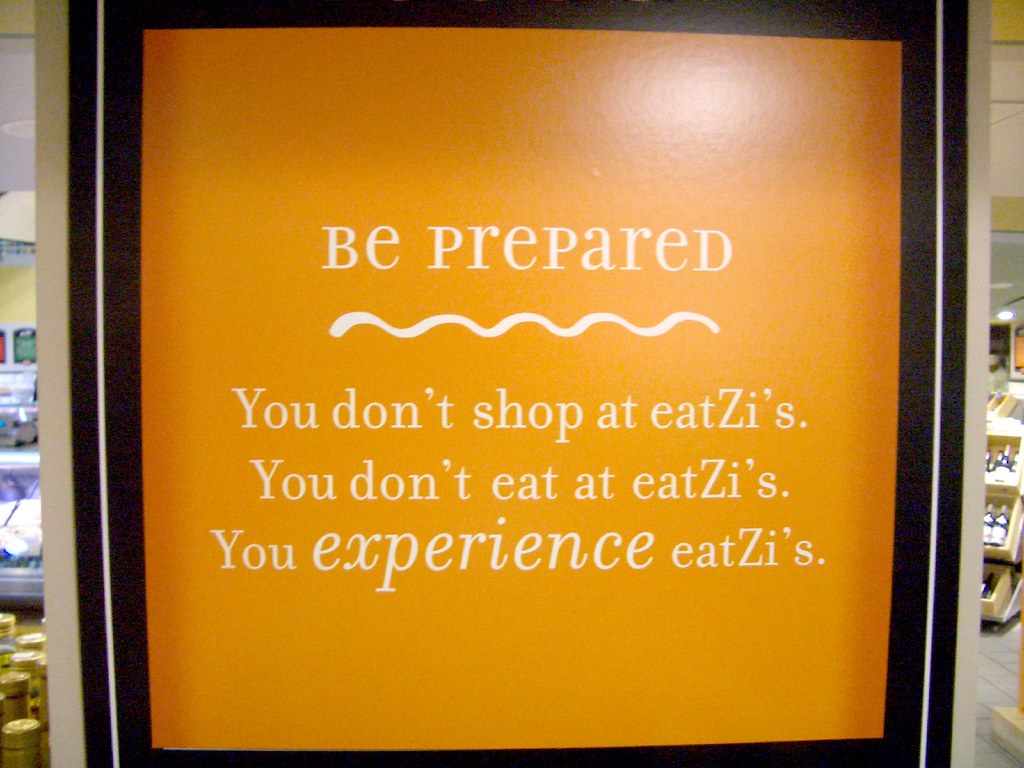
And to make things foggier, one sign presented this description: "You don't shop at eatZi's. You don't eat at eatZi's. You experience eatZi's." Thanks, how very Experience Economy of you, but really, which is it? Do I shop or eat? I don't know which mode to be in right now! It was borderline uncomfortable as I looked to other guests for how to behave, and tried hard to weigh my immediate level of hunger against the convenience issues of takeout.

Now while its elevator pitch may be rather hard to articulate, eatZi's is still an embodiment of every trend on today's radar. Busy urban dwellers with disposable income, spending a premium for fast, convenient, do-it-yourself meals, that require just enough preparation to also appeal to both epicurious foodies and moms who want to feel like they've "provided for" their families. It's like a giant trend report come to life, or a marketing student's wildest dream.

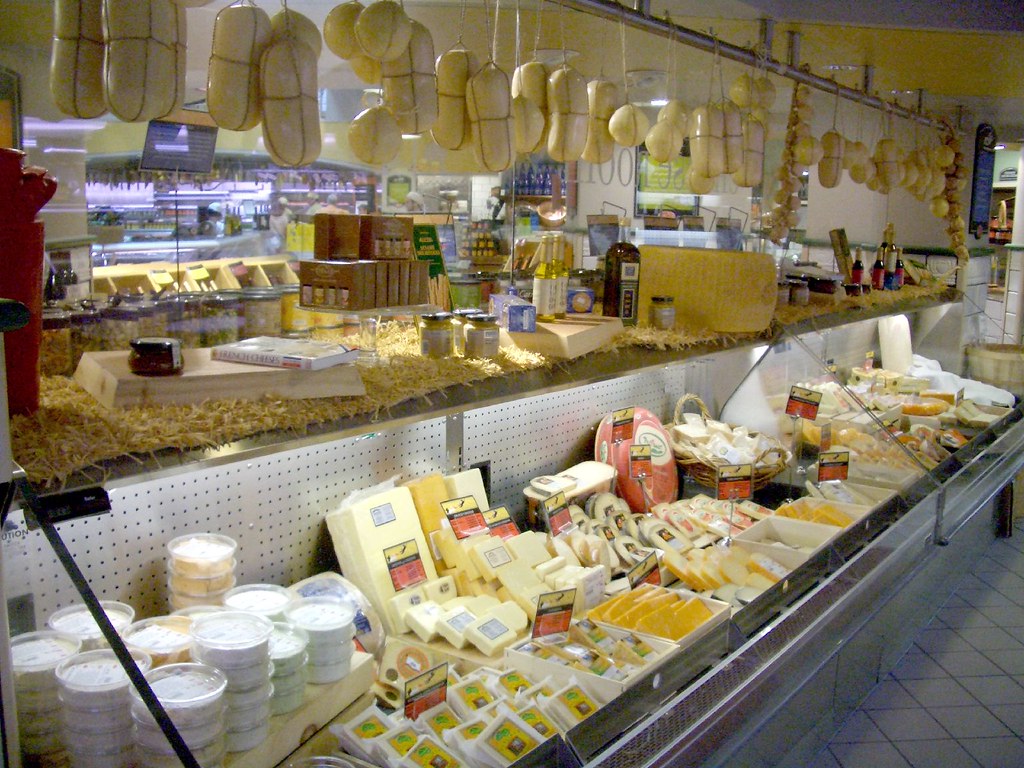
And I think eatZi's is doing a lot of things right. Its customer is defined, its messaging is catchy. It leverages multiple trends that other businesses aspire to tap into. And the food is pretty good too. So even though it doesn't fit neatly into one of my preexisting mental models, that's okay. My confusion turned to delight as I wandered through the cheese alley and gazed at the fresh, bright salads.

But as a talking point, it's still a little confusing. I have an easier time telling someone about a grocery store with a coffee shop, or a restaurant with a drive-thru, than talking about eatZi's. I guess I would say, "It's this great new, um, food market. You can get it for here, or you can get it to go. You can taste it in the store, or you can have it delivered. You can stock your home for Thanksgiving dinner, or you can grab a snack on your way to the gym." It may be great, but in today's world it requires some explanation.

Lately, I've noticed restaurants trying to be more like stores - special parking spots for curbside pickup, 30-minute lunches and drive-thru everything. I've also noticed stores trying to be more like restaurants - Starbucks kiosks, pizza on Friday's and food courts at Target. Perhaps everyone is trying to be what only eatZi's is. Perhaps it's the center where both sides converge, a sort of Food Source of the Future where customers can design their own experiences.

But because there is no protocol, some less jivey and more clear positioning might help put the words in peoples' mouths. Now, this is clearly not needed in traditional establishments; when you walk into Chili's, they don't need a sign saying "Welcome to a place where you sit at a table, a chef cooks your meal and you eat it here." And when you walk into Jewel, they don't need a greeter saying "Welcome to a place where you push a cart around, gather the items you want, and cook them yourself at home." People know these protocols because restaurants and stores have been around for years and years.

But eatZi's, and its format, have not. They are new. So a simple welcome would help me out. "Welcome to a place where you have the freedom to make your own meal. You choose how much you buy, who prepares it, where it's cooked and where it's eaten." If I could make a few key decisions right at the start, my journey through eatZi's would be more about culinary discovery, less about fumbling indecision.

I don't know if the trends will continue to grow, positioning eatZi's as the utopian nourishment resource of tomorrow, or if the prepared-foods sector will die down, leaving eatZi's with a bunch of real estate and some rotting potato salad. My hunch is that it will continue to open more locations and peddle its enticing and flexible offering. I just think that it's teetering on the edge of the chasm right now, and to cross it with confidence, it has a tiny bit more explaining to do.

7.25.2006

Stores will never die


I had the good fortune of attending a retail conference last week in Chicago. The Friday morning keynote was Barry Schwartz, author of The Paradox of Choice. The book is phenomenal and I highly recommend it. However, the best part for me was talking to the author after the show.

The book's subtitle is "How the culture of abundance robs us of satisfaction." Mr. Schwartz explained how having 40 toothpastes, 175 salad dressings and 275 cereals in the store leaves us paralyzed, unable to make good decisions, and ultimately feeling less satisfied with the choices we make. I couldn't agree more; our grocery stores carry an average of 30,000 items and enough is enough.

While I was having my book signed, a woman approached Barry Schwartz and said she was from eBay. She asked, "eBay carries millions of items. Are we perpetuating the culture of abundance?" And he thought about it, and said, "No. Because when I go on eBay, or Amazon, or any other website, I know what I want. Amazon might carry a million books, but for me, it only sells about 7. And I want all of them."

What a neat way to think of it. We don't have to know about all those other choices - we've deselected them the moment we type into our search boxes. Amazon isn't overwhelming because I typically know what I want, and I can find it easily.

But what if I don't know what I want? Well then, shopping online is a little harder. Can you really ever "window shop" online? You can view pictures and read descriptions, but if you haven't met the item face-to-face, it's a little harder to Buy It Now. People do, and sometimes it works out, but sometimes it doesn't, and they feel skeptical the next time around.

Personally, if I don't know exactly what I want, I need brick-and-mortar stores. I need to meet, shake hands and get to know my product. Maybe it's a blouse or some lipstick or a set of speakers or a lamp - but I want to decide in three dimensions before I buy in two.

So my theory is this: websites are better when I know what I want. Stores are better when I don't.

It's not that you can't browse online, or go straight to your product in a store. They're just not that good at it - yet. But what if we consider the implications of each, encroaching on the other's territory? What if stores were more like websites, and websites were more like stores?

Well, imagine if I walked into a store and was able to beeline it for the exact item I wanted? I suppose I would be shopping inside a physical version of Amazon. And wouldn't that be neat - I walk into a giant warehouse, tell them I want black strappy sandals, and am transported via a series of superfast moving sidewalks to the black strappy sandal section, where 7 pairs of shoes await my consideration?

Or the opposite case - what if I was browsing on Bestbuy.com, but could don virtual reality goggles which allowed me to type in "Sony video camera," and then suddenly "pick up," "turn on" and "use" 7 different Handycams? You heard it here first, people!

But seriously, smart folks have been predicting the death of retail for years. Saying that one day, physical stores will crash and burn because you can get anything you've ever wanted from the internet. Ultimately, I believe this is not true, for one simple reason: humans will never be able to know what they want, 100% of the time. There will always be moments of indecision. And even if we think we know, we will never be out of new choices. Sure, we settle into routines, and we know we like Tide detergent, Apple computers and size 32-28 jeans from the Gap. Perhaps we can just order these things, online, forever. But what if new jean styles come out? How will we know what kind is best? We better head to the mall to try them on.

I don't think that physical retail will ever die. Unless my crazy versions of the future come true (which they could, I suppose), people will still get in their cars and go to the store when they don't know what they want. Web shopping is still growing, and I don't think we've reached equilibrium yet, but it will come. We'll learn how to use both channels effectively to manage our levels of choice. If stores culled their selections and improved wayfinding, they'd inch ahead in the race. If websites got better at sensory experience somehow, they'd inch ahead. But I say, stick with your strengths. Let stores be GREAT at browsing, let websites be GREAT at beelining, and let us all finish our shopping and go outside to play.

7.19.2006

The beauty of focus


So there's this fruit stand in my neighborhood called Stanley's. Rather, it used to be a fruit stand, when it opened 39 years ago. Now it's a small fruit palace. A mecca for produce lovers. And isn't there a little produce lover in all of us?

Stanley's is focused on fruits and vegetables. They don't tell me that, I just know. It's all they sell. No need for ads, inside or outside the store. And Stanley's loves fruits and vegetables. The love is apparent in everything they do. Look at the way they arrange the asparagus. Look how carefully those oranges are stacked. It's small, clean, bright, cheap and busy. In fact, it's darn near perfect.

Stanley's success is indicative of a new (but actually old) trend called cross-channel shopping. You get your pasta at Jewel, your frozen foods at Trader Joe's, your meat at Costco, and your produce at Stanley's. Why do you do this, when so many stores carry all of these items? Because some places are more focused on certain things. As much as every store wants to be the sole provider of all your family's nourishment, they can't possibly do that well. They're not focused enough.

And how could they be? Stores have buyers. A typical grocery store will have a buyer (or three) for produce, for deli, for dairy, for snacks, for whatever other categories they divide their store into. Each of these buyers would love his section to be like Stanley's - his products glorified, given room to breathe, and properly attended to. But things get in the way, big-company things like operational efficiencies and SKU proliferation and staff allocation. Individual categories get trumped by "the whole store." Suddenly you have yesterday's apples getting bruised, 24 kinds of ketchup being carted in on palettes, and frozen foods jailed inside canyons of freezer doors.

So some stores focus, and others diversify. Then what happens? Word-of-mouth happens. People start talking about Trader Joe's, because the whole store is cool, and all, but really the frozen foods are the best thing there. And hey, we just got a Costco membership, did you know they have really good meat? And here, have a strawberry, they're from Stanley's. Yeah, it's amazing, have you been? People like to talk about their good retail experiences, and they like to classify things. If you tell people about TJ's, that's cool. But if you tell them about TJ's frozen foods, you are passing on even more valuable knowledge.

And so I find that a store with focus, with specialty and expertise, will get talked about more. People talk to me all the time about their great retail experiences, and often the more specialized, the better. After hearing about Stanley's for the umpteenth time, I finally decided to make the extra trip. And now I'm hooked.

I'm hooked because I feel that apples bought at Stanley's are special, nay, superior to those from the grocery store. They seem more loved, more expertly picked and more carefully delivered than those at Jewel. The store has focus, and it shows. I'm now a believer, spreading my own gospel about the little fruit stand that could.

In a world where everyone sells everything, I'd like to commend the stores that stay focused. We notice, we return, and we tell our friends.

5.19.2006

Pocket full of brilliance

Has everyone heard of American Girl Place? It's an outstanding retail experience and I encourage you to visit. However, if you aren't a female between the ages of 5 and 12, you might feel a bit uncomfortable.

This is because American Girl is for kids. And not the boy kind. This unique lifestyle brand is an absolutely integrated, tightly targeted set of offerings including stores, magazines, movies, books, restaurants, live theatre, photo studios and hair salons. But not the kind of hair salons where you get your hair cut - the kind where you get your doll's hair cut.

I could go on forever about the brilliance of AG's storytelling strategy. They imbue their dolls with vitality by telling moving, historical tales about their past in books and movies. They create dolls that look "just like you" to establish a personal connection, and they give them historically relevant names. Each doll is such a real person, if she gets sick (or her head falls off) you can bring her to the American Girl Doll Hospital! (and buy a hospital gown on eBay).

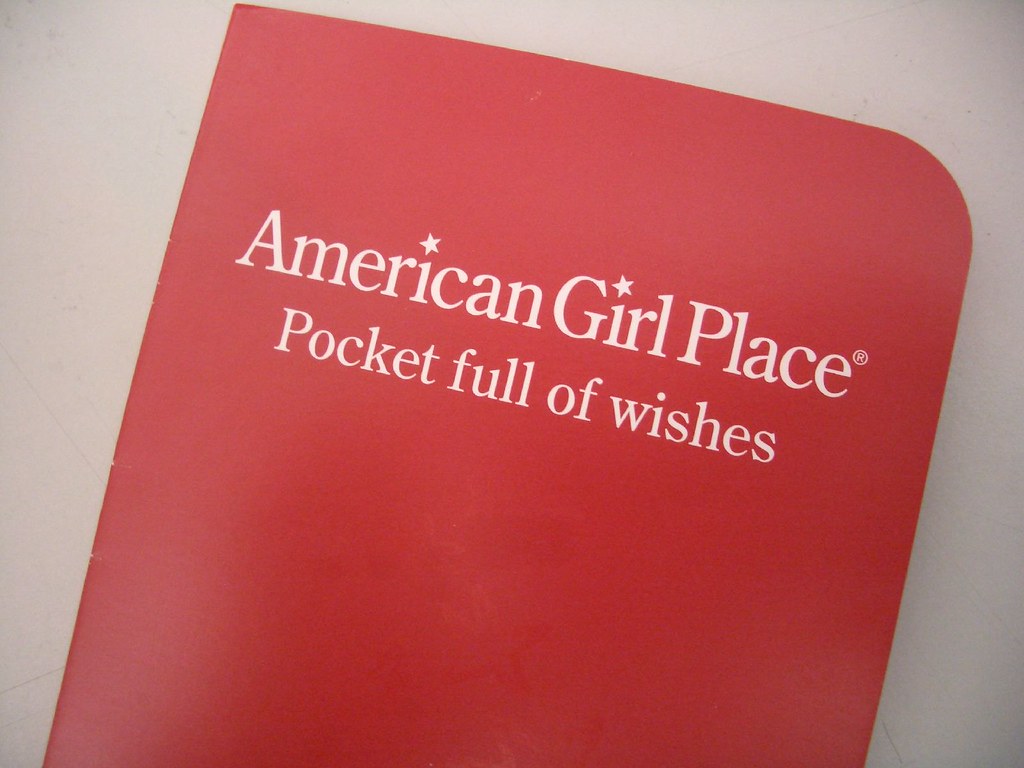
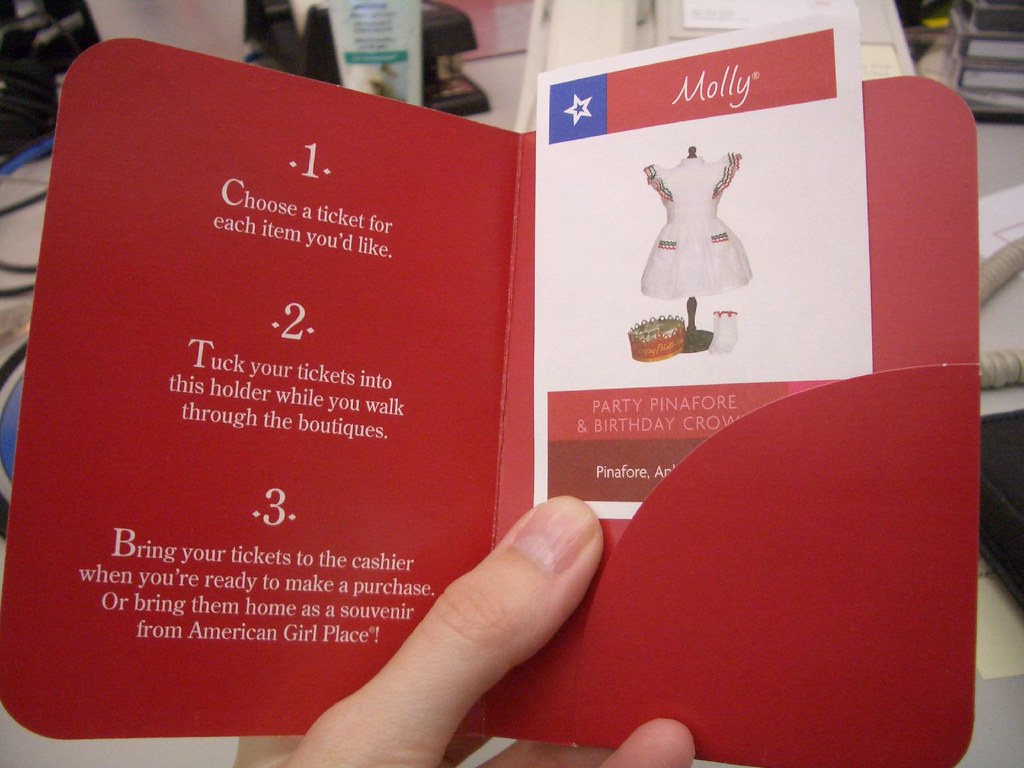
Now central to the retail channel are the showrooms, where you can buy your doll new clothes. And this is where I think American Girl has been most clever. So imagine: you are ten years old in this wonderland of girls and girliness. You pick up a little red folder. It's adorably titled "Pocket full of wishes." You walk around from display to display, gleefully viewing dioramas of dolls behind glass, in not only outfits but miniature environments. You see your doll Jess, exploring ancient Mayan ruins with her parents. You want her explorer's clothes. You want her backpack. You even want the ruins. What do you do? You pick up a little ticket. Next, Jess is kayaking across a river. You want her outfit, her kayak, her dog and her dog's outfit. Tickets for all these things. Suddenly you've got tons of tickets, but it's not like you're filling a shopping cart. You are collecting your wishes in a small, two-dimensional, under-your-mom's-radar kind of way.


And the tickets are fantastic, too - name of doll, color photograph of the outfit, and price. $20 for a party pinafore and birthday crown. Wait, says mom, $20 for what? A tiny piece of fabric? Absolutely not.

But mom, you whine, it's so cute! Here, see for yourself! You lead her to the diorama, where she too can experience the amazing scene. But she's not as impressed as you! Shocked and sad, you tuck the ticket back into your folder.

And here's where the brilliance begins. Kids don't give up. When they want something, they nag. And American Girl has given them the tools to be successful naggers. The folder states, "Bring your tickets to the cashier when you're ready to make a purchase. Or bring them home as a souvenir from American Girl Place!" Whatever, souvenir. These tickets are Certified Nagging Reminders. Girls hold onto them, pore over the adorable little outfits, and ask again. And again. They won't forget, because they're stored safe in their glossy, durable "Pocket full of wishes."

American Girl has done a masterful job of knowing its audience. Its young customers love the stories, the clubs, the products and the community. Its parental customers love the education, the day of quality time, the positive morals and the customer service.

But when it comes to shelling out the big bucks, American Girl knows who's really boss. They've empowered their young ladies with a lot of ammunition, and they know it works. This company is successful in part because no mom can forever resist the nagging power of her daughter.

5.16.2006

How to listen

In the retail world, there's a big fear. That fear is called The Internet, and that fear is real. "Good god," say grocery stores and bookstores and coffee shops and gadget shops, "how can we ever compete with the power of a website? We'll never have that accessibility, that convenience, that dialogue."

Stores can take steps to compete. They can buy more real estate. They can stay open 24/7. They can allow people to "shop naked" (if they could just get around that whole indecent exposure thing).

But what is arguably the most powerful case for online merchants is that they create a dialogue. They leverage the opinions of willing and able consumers, hungry to tell the world that the Uggs they bought on Zappos are super comfortable but your feet get hot so don't wear socks. Consumers who can't wait to share not only which satellite radio receiver to buy from Amazon, but how to install it and why it sometimes doesn't work in tunnels.

We all share an innate human need to be heard. If retailers want to stay relevant, they can start by listening.

But how to listen in a physical space? It's not as easy as clicking on "Comments." Retailers need to get a little more creative.

So how about a suggestion box? Not so much. The original form of feedback solicitation, the suggestion box is an item of pure, passive humility. Your comments go into a black hole, where you will definitely never see them again. And it's a boring black hole! So suggestion boxes gather dust everywhere they live. Listening needs to be active, and it needs to be inviting.

If you think active listening in a retail space can't be done, check out this article about RanKing RanQueen, a shop in Tokyo. Based on sales data, they literally rank items in the store by category. They put a little "1" next to the number one toothbrush. And a "2" next to the number two toothbrush. And they only carry the top 5 toothbrushes! This store is listening every time the register rings. And it is sharing shoppers' feedback in a way that sways crowds. I mean, why would you buy the number 4 candy bar?

This active listening is phenomenal, given the operational constraints that most retailers would whine about. But what this store is not doing is asking shoppers to go out of their way. And getting feedback to be appealing is a little harder. Hotels and restaurants hand out comment cards, but what's my motivation to fill these out? I'd be entered into a drawing? Again, not so much. If you want to hear what your shoppers have to say, make it inviting.

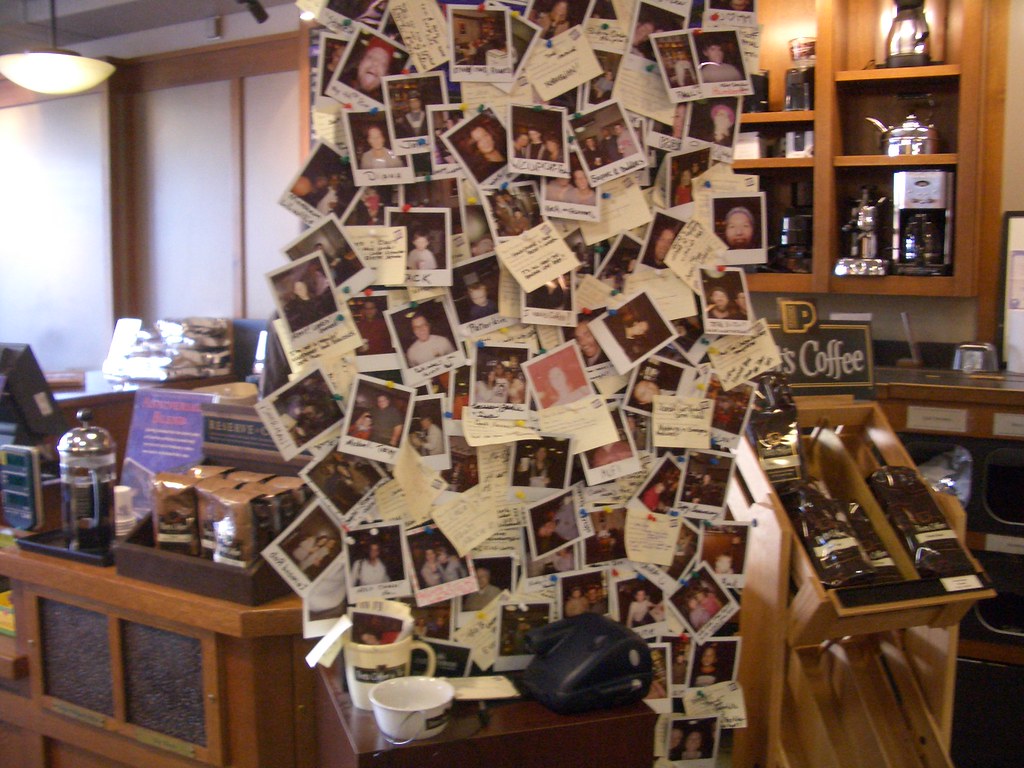
Peet's Coffee is doing just that. Their in-store bulletin board has a Polaroid camera, on and loaded, and a little tearpad with questions. What's your favorite Peet's drink? What's your best Peet's memory? Thoughtful, inspiring, borderline cheesy. But right on brand. Still, who's gonna stop and give feedback? What's my motivation?

My motivation is that Polaroids are fun. That there's nothing more fascinating to look at than another person's face. That I want to read about personal preferences because they are intimate. That I want to join this community because look how many people already have!

I don't know if Peet's is learning anything revolutionary about its products and services. But they are speaking their message loud and clear: "We are listening." And somehow, I felt closer to Peet's after writing about my chai tea latte. If some other coffee shop sold their products online, would I be interested? Maybe. But this retailer is holding onto its space in the mind of the consumer - not because it's convenient, or cheap, or even providing products I need, but because it's starting a dialogue.

If all retailers learned how to listen, I might buy my next book from a store.

5.03.2006

The store of the future

There's a lot of talk around the idea of "cross merchandising" at my job. Most brand marketers seem to be entirely for it, while most retail buyers are vehemently against it. As designers and consultants, we need to see both sides. But it's an endless debate and so I'd like to play it out here.

The basic premise is this: I am a brand company, and I sell cookies. I do not sell milk. However, I like it when milk is sold next to my cookies, because people buy more milk, and people buy more cookies. (As I understand it, this has been proven to boost sales in many, many retail situations. Cellphones with headsets, popcorn with movie rentals, chips with salsa, sweaters with matching skirts).

But now instead, pretend I am a store. I sell everything. Milk, cookies, Kleenex, hamburger buns, carrots. I want to make it easy for people to shop. If I move the milk, and put it next to the cookies, people will go to the dairy case and, seeing no milk, will be confused. They will back away slowly. They will flock to my competitors. They will never think to go look by the cookies.

Likewise, if I sell Kleenex next to the cold medicine, instead of in the paper aisle; if I sell hamburger buns by the meat, instead of the bread aisle; if I sell carrots with the ranch dressing, instead of with the produce; I am creating chaos.

So why can't we just put MORE Kleenex next to the cold medicine? Keep the MAIN Kleenex stock in the paper aisle, but add a couple boxes next to the NyQuil? Surely those boxes will fly off the shelves!

(And they will, too. People don't realize how suggestible they are, but if you are buying NyQuil, you see the Kleenex boxes and go "Oh yeah! I totally forgot, I totally need Kleenex." And you totally buy some. And that adds up for a retailer).

But suddenly, we are moving towards a scary store of the future. Everything is everywhere. Carrots are in the salad dressing aisle, along with lettuce, croutons and dinner rolls. It barely looks like a salad dressing aisle anymore! The milk is by the cookies, the chocolate candy, the cake mixes and the peanut butter! What kind of crazy store is this?

So here's what I'd suggest, if I were designing the store of the future. People have two very different needs in a grocery store. Number One: Find what I am looking for. You'd think this was easy but good god, it's not! Have you ever tried to find horseradish in a Dominick's? It's a nightmare! And Number Two: Give me ideas. What time do you usually figure out what to cook for dinner tonight? Maybe five minutes before you start cooking? You look in your fridge, you peer in your cupboard, and you think, "I have no idea what to make."

So here's how my store would go. There are two very different sides. The first side is Easy to Find Land. There is no cross-merchandising, no shelf extenders, no aisle violators, no signs sticking out into the aisle, suggesting that you try some chips with your salsa. Its aisles are uncluttered, there are fewer products, and I can see where everything is.

The second side is Suggestion Land. It is comprised of displays with recipes and the ingredients needed to make them. You have the recipe for Chicken Marsala, and right there, underneath the tear-off recipe card, are chicken breasts, sage, heavy cream, Marsala wine, lemon juice and shallots. Next to it is the Spaghetti recipe, with pasta, marinara sauce, parmesan cheese and mushrooms. Next to that is the Milk And Cookies display and the Carrots And Ranch display. Maybe these displays are arranged according to meal: Breakfast, Lunch, Dinner and Snacks. Maybe they are arranged according to prep time: 5-15 minutes, 15-30 minutes, 30 minutes and up. Suggestion Land is a walk-in cookbook.

Sometimes I'm in the mood to find what I need and get out, because people are coming over to my house and the store employees have all disappeared and I can't find the ginger dressing! Aah! In this case, please give me Easy to Find Land. I will be happy and loyal.

But sometimes, I have an hour, I am in the right state of mind, and I want to be shown recipes and ideas. In this case, please give me Suggestion Land! I will happily and easily change my mental model, because I understand that it's a different space and products are sold differently there. It's not that big a leap.

Grocery stores today are a total mishmosh. It's ridiculous. They are trying to solve both these needs - finding planned purchases and discovering new items - in simultaneous spaces. It makes both harder to do.

By displaying the products according to shoppers' mindsets, the store of the future will both inspire me AND make my life easier. I hope it gets here soon.

12.12.2005

Manipulation by chocolate

So here's the scenario: You're out to dinner. You had an appetizer, a salad and an entree. You are now in the throes of a food coma - your eyes glaze over, your waist button pops and you simply cannot imagine forcing another bite into your mouth. The waitress comes back with a small menu. "Can I interest you in some dessert?"

What do you think, waitress? My guess is that nine out of ten people say no. But why? I'll tell you why. They are simply being asked at the wrong time.

Grand Lux Cafe, in downtown Chicago, has finally cracked the age-old dessert dilemma. Why are we asking people to indulge in sweets when they are stuffed to the brim? Why not, perhaps, ask them about dessert when they are - gasp - still hungry?

And so, the servers at this plush, velvet-and-gold, indulgence-for-all restaurant ask you about dessert, first. In fact, it's right after you sit down. Oh, they act like it's a real "time constraint." The pitch goes something like this: "We have a selection of five desserts that take a half an hour to prepare. Would you like to order one now?"

And of course, our eyes bigger than our stomachs, we think "Sure! I'm so hungry I could eat a house! I'll get dessert going now, because I'll definitely still be hungry in thirty minutes!" Definitely.

Well let me just tell you, I ordered the mini chocolate chip cookies, and I ate less than one cookie. I think I paid eight dollars, too.

Don't get me wrong - I think Grand Lux is definitely onto something. They cleverly looked at their problem, "We're not selling enough dessert," and lived it through the eyes of their customers. I'll bet their dessert hit rate is a lot better than 1 out of 10, too.

But people, don't be fooled. Since when does dessert take a half an hour? The pre-order is a clever trick, but in my opinion, it's just plain manipulative.

11.22.2005

Signals for sitting

I've always been fascinated by the ways that space changes people's behavior. How your surroundings can subtly influence everyday aspects of your body like volume, posture, speed and awareness.

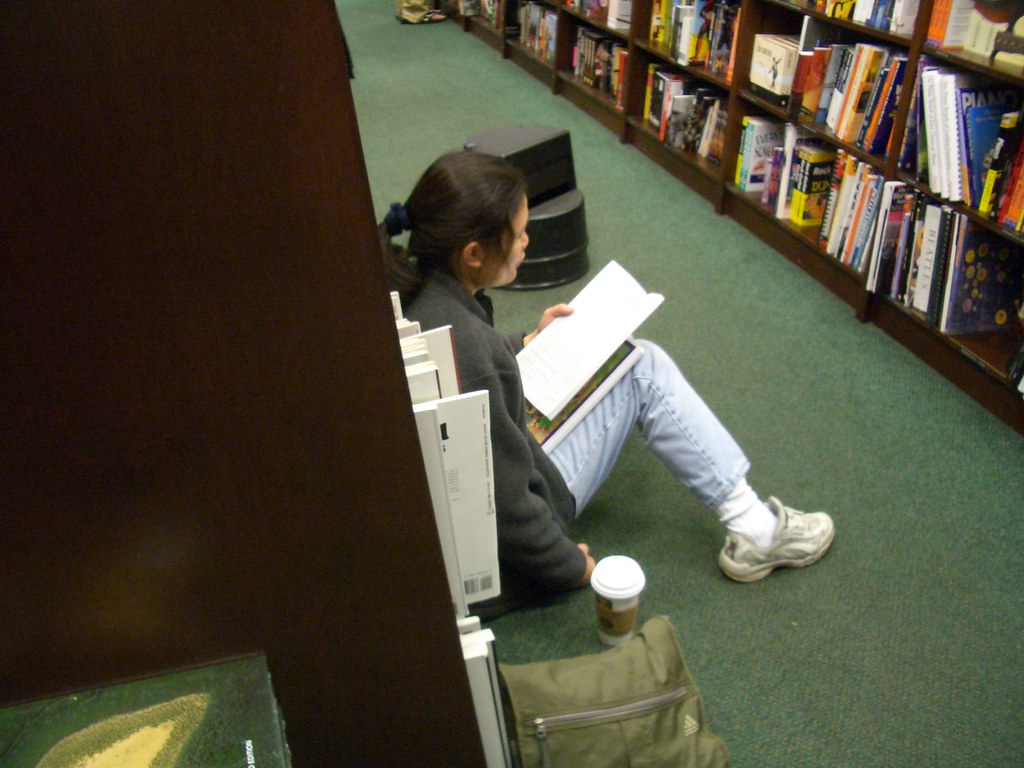
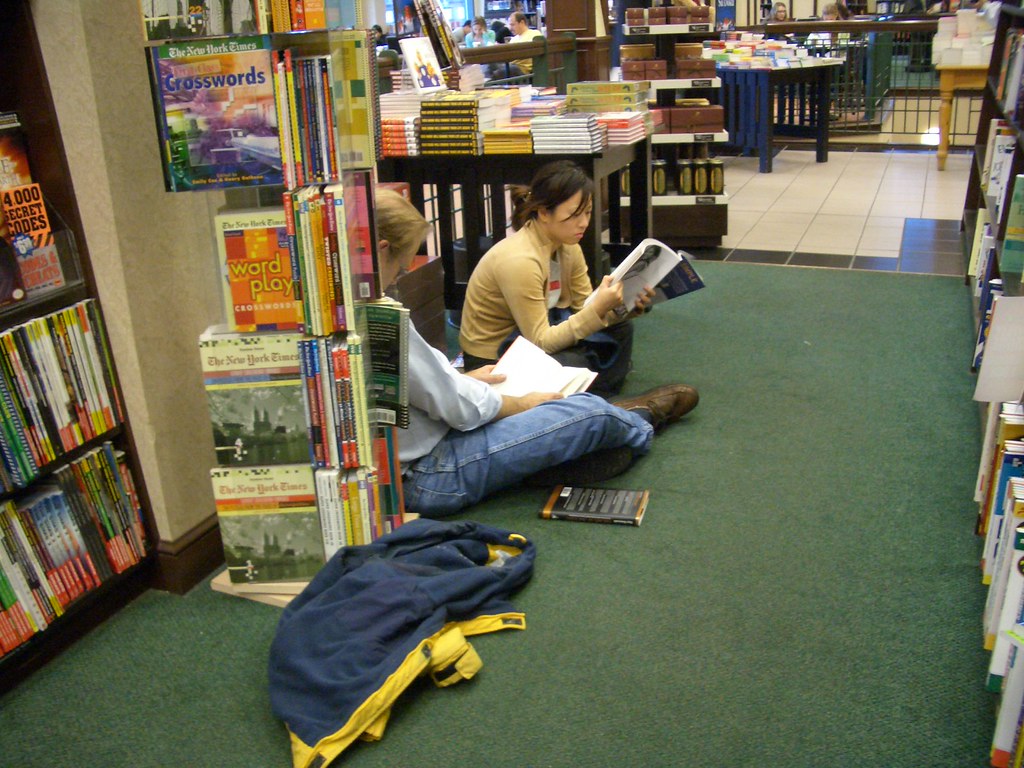
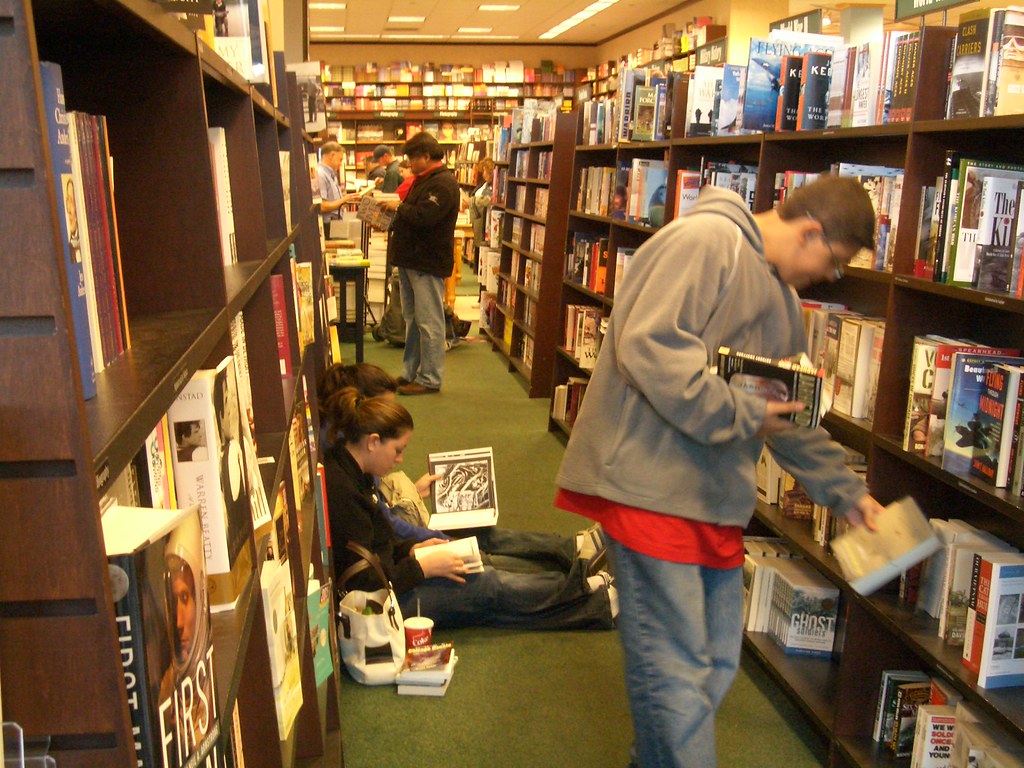
I was in Barnes and Noble the other day, and I noticed a very intriguing behavior. Around almost every corner, there was someone sitting on the floor.


Can you think of another public space where the floor looks inviting? Yeah...none spring to mind.

Now obviously, the nature of Barnes and Noble's business would point to a need for seating - lots of people like to read half the book before taking it home - and for this they provide couches, armchairs and an entire Starbucks cafe.


But yet, you have these floor dwellers.

So how to explain it? I feel that Barnes and Noble has designed spaces which, intentionally or not, signal to the weary that it's okay to sit. And the cues, oddly enough, seem to relate to childhood - a time when sitting on the floor happened every day.

A big part of this is the carpet. It's not super plush, but it's incredibly clean and consistent. Like the living rooms of childhood, or the floors of kindergarten. It doesn't exactly look cozy enough to lay on - but it sure looks good enough to be touched by your butt, legs and feet.

Next, there is a nice contrast between low, open spaces and tall bookshelf hallways. When we are little, we like to hide from grownups. When we are grownups, and hiding is socially inappropriate, we welcome the chance to go around a corner, lean against a wall, and slide down into our books. The tall aisles provide physical, visual, auditory and mental separation from the rest of the world.

And finally, Barnes and Noble emanates the design aesthetic of our local childhood favorite - the library. The stores have giant rolling ladders, lots of wood, stepstools in the stacks, employees with the knowledge of librarians, and an overall emphasis on reading to learn and grow. They feel hometown, they feel safe, they feel like one of the great pillars of democracy. They feel like the place where we used to crawl around during storytime.


I don't know if Barnes and Noble is happy with people sitting on its floors; perhaps they create traffic jams or look too casual. But I hope the company recognizes and celebrates the factors that make its stores so sit-worthy, because the more people sitting on the floor, the more people staying in the store.

10.31.2005

Instant gratification

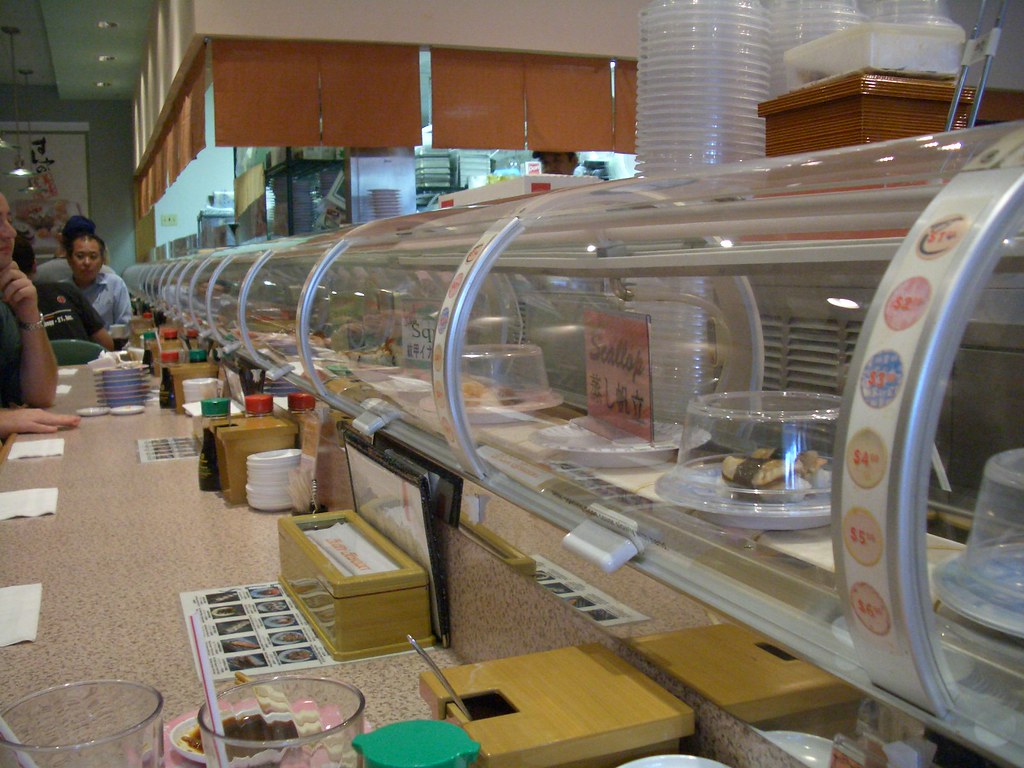
So there's this little restaurant near my office called Sushi Station. The genre of this place is best described as "conveyor-belt sushi." Let me explain.

You sit around a large counter on barstools, not unlike the counter at an American diner. Right in front of your face is a conveyor belt, upon which little plates of sushi ride. They are covered by a large clear tube which has slide-up doors. You sit and watch the sushi go by. Every so often, a sign rides by saying "Spicy Tuna" or "Edamame." If you see something that looks good, you just open the door and grab it! Then you eat it! Just like that - instant gratification.

The way you stay honest is that the plates are color-coded. It's something like $2 for green, $3 for pink, $4 for blue and $6 for yellow. When you've had enough, your waitress comes by, tallies up your plates and brings you the bill. Clever.

What I think is fascinating about conveyor-belt sushi is that they have literally brought the menu to life, right in front of you. First we saw diner menus with little drawings of their food. Then the Denny's menu brought this concept to the masses with its not-fooling-anybody photos of eggs and bacon. Some restaurants have dessert trays, or even platters showing their raw cuts of meat (yikes).

But this is the ultimate in real-time decision-making. It's almost childlike in the way it caters to your visual sense - you see something and say "I want that." Seconds later, you have it.

Now I know that Americans are considered lazy, and that we are constantly coming up with "inventions" that bring "convenience" to our lives, so we don't even have to get up to change the channel. And I have to say that I'm not a fan of this trend - can't people just get off the couch and do something for themselves?

But that said, the idea of conveyor-belt shopping still sounds pretty freaking cool. Just imagine - you sit in a chair and things fly slowly by your eyes. You consider each thing for just a second. Suddenly, "That one!" And you've made your choice.

It would be fun for impulse buys, or purchases where you can't make up your mind. It would help in situations where the process takes a long time. It's like picking the bad guy out of a lineup. You see it once, and in a split second, you know. That's the one I want. And bam - instant gratification.

Maybe one day we'll all be sitting in La-Z-Boys at Target, watching toasters fly by.