10.08.2006

She is the store

Excuse me miss, but are you knitting?

If you are one of thousands of young women who has heard that question recently, you know that knitting isn't just for grandmas anymore. Knitting was declared "the new yoga" at the start of the millennium, and more and more young people are taking up this calming, creative craft.

Everywhere you look, the knitting wave continues to grow. My trendsetting city has yarn shops in practically every neighborhood, and when my friend and I started a local knitting group last year, we had no idea it would grow to over 250 members.

But I find a slight gap between the hip chick making a scarf on the train, and the place where she buys her yarn. Many knitting stores are, for lack of a better word, uncool. They display thick cabled sweaters and pea-green shawls. They are run by disconnected women who make up in yarn skills what they lack in people skills. They have punny names like Knitche, Have Ewe Any Wool? and We'll Keep You In Stitches. It's a decidedly frumpy retail landscape.

However, a few knitting stores have started to get it, and I'd like to highlight one that rises to the top. It's a small boutique near my house, and it's called Nina. "Nina," you ask, "what kind of a name is that?"

Well, the best way to describe Nina is through a parallel example. The Apple Store is often praised in this way: "It looks like the whole store was designed by one person." Friends, meet Nina.
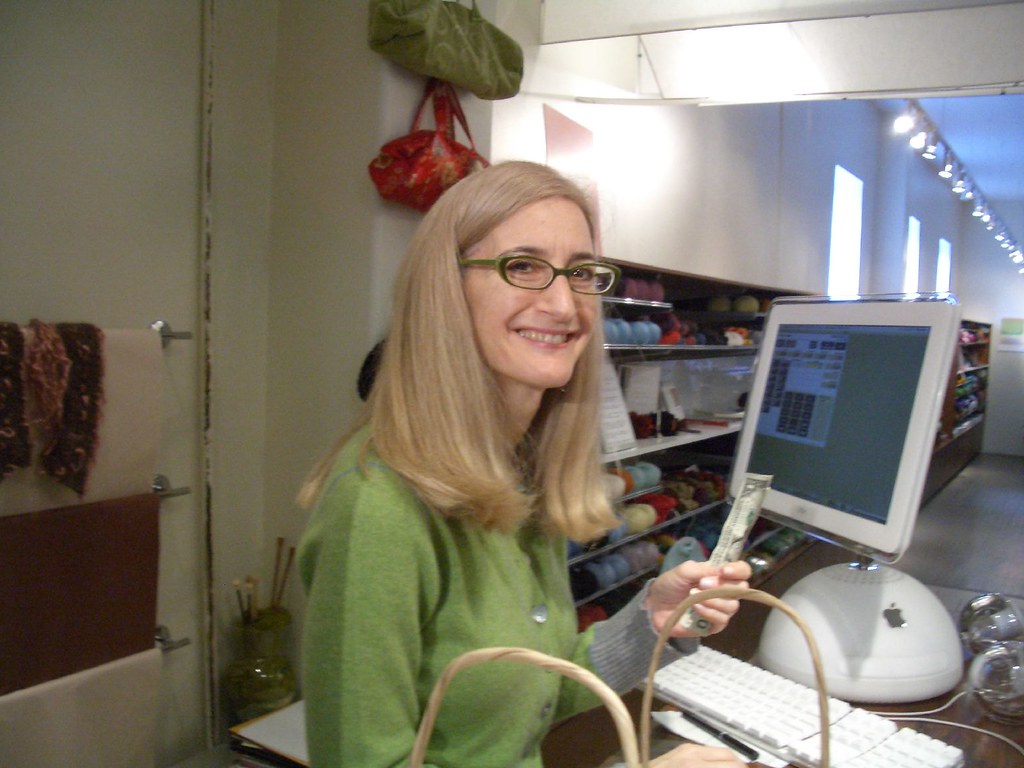
Nina is a store designed by one woman. While I don't know this woman personally, after spending some time in her shop, I feel as though I've been to her home, met her family, looked through her closet and heard her life story. I feel like I know her inside and out. This is because she seems to have touched each nook and cranny, made each careful decision and essentially put herself into every element of the space.

Nina's personal style is unique and enviable. Her often-homeknit outfits simultaneously defy and create trends - sweaters with flared sleeves and intricate color patterns, matching wristwarmers and wraps. And Nina seems almost ageless. She often wears her long hair down. Her modern glasses are green. She's soft-spoken and sweet and yet, at the same time, very very cool.

And this personal style spills out into every detail of the space. Oversized needles frame the front window, a space made warm by a modern couch and enormous low-hanging lamp. Nina herself is small, and these proportions make you feel a bit like a child, or perhaps Alice in Wonderland. Blond tile floors practically match Nina's own hair. The clean walls and minimal wood shelves make each brightly colored ball of yarn pop that much more. And each product itself seems hand-selected, each blue the newest shade, each alpaca yarn the softest blend. From the lovely bamboo needles, to the pristine white iMac, to the graphically elegant shopping bags, every inch of Nina looks like, well, Nina.
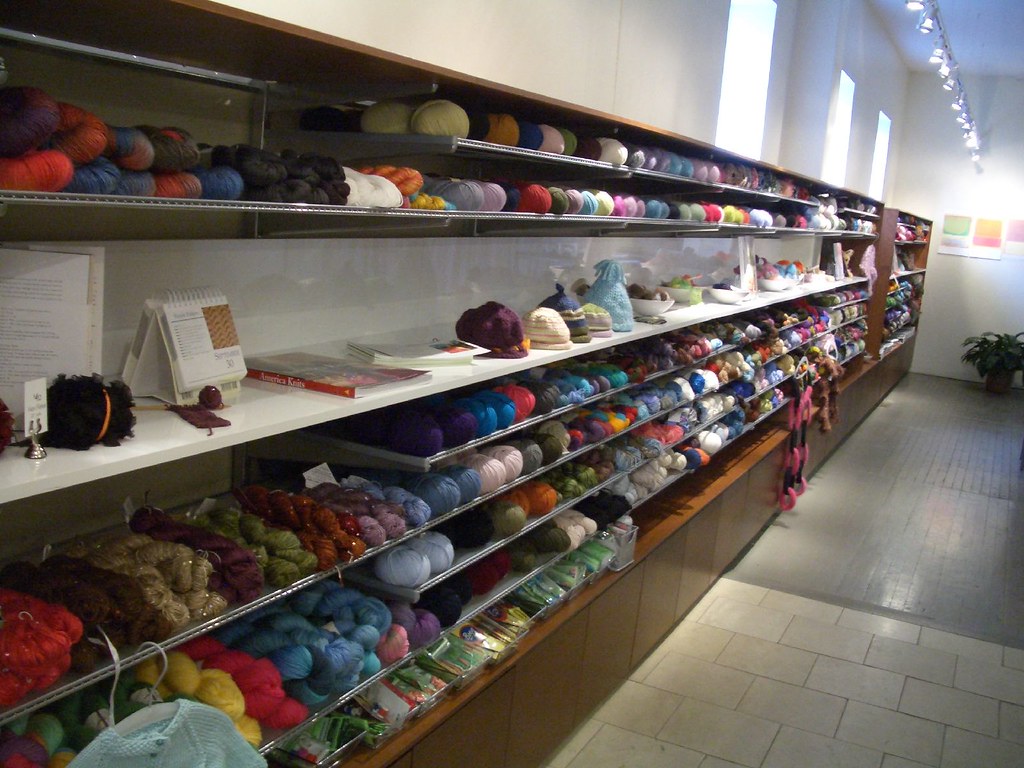
The coherency found in this store is remarkable; everywhere you look, you see the vision of one person. But how might this translate to the larger world? Knitting retail is fragmented and inadequate. Could Nina expand her empire? Could she open even one more store?

My answer is, I hope not. In an industry where the product is so personal, the decision so tied to creative expression, having the owner's physical presence can make or break all the good design in the world. If Nina herself weren't there, I would have said "Nice shop," bought some yarn, and left. I think that without Nina at the counter to say hello, advise on gauging and suggest projects, as well as knit and model her own creations, the cool vibe would die down pretty quickly.

Then, to turn the issue around, could larger chains ever be like Nina? We've all heard of "brand nazis" and design language so tight no air gets through. Some stores come close to this level of cohesion, mostly brand spaces like Apple and Nike. But standards become more malleable with each successive person who uses them, and rules are bent, then broken, with each new store. Furthermore, you can't have your company's top retail designer also work the register at all your stores. Sadly, the laws of physics won't allow it.

Now admittedly, I don't want to share Nina. I want her to keep her store in my neighborhood and sell her cool yarn to me. She's helped knitting become chic, and I'm grateful.

But I also think if Nina wanted to expand her horizons, new stores wouldn't be her best bet. Perhaps she should open a retail consulting business, helping people find their own personal style and translating it into their store designs. She may be good at knitting, but she's good at retail too.

And so, Nina's shop remains unique. I will continue to shop there for the product, but also for the person. You can take the store out of Nina, but don't you dare take Nina out of her store.

9.22.2006

Size inflation


The following dramatization is based on real events.

Woman enters store. Woman spots shirt. Woman checks sizes. Woman identifies shirt of her size. Woman takes shirt to dressing room. Woman finds shirt to be too large. Woman feels elated, then confused.

---

This scenario could happen to you. Perhaps it already has. This series of events is something that goes on periodically in the world of clothing retail, and it's a bit of a mixed blessing. It's called size inflation.

That's right, folks. You thought you were an 8? Guess again! Now you're a 6! Always been a medium? Now you're a small! Hooray, you say as you leave the dressing room to find the item in your new and improved size.

Now I won't name names, but I have experienced size inflation recently at a number of popular retailers. And I'll admit, when I bought my first skirt in a 6, I experienced tiny, temporary glee. Maybe I had lost weight? Or the yoga was paying off? And even though I hadn't changed a bit, and rationally I knew that, some deeply-buried emotional corner of my brain felt good. I would even venture to say that it influenced my purchase decision. "I like this skirt because it's a 6," a tiny voice said. So I can only imagine why stores shift their sizes. They are in hot pursuit of the magic moment when women realize, "Good god, I'm a smaller size!" That's right ladies, you too are a smaller size.

Except, of course, you're not. Your body is the same today as it was yesterday. Perhaps you've been a happy size 10 for years. You are accustomed to your size 10, and it makes shopping easier. So now, when you find that in some stores you are a 10, while in others you're an 8 and in still others a 6, well that's just confusing. With each new store, you have to bring at least two or three sizes into the dressing room. Your old standard is no longer standard.

So why would retailers put us through this trouble? Well, size inflation in clothing coincides neatly with size inflation at food establishments. It's right alongside the Super Size menus, the Big Gulps, the entrees at Cheesecake Factory. As meal portions grow, everything else grows too.

And so, not wanting to be "the only store where I'm still a 10," each retailer periodically updates its sizing structure so that women feel better about buying there. They keep up with the Gaps, if you will. And it tends to work out quite nicely - the women who have grown keep the same size, while the women who have not, go down.

But this is crazy! While other companies adjust according to reality, such as Tupperware making larger lunch containers or airlines adding wider seats, clothing stores are simply shifting these arbitrary numbers called sizes! While it's clever from a psychological perspective, it's also denying reality. It's changing the macro so we don't feel the micro. It's keeping that woman from noticing her own changes.

---

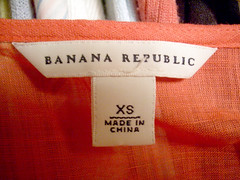
I recently purchased my first-ever extra small top from Banana Republic. I may be on the thin side, but still. There is no way I am an extra small in this world. I didn't feel any joy this time - just annoyance. After trying both a medium and a small, I felt strange when I finally took the extra small and it fit. "If I am an extra small," I thought, "what size does Jessica wear?" (My little sister is far more narrow than me). And who is wearing the mediums that I used to buy? The whole experience was slightly disconcerting.

Depending on which way you look at it, they've made the clothes bigger, or the sizes smaller. It's like currency inflation, and I get it. You follow the trends, and you make adjustments. But I wish there was another way. Because this practice affects women in a fundamental manner. You are messing with our perceptions of ourselves, and prolonging our inevitable facing of facts. It feels artificial because it is artificial.

I think retailers should get together and slow the size inflation cycle. Just add numbers on at the top. Integrate more of the plus sizes into the main lines. It would be a pretty inclusive strategy, and as long as everybody was in agreement, nobody would get hurt. Maybe this is unrealistic, but it's not impossible. Surely retailers would prefer not to go through costly resizings every few years!

People make a big deal over the fact that Marilyn Monroe wore a size 12. Oh, how our standards for beauty have changed, we say. But was she told that her dress was a 4, to make her feel better? I doubt it. There's a reason some members of the industry call this practice "vanity sizing" - we are more vain than ever, and more ready to equate thinness with beauty. Size inflation is just one part of this unhealthy cycle. I'd love to see it end.

9.15.2006

Disappointment of the day


A few weeks ago, I stayed in a Holiday Inn Express. It was typical business travel - a rather uneventful 3-hour drive, followed by a routine check-in at a generic hotel. As I handed the woman my credit card, I turned and noticed a big dry-erase board on the counter.

Handwritten in an array of bright colors, the board welcomed "Gary Galleher, our Guest of the Day!" Huh, I thought, that's kinda cool. Upon questioning, the front desk attendant told us that indeed, Gary had already checked in, and that yes, he had been excited. "They always get excited. They all get out their cellphones and take a picture." How sweet. But what does Gary get?

It turns out that Gary gets a pretty good deal. Besides seeing his name in marker, he gets an upgraded room, which I believe contains a jacuzzi tub, and a free movie rental. Oooh. The room, the tub AND the movie. I felt genuinely jealous of Gary. What a nice surprise, after a long day on the road. Not bad at all. Wish I was Guest of the Day. Oh well, his company probably paid for it or something. Maybe Gary is a CEO. Or maybe Gary stays at Holiday Inn Express every week. Maybe Gary owns Holiday Inn Express.

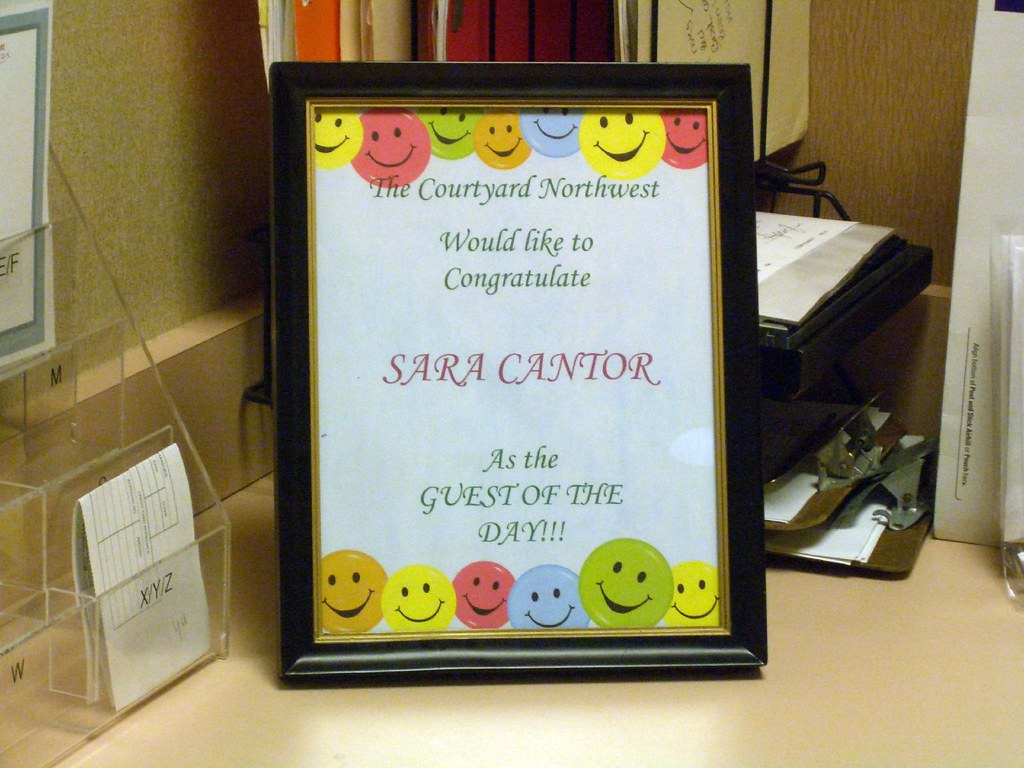
The incident faded as time passed. Then yesterday, I had another uneventful drive and routine check-in, this time at a Courtyard Marriott. Ho hum, another business trip. Here's my credit card and wait - what's that - is that MY name? - oh my god you guys, I'M THE GUEST OF THE DAY!!!


I literally jumped up and down. There it was, my full name on a framed piece of paper! What surprise, what delight. I felt like they knew me. I felt like a celebrity! I felt like Gary.

Of course, I immediately composed myself, in the manner of all contestants on Wheel of Fortune, preparing myself to be Shown What I've Won. I had a flash fantasy about a giant bubble bath with jets, about choosing my movie from a list of hot new releases. This trip was gonna be awesome.

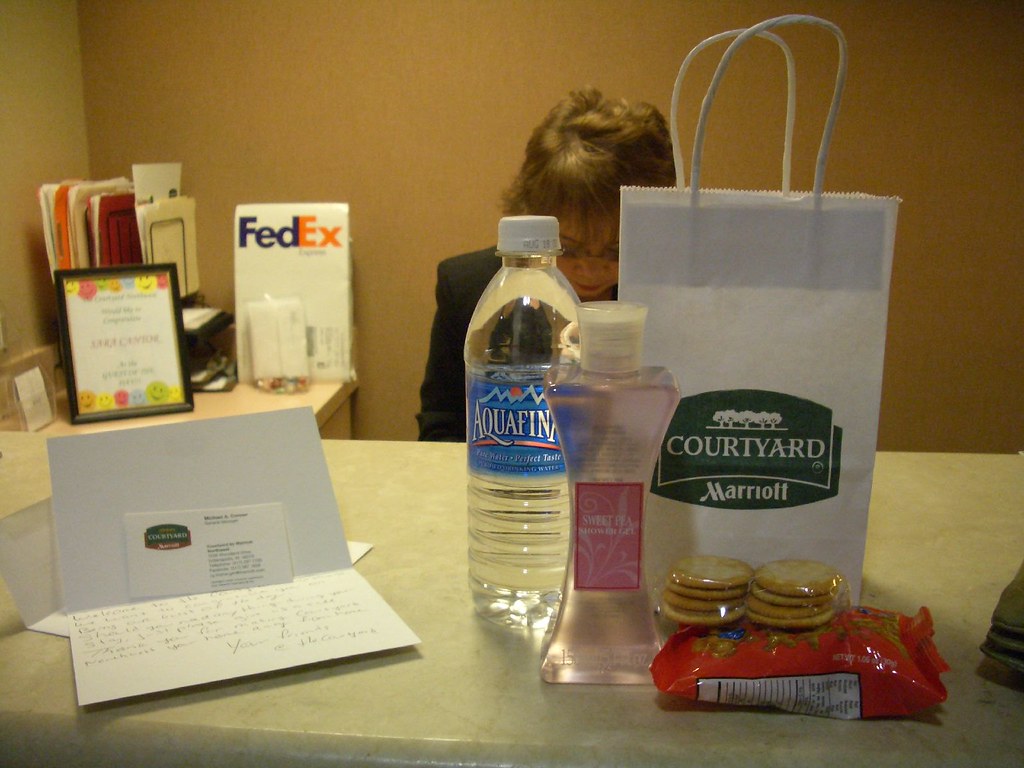
So the woman smiles and hands me a bag. A small bag. A small bag with the Courtyard logo. Okay. I reach inside. A bottle of water. A bottle of shower gel. A bag of animal crackers, and a packet of Ritz crackers. That's it. "That's it?" "Oh, and this," she says, and hands me an envelope. Ooh, an envelope! Surely, this is the big finish. It's definitely gonna be a gift card to a local restaurant, a coupon for a free massage, half off my next room at the Courtyard. I open it with high hopes.

It is far and away the most generic letter I've ever read. Fully devoid of meaning. "Welcome to the Courtyard. We want to congratulate you on being our Guest of the Day." Okay, thanks, now really, what do I get? "Should you need anything during your stay, just please give us a call." Okay, but I would do that anyway! Anyone would! We can all call the front desk, at any time! How am I different? "Thank you for making Courtyard your home away from home." Where is my prize? Show me the benefit!


As it turns out, there is no benefit to being Guest of the Day at the Courtyard Marriott. The water was room temp, the shower gel was cheap, and the animal crackers were stale. (I will admit that I enjoyed the Ritz crackers, but that is my only concession here). The single joy I experienced was seeing my name on a printout.

So here's the thing. If I hadn't stayed in the Holiday Inn a few weeks back, hadn't seen Gary's name and heard about his perks, I would have been delighted and only delighted to receive the minorly special treatment that I did. Wow, a bottle of water? Hey, it's better than my coworkers got! Ha ha to them! I'm the Guest of the Day! But since I had come face-to-face with the dry erase board on that fateful night, my bar had been raised. Significantly and irreversibly. And when this experience fell drastically below that bar, I was left feeling regretful that I ever walked through the Courtyard doors.

It's unfair to pit the two hotels against each other, but hey. That's the consumer world we live in. Somebody creates a nice experience for their customers, and everyone else rushes to catch up. It's nice for the Courtyard to try, and they get a big E for effort. But man. Shower gel? Animal crackers? I have never gone so quickly from surprise and delight, to disbelief and embarassment. What a letdown. I would have preferred to get nothing over a goody bag of crap.

So a part of me wishes they would only show my name. Seeing one's name is surprisingly thrilling, and I experienced a rush of somewhat childlike joy. It's like hearing your name on the radio when you donate to NPR. It's like seeing your birthdate in print. It's something familiar and personal, celebrated in public. The fact that every Holiday Inn Guest of the Day gets out his cellphone and takes a picture? A huge indicator of the significance. It's also quite funny, and makes for a good conversation piece the next day.

In fact, I believe if more retailers incorporated this simple "hold up a mirror" strategy, shoppers would feel a tinge of interest when walking in the door. They would always think, maybe it's me!

So an open letter to the Courtyard: The little poster is plenty exciting. It's all you need to make us feel welcome. If you can't deliver a better experience than the comparable establishment down the street, don't get our hopes up. Go for something that you can execute well, now. And stop right there.

9.07.2006

The fast and the curious


A humble thank you to Fast Company for the kind review, and a big welcome to new visitors!

Restaurant or store?


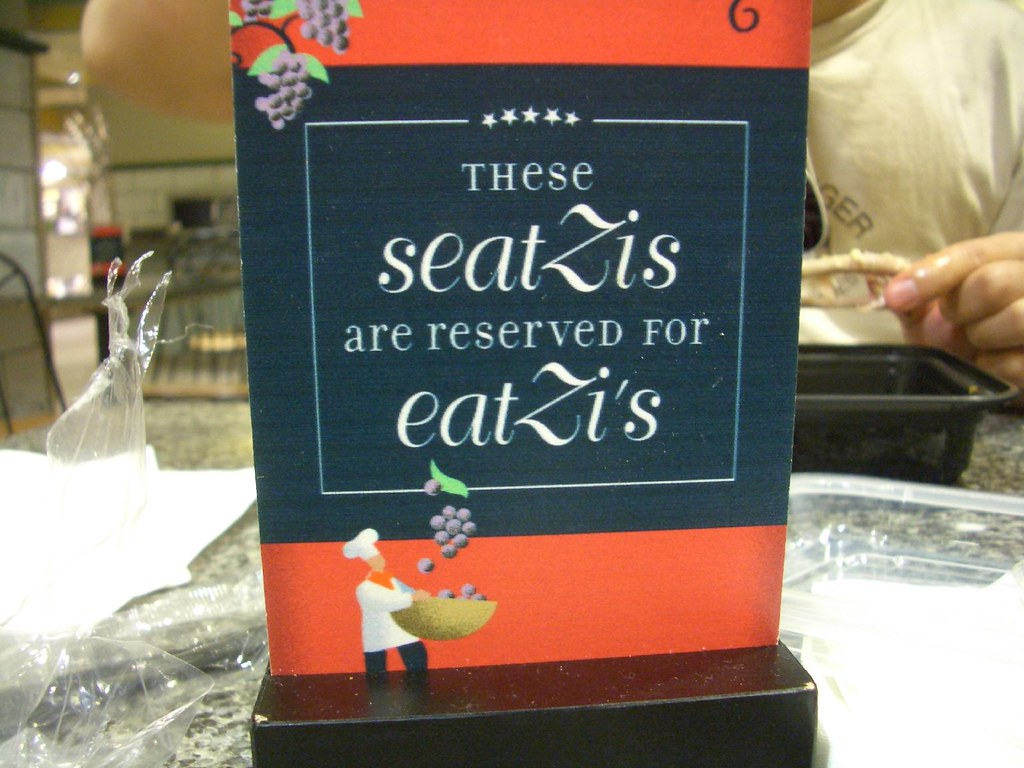
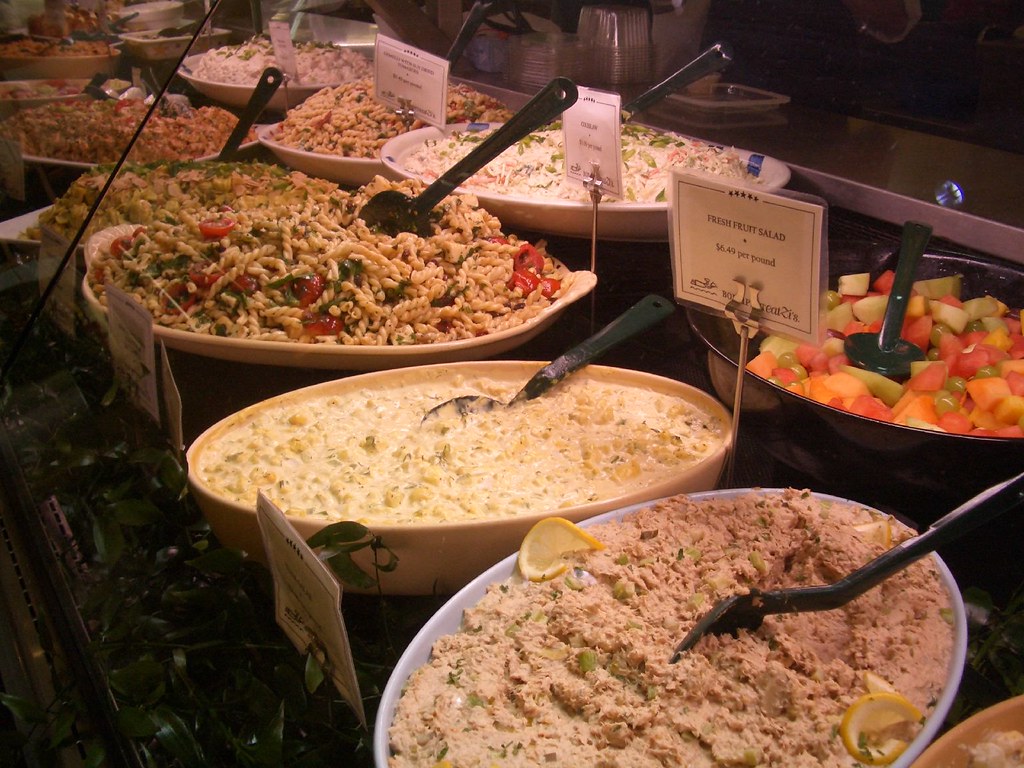
So there's this new prepared-foods place in Chicago called eatZi's. It's doing something very difficult, and doing it fairly well. It's bridging the gap between restaurants and stores.

Prepared foods are the kind that require little or no work on your part. You don't sit and eat them in a restaurant - you take them home. Oh, but you don't buy single ingredients either - you get them almost-ready-to-eat. Prepared foods often need a few steps, such as heating, mixing or spicing. They are for people who want to cook a little, but don't have time to cook a lot.

Prepared foods have been growing steadily in recent years, but if you look at this newish market, your options still come from mostly traditional players. Either it's primarily a restaurant - "We're Chili's and we also have curbside pickup" - or it's primarily a store - "We're Whole Foods and we also have a great couscous salad." But eatZi's is neither a restaurant, nor a store. It's really, actually, both.

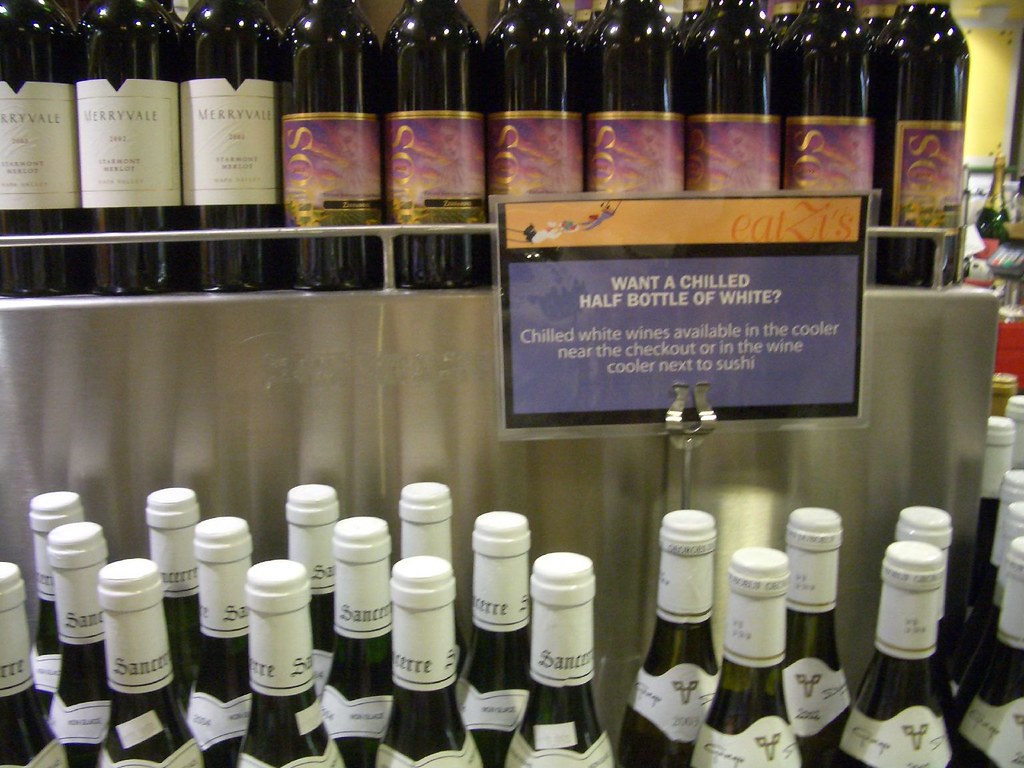
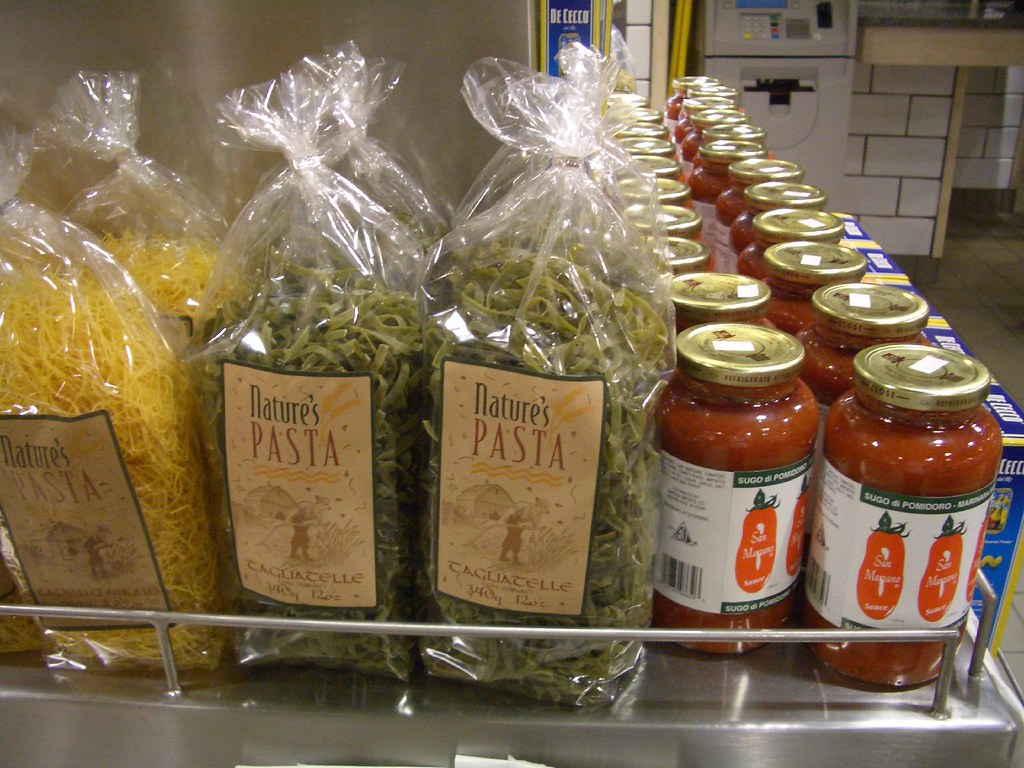
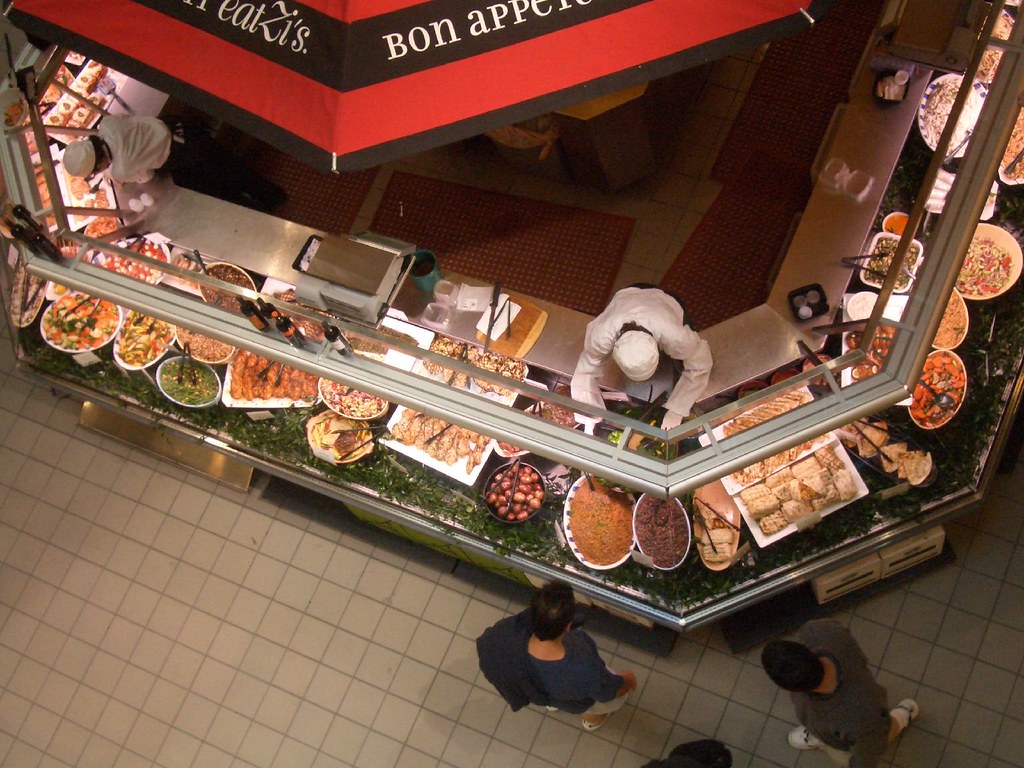
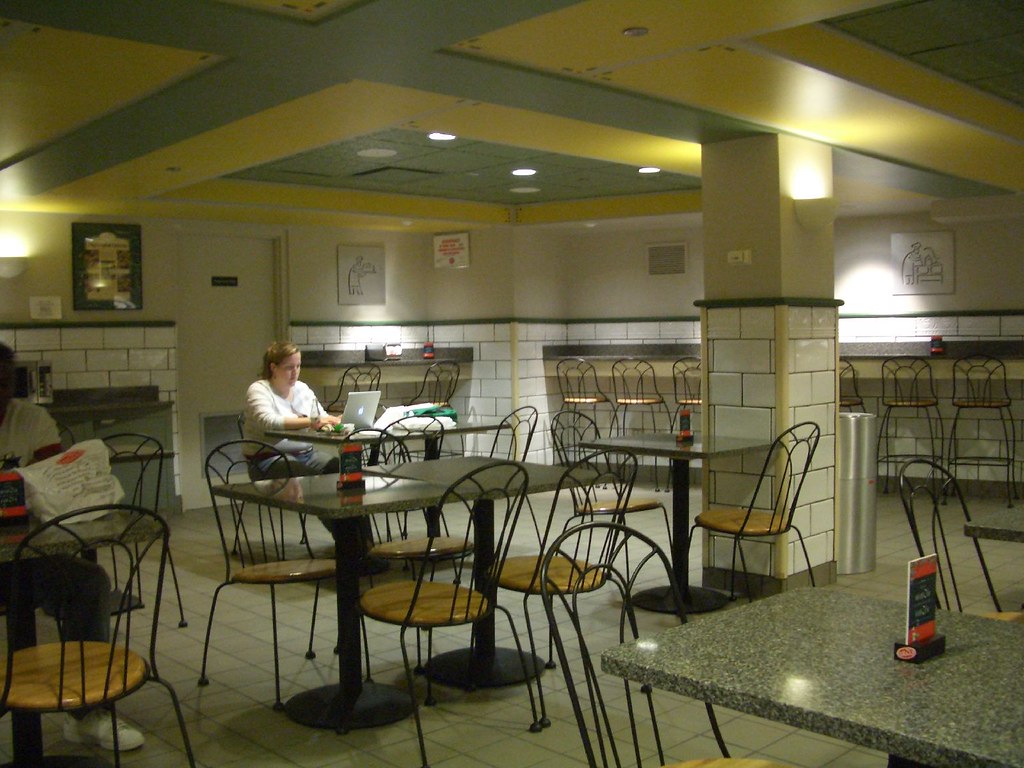
I walk in, and the cues are all across the board. The first thing I see is a big metal wine rack, an upscale version of your standard grocery shelf. One point, store. But then there is a sign encouraging the purchase of chilled half bottles, which I can open and drink right here and now. Huh. One point, restaurant. Then I see bags of dry pasta and jars of red sauce. Two points, store. Oh, but then there are chefs slicing meat and tossing salads! Two points, restaurant! Then I see a tasting station with a gorgeous basil cream spread and crackers - three points, store? But then there's this big seating area - three points, restaurant! Ahh! The lines were blurring as I struggled to put eatZi's into one of my mental buckets - the bucket for restaurants or the bucket for stores.

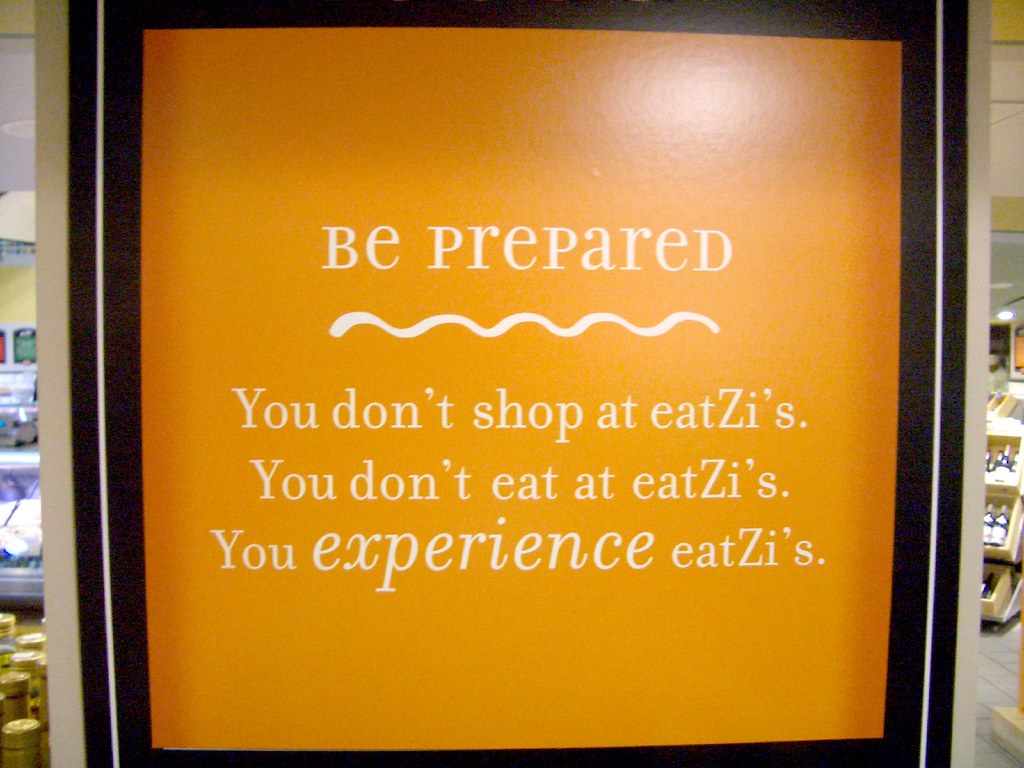
And to make things foggier, one sign presented this description: "You don't shop at eatZi's. You don't eat at eatZi's. You experience eatZi's." Thanks, how very Experience Economy of you, but really, which is it? Do I shop or eat? I don't know which mode to be in right now! It was borderline uncomfortable as I looked to other guests for how to behave, and tried hard to weigh my immediate level of hunger against the convenience issues of takeout.

Now while its elevator pitch may be rather hard to articulate, eatZi's is still an embodiment of every trend on today's radar. Busy urban dwellers with disposable income, spending a premium for fast, convenient, do-it-yourself meals, that require just enough preparation to also appeal to both epicurious foodies and moms who want to feel like they've "provided for" their families. It's like a giant trend report come to life, or a marketing student's wildest dream.

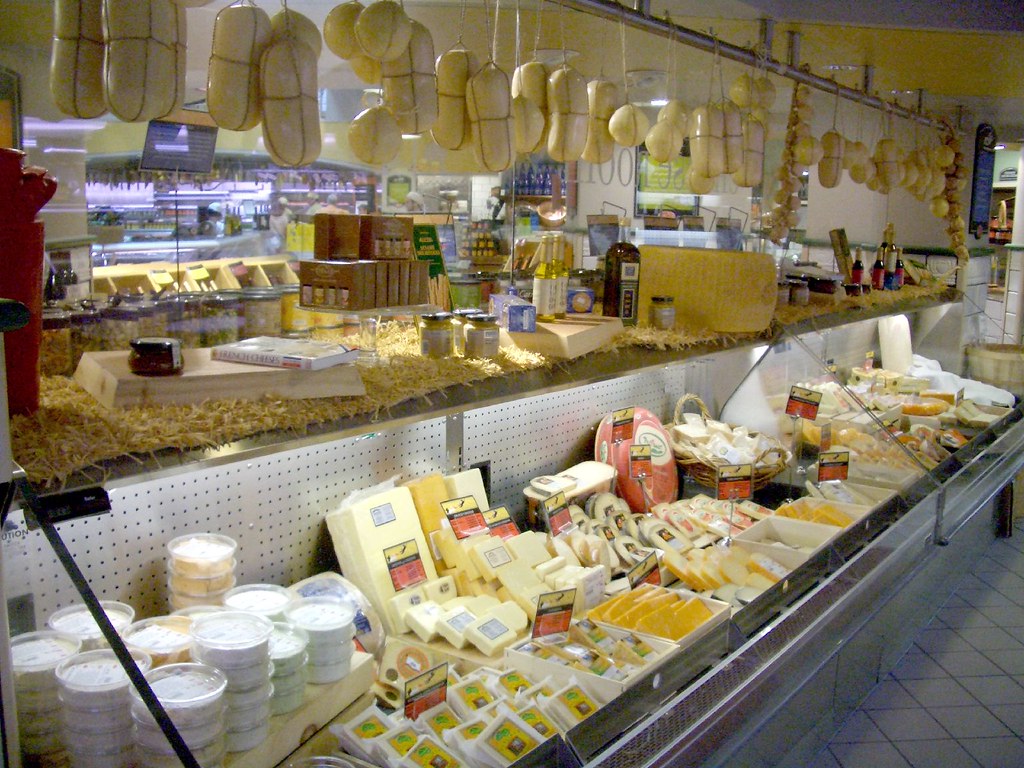
And I think eatZi's is doing a lot of things right. Its customer is defined, its messaging is catchy. It leverages multiple trends that other businesses aspire to tap into. And the food is pretty good too. So even though it doesn't fit neatly into one of my preexisting mental models, that's okay. My confusion turned to delight as I wandered through the cheese alley and gazed at the fresh, bright salads.

But as a talking point, it's still a little confusing. I have an easier time telling someone about a grocery store with a coffee shop, or a restaurant with a drive-thru, than talking about eatZi's. I guess I would say, "It's this great new, um, food market. You can get it for here, or you can get it to go. You can taste it in the store, or you can have it delivered. You can stock your home for Thanksgiving dinner, or you can grab a snack on your way to the gym." It may be great, but in today's world it requires some explanation.

Lately, I've noticed restaurants trying to be more like stores - special parking spots for curbside pickup, 30-minute lunches and drive-thru everything. I've also noticed stores trying to be more like restaurants - Starbucks kiosks, pizza on Friday's and food courts at Target. Perhaps everyone is trying to be what only eatZi's is. Perhaps it's the center where both sides converge, a sort of Food Source of the Future where customers can design their own experiences.

But because there is no protocol, some less jivey and more clear positioning might help put the words in peoples' mouths. Now, this is clearly not needed in traditional establishments; when you walk into Chili's, they don't need a sign saying "Welcome to a place where you sit at a table, a chef cooks your meal and you eat it here." And when you walk into Jewel, they don't need a greeter saying "Welcome to a place where you push a cart around, gather the items you want, and cook them yourself at home." People know these protocols because restaurants and stores have been around for years and years.

But eatZi's, and its format, have not. They are new. So a simple welcome would help me out. "Welcome to a place where you have the freedom to make your own meal. You choose how much you buy, who prepares it, where it's cooked and where it's eaten." If I could make a few key decisions right at the start, my journey through eatZi's would be more about culinary discovery, less about fumbling indecision.

I don't know if the trends will continue to grow, positioning eatZi's as the utopian nourishment resource of tomorrow, or if the prepared-foods sector will die down, leaving eatZi's with a bunch of real estate and some rotting potato salad. My hunch is that it will continue to open more locations and peddle its enticing and flexible offering. I just think that it's teetering on the edge of the chasm right now, and to cross it with confidence, it has a tiny bit more explaining to do.

8.31.2006

The drowning dog


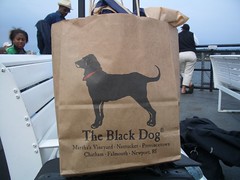
There is a small restaurant in Martha's Vineyard called The Black Dog. It's a quaint, rustic establishment that serves upscale seafood dishes. The Black Dog is a restaurant, and it is a good one. The story could end right here.

But it doesn't, because in terms of merchandise proliferation, this tiny eatery rivals the freaking Hard Rock Cafe.

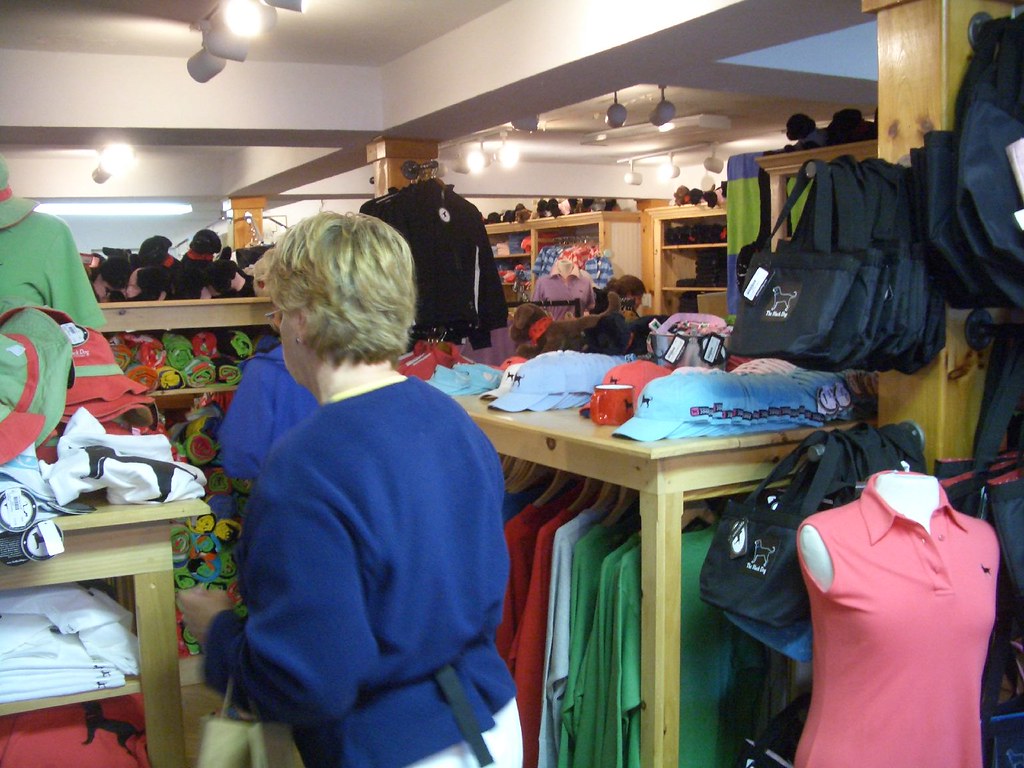
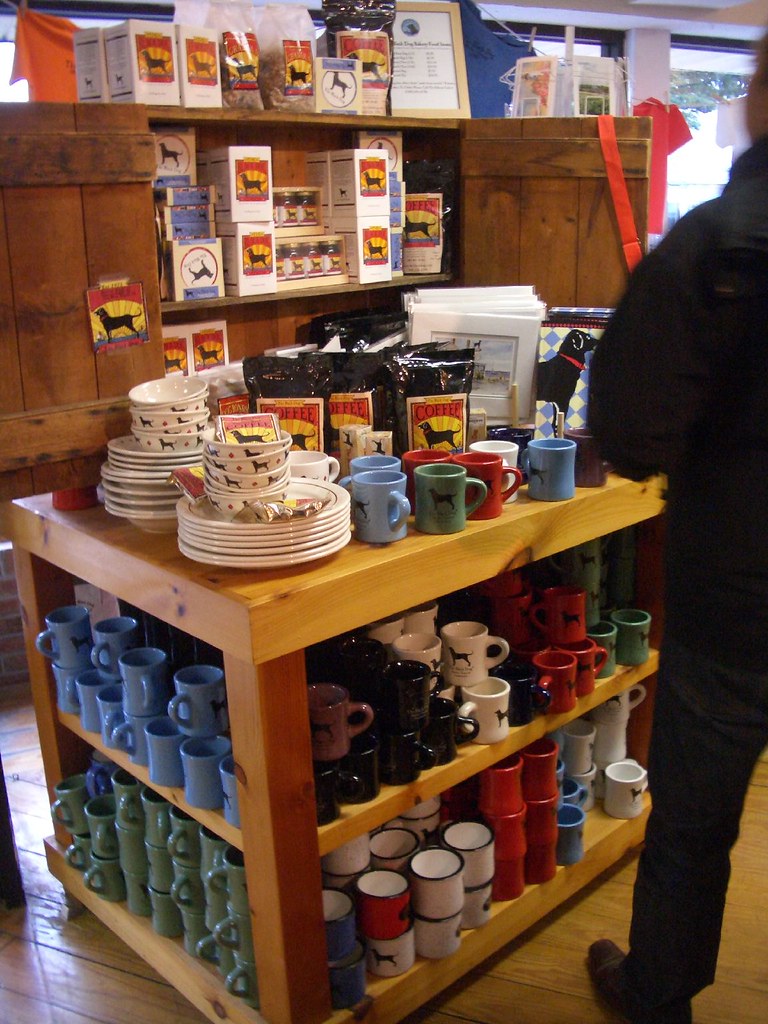
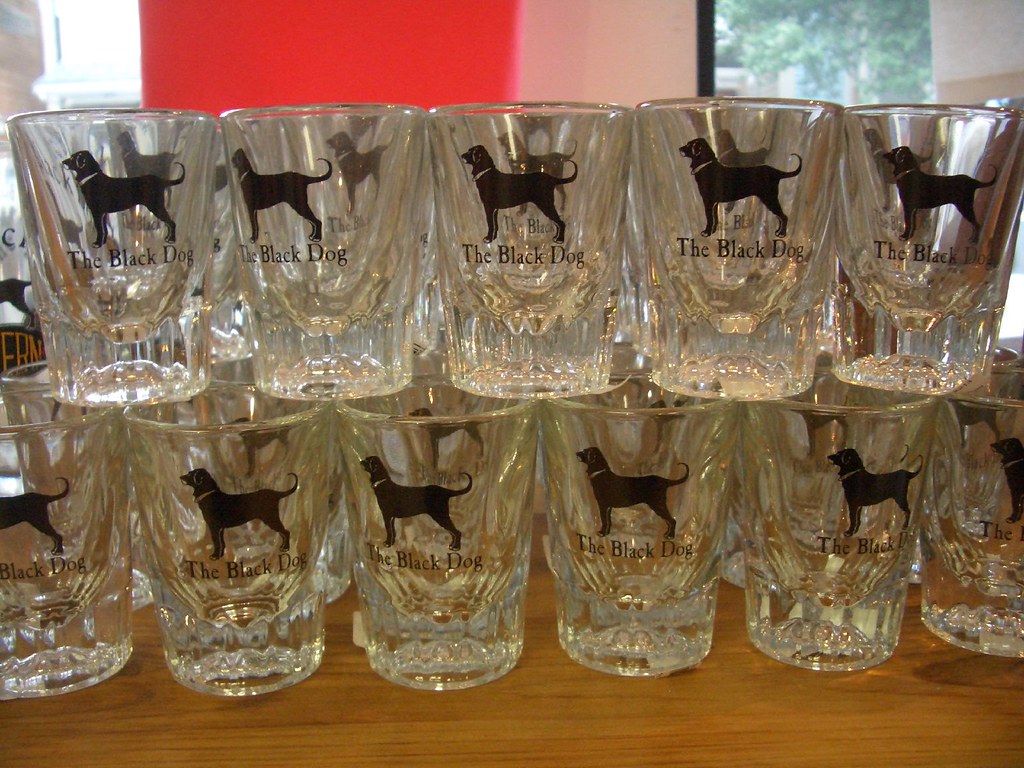
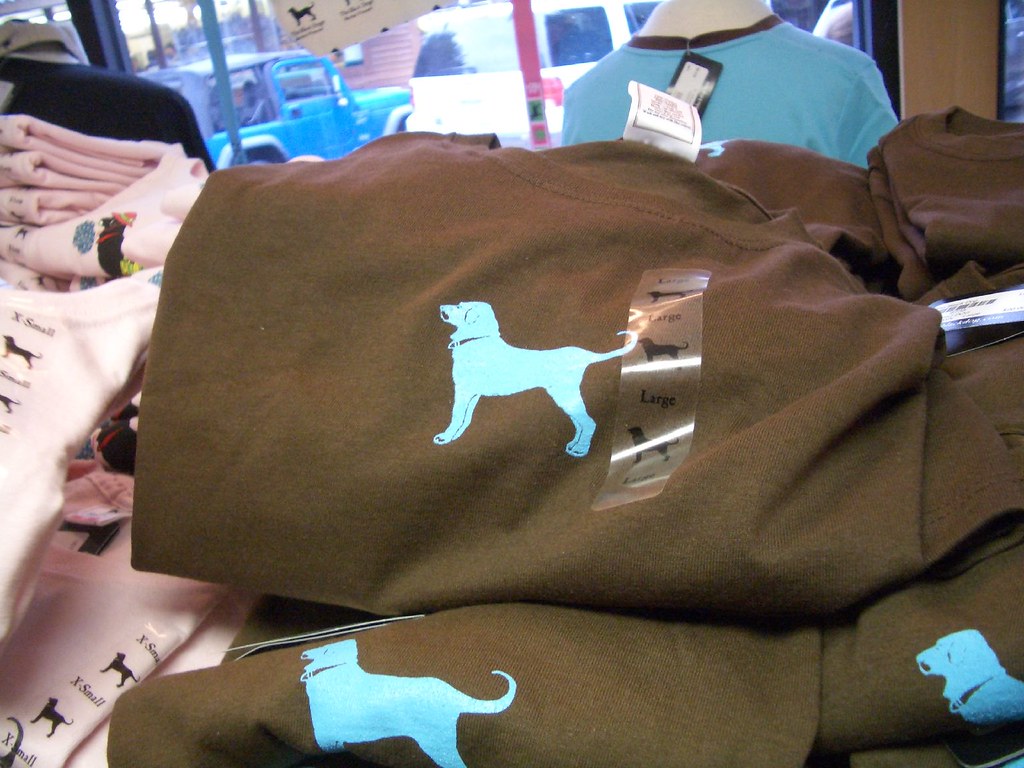
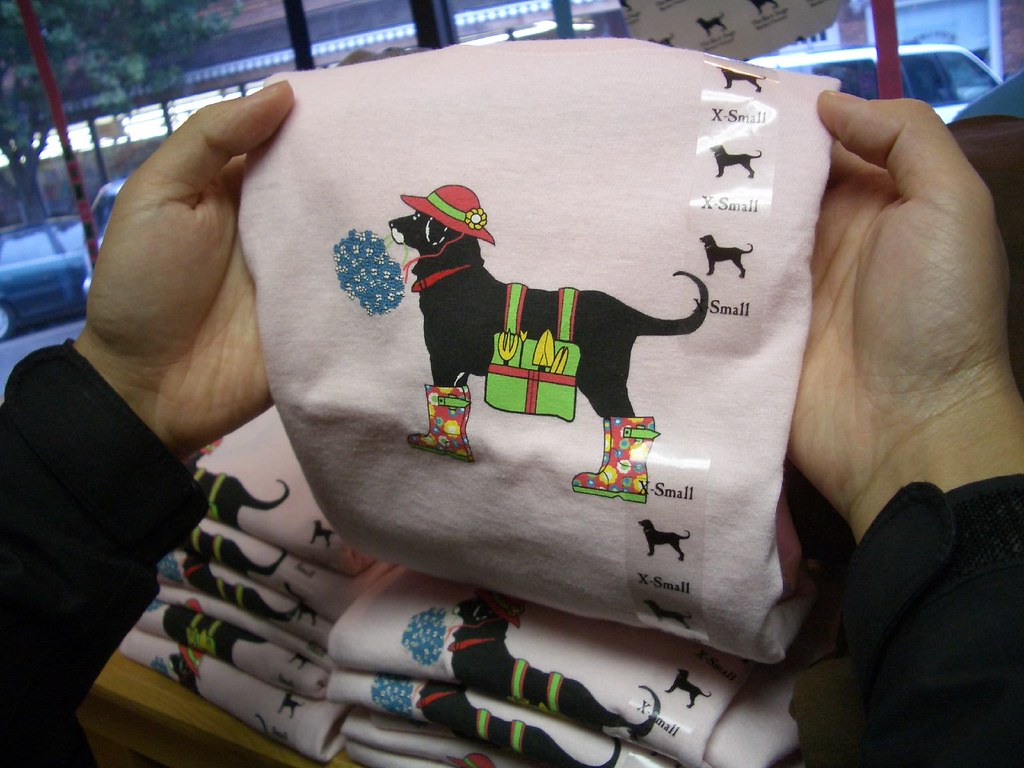
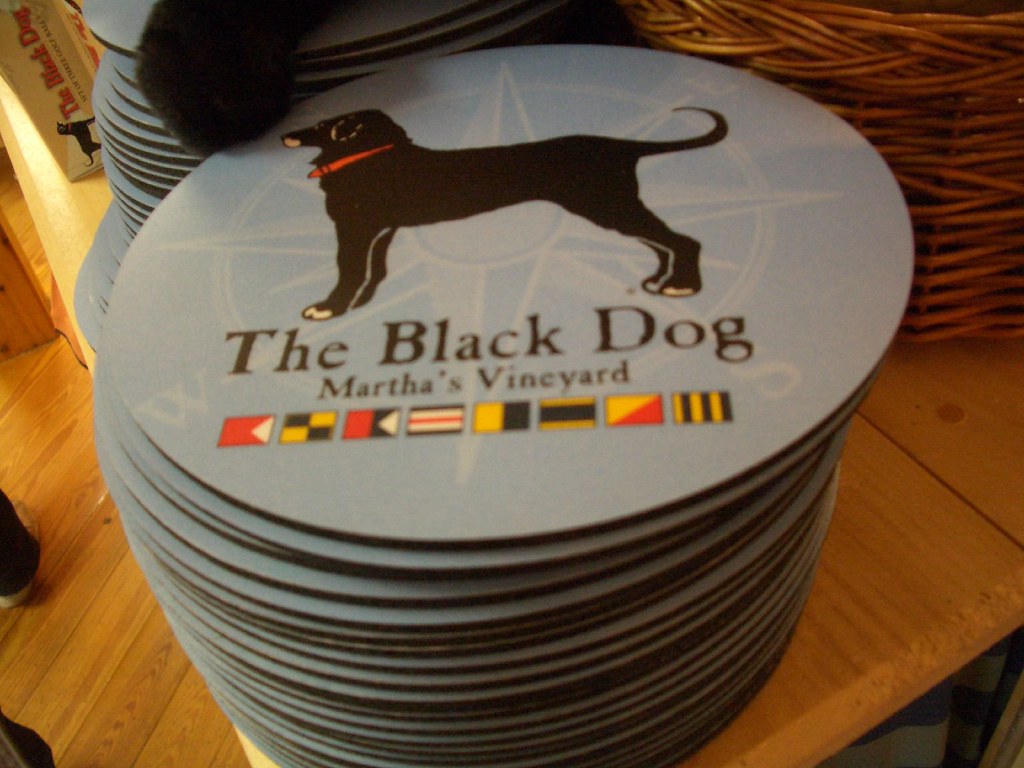
I spent a few days on the island and boy, I just could not miss The Black Dog. It. Was. Everywhere. Shopping bags from The Black Dog. Hats and t-shirts and sweatshirts and bandanas and tote bags from The Black Dog. Kids carrying stuffed animals of The Black Dog. The Black Dog Bakery. The Black Dog General Store. The Black Dog Kids Store. And venture inside one of these stores? Black Dog shot glasses, coffee mugs, cozies and baseball caps and bathing suits and beach towels and people, this has passed the point of no return. (I felt like David Cross on his American flag rant. Eat the Black Dog. Eat it.)

The Black Dog owns a font. It owns a logo. It owns a certain breed of canine. It owns half the real estate on Martha's Vineyard! It basically owns the island, and for most intents and purposes, this is a good thing. For the owners, it's good business. For the tourists, it narrows down their dinner options and souvenir choices. And for the locals, well, there seems to be a constant, unconditional outpouring of love and dollars for anything with The Black Dog on it. People love that crazy dog.

But my question is, why? I spent four days, had about four thousand Black Dog brand impressions, and still don't know what the fuss is about. In fact, I feel absolutely no connection with that silly mutt. Maybe it's because the wait at the restaurant was 40 minutes long and they didn't take reservations, which left me disenchanted. Maybe it's because we ate at the Black Dog Bakery instead, which was overhyped and a bit disappointing. Maybe it's because I saw no real black dog running around, and that was what I was hoping for. Maybe the legacy was just lost on me.

Now I have to assume that the locals know the legend. They've heard the story of the old sea captain, his loyal black dog and his tall ship, and how he provided food to hungry sailors long before there were any year-round restaurants on the island. For more Black Dog lore, its website is chock full of stories. But the stories don't get communicated anywhere in the physical world, and I think that leads to a big disconnect. People are buying products, but they don't know why.

There's an important ratio at stake here: I'll call it the ratio of core offering to fluff. In some places, the core offering is primary, such as an authentic meal at a simple diner. The food is good; end of story. In some places the two are balanced, such as Joe's Crab Shack, which offers a quirky atmosphere, affordable seafood and snarky t-shirts at the front. Part core, part fluff. And then there is The Black Dog, where the fluff is just disproportionately huge. There is one Black Dog Tavern, and there are 12 General Stores.

Now god bless the folks who run The Black Dog, for they must be overjoyed at this level of growth. Their brand is synonymous with Martha's Vineyard - you almost can't board the exit ferry without showing your shopping bag. Furthermore, all brands start somewhere, and the Black Dog's humble beginnings are grounded in a very real, very beautiful core offering.

And I know that it would be hard to replicate The Black Dog's core offering (its restaurant) every half a mile. Nobody but Starbucks can pull that off. Plus, why would they? The restaurant's lure is partially its exclusivity, its scarcity. To add franchises would water it down. I also know that the company is simply responding to demand - hey, when tourists are clamoring to buy your coffee mugs, why not make shot glasses? And so on.

But I think at some point, you have to practice restraint, because the brand just gets diluted. When does that happen? Well, this brand is most certainly diluted when the dog is no longer black. Or when it's wearing random costumes. Or when your line extensions become totally unrelated (I'll buy a beach tote, but not a mousepad!) It's diluted when nobody can get a seat at your tables, so they simply substitute the experience for a store-bought replica. When people buy your stuff but have no idea what it means. When they only buy it because everyone else already has.

Black Dog, I applaud you for your recent expansion. I just hope you can find a way to stay focused on your core offering. You should tell your story, whether by retail design, a museum-like exhibit, books or cultural events or even another restaurant. I want to love you, just like everyone else does. You just have to give me a reason.

8.22.2006

Was anyone helping you today?


So I walk into Banana Republic and start shopping. A guy comes up and asks if I need help. I do, in fact, need help. "Do they have these pants in black?" He goes to check.

It turns out they are out of stock, but he will be getting more in next week. The salesguy kindly writes down the store's phone number, and the pants' item number, so that I may call before coming. I found this to be exceedingly good customer service. He not only got me information, he held the promise of the pants I wanted. At this moment, he was my favorite salesperson ever.

But at this same moment, could I remember what he looked like?

Eh. Not really. He was oh, yea high, with brown hair, I think, and tannish skin. Yeah, he was definitely tan. Perhaps he was Indian? He might have been Indian. What if he wasn't Indian at all? I shouldn't say that, just in case I am wrong. What was he wearing? Did he say his name? How embarassing.

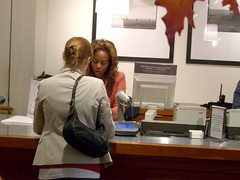
These thoughts ran through my head twenty minutes later, as the girl at the cashier asked me one very simple question: "Was anyone helping you today?"

---

I've noticed more and more clothing stores using this strange protocol. It basically helps assign commission to higher-performing employees. The theory is simple - if the customer says Kelly with the purple shirt was helping her, then Kelly with the purple shirt gets a little something added to her paycheck.

But what if you can't remember Kelly's name, or the color of her shirt? What if in your memory, Kelly's only identifying feature was that she was overweight? Good god.

To finish the episode, I continued to shop after the guy went away. The minute I picked up my second shirt, a nearby saleswoman asked if I'd like to start a dressing room. Fine, sure. A minute later, I picked up a skirt. "Do you want me to add that to your dressing room too?" I guess so, but you are starting to get on my nerves.

This woman added things to my dressing room. She "checked in on me." She was generally nice, but a bit intrusive. Sure, though, I suppose it was she who actually "sold" me the shirt, for no other reason than the fact that she was there before I decided to buy it, and she was there right afterwards.

So when the girl at checkout asked the question, I felt nothing but awkward. What I wanted to say was, "Well you see, two people helped me today, and the woman was technically the one to 'sell' me the shirt. But the guy helped me with a future purchase, while leaving a lasting positive impression of your store. Which the woman actually diminished. So I'd prefer to name him, but I guess I'll name both if I can. However, I can't remember what either of them looks like, I don't know their names, I can't see them from where I'm standing, and any attempt to describe them will only dig me deeper into this hole."
This response actually came out like, "Oh, uh, this lady..." I trailed off as I looked around. "Was it Kelly?" "Yes! I mean, I think so. Sure. Kelly."

I'm sure that this system works well from ten thousand feet away. Managers at corporate pore over the numbers and see that shoppers are responding, commission is being awarded, and associates are being incented to work a little harder. But when you are on the ground, standing at the desk, I believe that the system has some fundamental flaws.

First, the question implies that either someone helped, or no one helped. It's essentially a yes-or-no question. There is no gray area for qualitative feedback. I think stores should allow me to commend someone even though he or she didn't actually help me with the item I bought. What about the more general, "Did you experience good service today?" Or the more benefit-oriented, "Did anyone make your shopping trip easier?" Or the more frank, "Is there anyone you think we should pay more?" Hey - people appreciate a little honesty.

And this qualitative feedback should apply whether the response is good or bad. If someone made my shopping trip easier, but someone else made my shopping trip harder, why can't I say both? I know the cashier only has so much time when there are impatient customers behind me, but if you are taking down one name, you can take down two. If you are putting Kelly's name on the good list, you can just as easily put it on the bad list.

Second, the question forces shoppers to recall at least one awkward piece of physical information. Which is no doubt the last thing on their minds. I know that when I am in the midst of feeling distraught, because this shirt is too much money but I really love it, don't ask me to take note of someone else's personal details. They are just not that important right now.

And especially when we don't know which details are appropriate. My first identifier of the guy was his race, but that would be weird if it was right, weird if it was wrong. How about asking us to identify one specific, objective feature, like hair color? Or how about pointing to a poster of employee names and photos? (Even if you couldn't draw Kelly from memory, you could surely pick her out of a lineup). And what could Kelly do to help us remember? Wear a shirt with her name on it in large font? Escort us to the checkout? Hand us a plastic "business card" that we could give back when we pay? The shopper needs a little help here.

Finally, the whole incentive system leads employees to try to be memorable, not necessarily helpful. Because the real question ends up being, "Can you remember anyone in our store today?" That woman was erring on the side of annoying because she knew there was a chance I'd name her at the register. And you know what, I did. But if half your shoppers welcome assistance, and the other half just want to be left alone, you are going to strike out every other time. You personally might benefit from higher commissions, but your whole store suffers from the feeling of pushy staff.

So perhaps the goal shouldn't be to commend individuals, but rather the whole team. Maybe they are graded on specific attributes, so that the entire store may improve in certain areas. On a scale of 1 to 5, how friendly were our staff today? And tomorrow we ask, how helpful were our staff today? And the day after that we ask, how available were our staff today?

In a perfect world, all employees would be mind-readers, able to know in an instant whether a shopper wanted a helping hand or total avoidance. It's never going to happen quite like that. But if stores are looking for feedback on how their staff are really doing, they should think a little harder about the ways they gather it. Because when the answer isn't black and white, the question shouldn't be either.

8.17.2006

The curious shoplifter


Last week, I witnessed something dramatic.

I was standing in the auto care aisle at Wal*Mart when a teenage boy entered the aisle. He looked about 14, with a very long shirt and baggy shorts. He started fiddling with the merchandise, which seemed odd to me because he couldn't possibly be old enough to drive a car.

Suddenly, a man came up to him. The man was tall, with a shirt and tie and a big official Wal*Mart badge. He was holding a torn-open, empty package of something - I couldn't tell what, but it looked like maybe razors or video games. "Do you know anything about this?" he barked. The boy shook his head no. "So if the police searched your pockets on the way out, they wouldn't find anything?" Again, the boy shook his head. The man stared at him for another few seconds. "All right then." And he left.

I stood staring at the kid, having abandoned all manner of social inhibition. He continued to look at the stuff on the shelves, but his hands hovered nervously around his pockets. Then he glanced at me and we locked eyes. He looked scared.

Finally, the kid left the aisle and he was gone. The man came back a minute later, searching all around between the shelves and under the products, presumably trying to find the item which he assumed the kid had unloaded. After all, the auto care aisle is relatively secluded and if I were trying to hide inside Wal*Mart, it's exactly where I would go.

---

Retail theft is a big, big problem in the US. Professional thieves wear trench coats with inside pockets, so that they can reach their arms into the shelves and sweep out all the product at once. And they go for items that fit their target criteria: small and valuable. High-theft items include traditionally valuable items like razor blades and DVDs, as well as more recently valuable items like cough medicine and baby formula, the ingredients of which are used to make drugs.

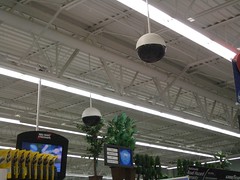
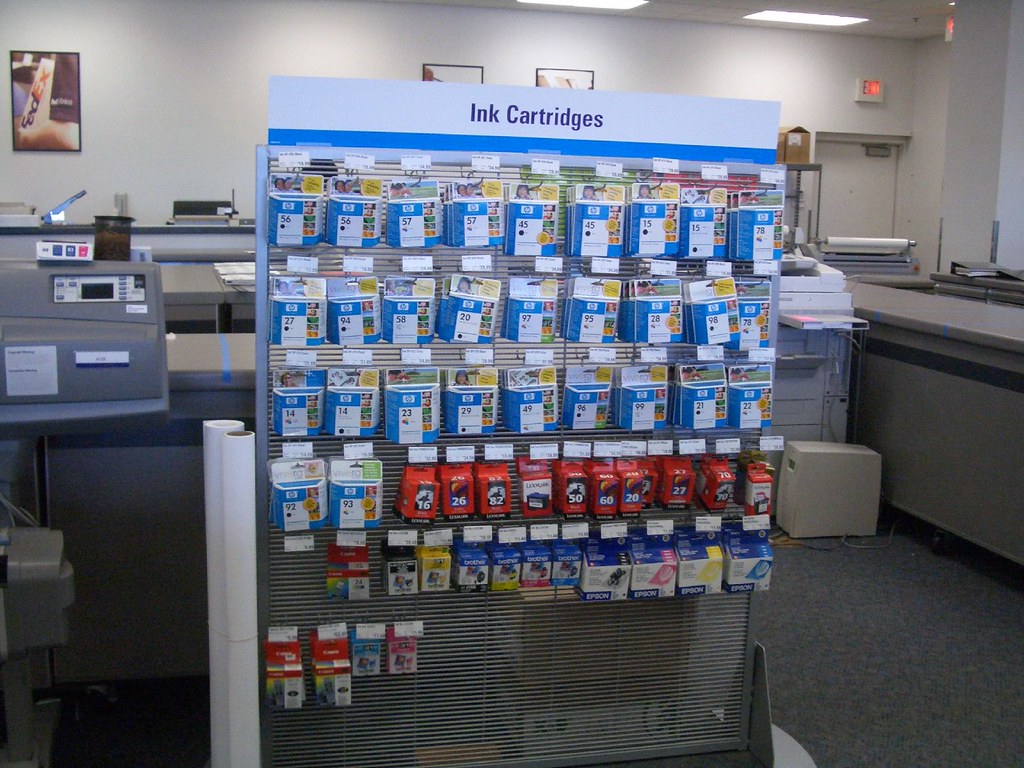
This problem is formally called shrinkage, and many attempts have been made to solve it. You can watch your store - Wal*Mart installs security cameras every few feet, disguised in eerie little domes and suspended from the ceiling. You can secure your product - Walgreens has locked up razor blades for years, and Best Buy ties down cellphones with massive security cables. You can move your product's location - FedEx Kinko's now puts printer cartridges behind the counter. You can install shelf-level security - this solution has clear shelf guards, and if the shopper holds the guard open too long it sounds an alarm!

The problem with all these tactics is that while they deter thieves, they also deter honest shoppers. I hate finding an employee to unlock the case, so sometimes I just skip it. So while theft goes down, sales go down too. But the even crazier thing is that these solutions still provide retailers with a return on investment. Shrinkage causes so much loss that it is literally cheaper for them to make shopping hard for honest people, than it is to make it easy for thieves.

But folks, this is a losing battle. The smarter the stores get, the smarter the thieves get. It seems we are caught in a downward spiral, where the ultimate loss is to the shopping experience. And like any systemic problem, I don't think it can be solved by putting a bandaid on the end state. You have to start farther up the chain.

Maybe it involves communicating trust in your shoppers. Maybe it means treating your employees with respect - after all, half of the loss is from employee theft. Maybe it means going even farther back, to the root causes of the need, and getting involved in the community.

Instead of scaring that kid, which will only make him tougher next time, maybe the Wal*Mart man could have taken his information, called his parents, and invited him to a class on how to be smart with money. Maybe he could have recruited him into an internship program or a Wal*Mart volunteering squad. Maybe he could have sat him down and interviewed him about his reasons for shoplifting. Maybe he could have taken him in the back and showed him the security guard station. Maybe he could have invited him and his family over for dinner. I know these ideas sound crazy, but they aren't much crazier than yelling at every suspicious-looking teenager.

I don't presume to know the answer to this one. It's something that a lot of smart people have spent a lot of time trying to solve. What I do know is that there are some dishonest people out there, but far more honest ones. And if the shopping experience becomes so bad that the honest ones feel their business isn't welcomed, they will take their business elsewhere.

8.12.2006

Billions of pennies


A wise man once told me that retail is billions of pennies. He was my boss's boss, and it was my first day on the job. Needless to say, I was confused. I pictured giant warehouses of pennies, stores overflowing with pennies, people pushing shopping carts through oceans of pennies. What the hell was this guy talking about?

Well, I think I get it now. Retail, at least the mass market kind, is about low margins and high scale. Let me explain.

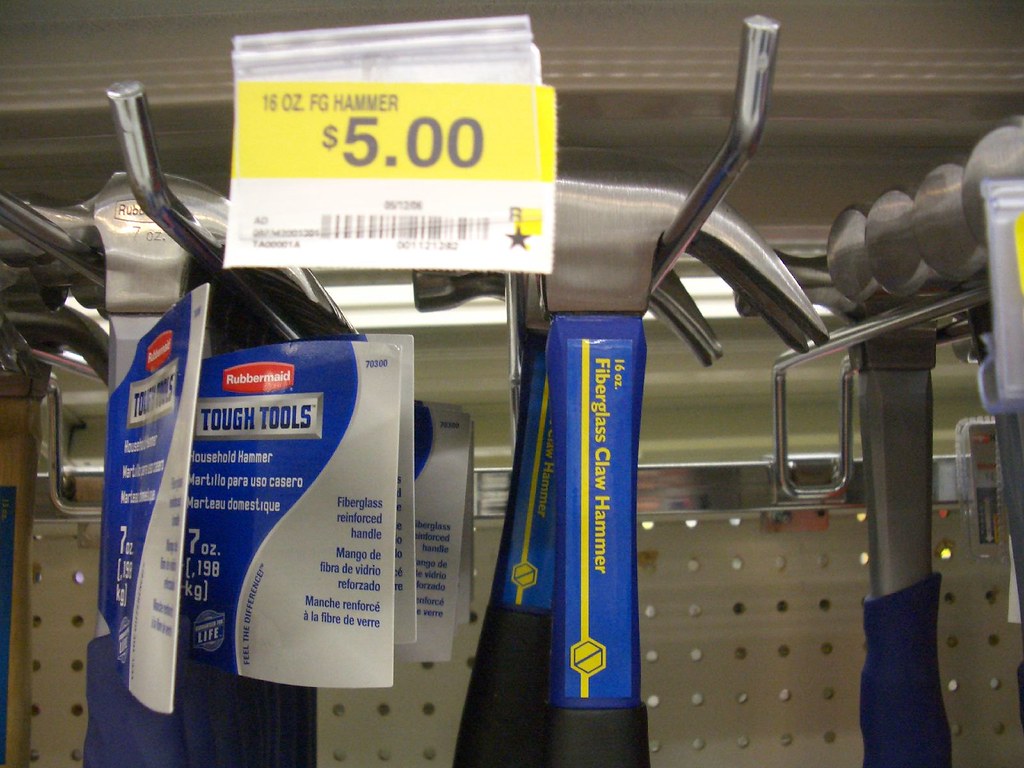
Let's say Wal*Mart sells a hammer for $5.00. Millions of people walk past it, all over the country and all over the world. Of those millions who walk past the hammer, only thousands see it. Of those thousands who see it, only one thousand decide to buy it.

But those thousand people are hardly insignificant. If a thousand people buy a $5.00 hammer, that's a sizable chunk of change. However, let's say Wal*Mart paid the hammer maker $4.78 apiece. So they only make 12 cents on each hammer sold. Hence, they need to sell a lot.

Now let's say Wal*Mart notices that the hammer is selling well, so they raise the price to $5.05. Five more pennies. Not a big difference to a shopper, but that's 17 cents of margin instead of 12. An extra $500 for the store, just like that.

This type of scale is what allows stores to stay in business with twelve-cent margins. If you picture your shopping cart from the store's perspective, they are getting 50 cents on your soap, 13 cents on your apples, 24 cents on your deodorant, and so on. If 600 people buy that deodorant, the pennies add up.

And what we don't think about is that stores are measuring our every move. If you are in CVS and you see a slick new display, some part of your brain says "Ooh, this Dove body lotion looks great!" and you buy one. Did your single purchase make a difference to CVS? Hardly. But you are just one of many. That display caused 20 extra people to buy Dove body lotion in that store. It caused 2,000 extra people to buy Dove body lotion in all stores. CVS made a bunch of pennies off that one.

Our actions at retail are measured with a giant lens. Each time we add one more item to our cart, the store doesn't earn that much - maybe a few cents, maybe a dollar. But with massive scale, our collective actions add up. It's kinda like voting.

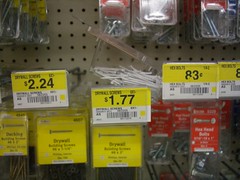
I only recently realized the true meaning of the comment, after spending a significant amount of time inside Wal*Mart. They've tinkered with every last price tag, so that instead of a whole shelf of product being $1.99, some items are $1.77 while others are $2.24. Because they are so large, every last cent makes a difference.

Retail is big business, that's for sure. But it isn't always about millions of dollars. Sometimes, it's about billions of pennies.

8.02.2006

Bag, please


You might describe my boyfriend and I as environmentally conscious people. We don't work for Greenpeace or anything, but we saw An Inconvenient Truth and read Cradle to Cradle and subscribe to Dwell and make efforts to buy organic and conserve energy and recycle.

So you might expect this to translate to our shopping habits, and typically it does. When we each bought something at J.Crew last weekend, we asked that our purchases be put into one bag. Two bags is a waste. Sure, the salesgirl agreed, and put my stuff in his bag. Good for the environment, bad for the store.

Why is it bad for the store? Because shopping bags are a form of real-world advertising. You see a woman, presumably a well-dressed one, holding a J.Crew bag. Consciously or not, you ascribe her qualities to that brand. Wow, you think, J.Crew sure has attractive and fashionable customers. Maybe I should shop there too.

Stores want those bags out in the world, not tossed in a closet. This is why shopping bags have gotten more like purses and less like throwaways in the past few years. I've been handed bags lined with ribbon, coated with splashy paint, and made of materials far less recyclable than paper. The bag is now an extension of the brand, and with that title comes an obnoxious amount of waste. So whenever possible, I act like an informed consumer, and I skip the bag.

But sometimes, being an informed consumer isn't enough. We also visited Crate & Barrel last weekend. And what do C&B cashiers do with every item? They wrap it in tissue paper. Does that tissue paper save ceramic plates from cracking? I highly doubt it. But perhaps it gives the impression of safety. So fine, wrap each individual plate. Maybe it's helping people to think their new dishes won't break in the trunk of their SUV on the ride home.

However, we were buying dish towels. Just dish towels. Nothing fragile or heavy or expensive. Certainly dish towels don't need to be wrapped - if anything, they should be the wrapping! But it all happened so fast: the guy grabbed a big sheet of tissue paper, my boyfriend called out, "You don't need to - " and the guy cut him off with, "Too late!" He quickly finished the wrapping, gave a cheery smile and handed us the bag.

Shut down. We lost. We were no match for this man's sheer corporate obedience. He's been trained to wrap everything, presumably because of some "out-of-box experience" philosophy that everyone and their mother has borrowed from Apple. Perhaps Crate & Barrel imagines that when shoppers get home, they see their new dish towels, lovingly wrapped by the hands of the brand itself, and tied with a nice big bow of lifetime loyalty and positive word-of-mouth.

But does the wrapping make a difference to people? Do the bags make a difference to people? Because not to get all Doom And Gloom on you, but they are making a difference to our planet.

Now I don't think people are going to take a stand, exactly. You can raise awareness all you want, but you won't get shoppers to stomp their feet in defiance and say "If you wrap that placemat in tissue paper, god help me but I will never shop here again." Sure, we say, wrap it. Give me a big ornate bag filled with crinkly paper. It looks nice, implies some safety, and makes me feel special.

But frankly, people just take the bag because it's the default. They have their plates wrapped because it's the default. Americans will choose the default way more often than not; it's one less decision they have to make.

With that in mind, a good way to make change is to ask people to do nothing. Just engineer the environment around their inaction. So what if the default was no bag, no wrapping? The bag was readily available if they asked, but if they did nothing, they wouldn't get one? I think it would be a different world. Some people would take their dish towels as-is, and carry them out to the car. Or stick them in their backpack or purse. Many would ask for bags, but not all. Some would learn that they didn't really need a bag after all.

A final story: My mother used to buy our milk from a drive-thru shop called Farm Stores. She'd use the same line every time. "Gallon of skim milk, no bag." Every single time. We just didn't need a bag. It was one gallon of milk, and we were driving it straight home. She was an informed consumer, and didn't want to waste. However, because of this tiny extra effort, my mom was surely in the vast minority of customers.

Imagine if people had to say "Gallon of skim milk. Bag, please." I think we'd move the needle on packaging waste at retail.